Vastu colours for home planning is one of the simplest and least disruptive ways to bring a house into line with traditional guidance. Paint can be changed in a weekend, curtains in an afternoon, and none of it needs a single wall to come down. That is why colour is one of the first tools we reach for when we write a correction plan.
This guide explains the traditional link between directions, elements and colours, then goes room by room through a typical Bangalore home. It also covers the practical side that colour charts leave out: paint finishes, light, damp walls, rented flats and why you never need a special product.
Why colour is one of the easiest Vastu corrections
Most Vastu corrections are about placement: where the bed goes, where the stove sits, what is kept in a corner. Colour works alongside placement. It changes how bright or heavy a room feels, how light bounces through it and how calm or busy it reads, and it does this without any construction.
Colour is also reversible. If a shade does not suit your family, you repaint. That makes it a sensible place to start, especially in apartments where structural changes are not an option.
Traditional guidance: colours by direction and element
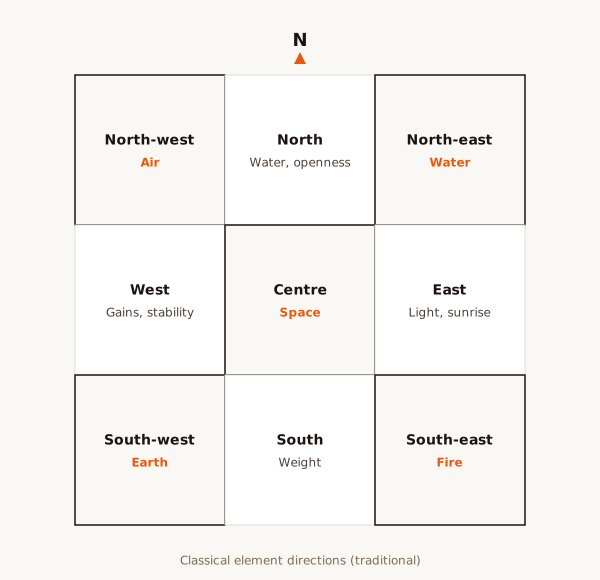
Traditional guidance: Vastu links each direction with one of the five elements, and each element with a family of colours. Different schools vary a little in detail, so treat the list below as broad, widely shared guidance rather than a fixed rule.
- North (water): light blue, pale green, soft aqua.
- North-East (water and space): white, cream, very pale yellow or blue. Keep it the lightest part of the home.
- East (air and morning light): light green, off-white, pale sky blue.
- South-East (fire): peach, soft orange, light pink, warm cream.
- South (fire): coral, terracotta, warm pink, used in moderation.
- South-West (earth): beige, sand, light brown, mustard and earthy yellows.
- West (space and metal): white, light grey, soft silver, pale blue.
- North-West (air): white, cream, light grey, very pale blue.
A common thread runs through all of it: lighter colours to the North and East, warmer and earthier colours to the South and West. That pattern also happens to suit Indian sunlight, since the South and West walls take the harsh afternoon sun.
What we measure before choosing colours
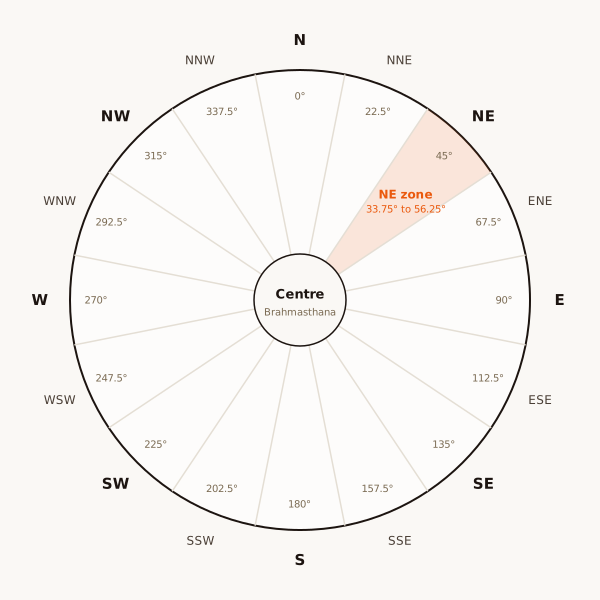
What we measure: colour advice only works if the directions are right. We take a compass reading from true north on site, correct it for magnetic declination and divide the home into 16 zones of about 22.5 degrees each. You can check the declination for your location on the NOAA magnetic declination calculator.
Builder plans often mark the North a few degrees away from where it really is. In a small flat that can move a bedroom from one zone to the next, which changes the colour family we would suggest. Our 16 Vastu zones explained guide shows the full wheel.
Room by room: living and dining
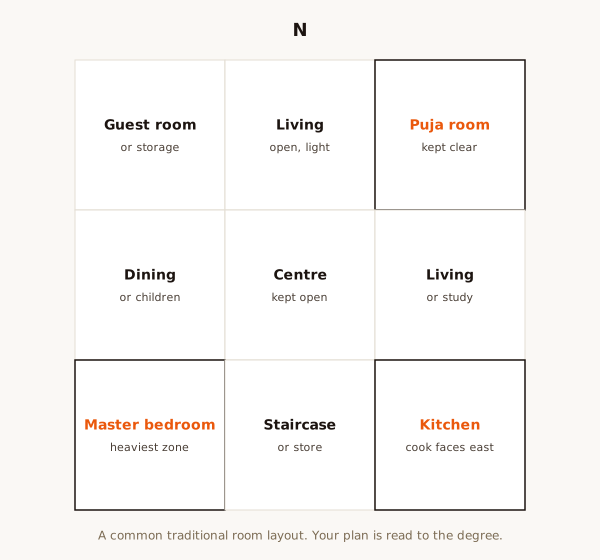
The living room is usually in the North, East or North-East in a well planned home, so light, open colours suit it: off-white, cream, pale green or soft blue. If your living room faces West or South, warmer neutrals such as sand or light beige keep it from feeling cold in the evening.
Dining areas suit warm, appetising but gentle shades: peach, light yellow, cream. Avoid very dark walls in a dining space; they make a small room feel smaller and need more artificial light at dinner time. Our Vastu for living room guide covers furniture placement in the same space.
Room by room: bedrooms
The master bedroom ideally sits in the South-West, which pairs naturally with earthy colours: beige, light brown, soft terracotta or warm cream. These read as settled and quiet, which is what most people want from a bedroom. Bright red over a whole wall is traditionally avoided in bedrooms.
Children’s rooms are usually in the West or North-West. Light blue, pale green, soft yellow and white work well, with brighter colours kept to bedding, toys and art that can change as children grow. Guest rooms in the North-West suit white, cream or very light grey.
For bed placement and sleeping direction, see our Vastu for bedroom guide.
Room by room: kitchen, pooja room and bathrooms
- Kitchen (ideally South-East): peach, light orange, warm cream or light yellow. Avoid black countertops across the whole kitchen if you can choose; a lighter top is easier to keep clean and brighter to cook in.
- Pooja room or unit (ideally North-East): white, cream, very pale yellow. Keep it the lightest space in the home.
- Bathrooms and toilets (often West or North-West): white, light grey, pale blue. Light tiles show dirt quickly, which helps keep them clean.
- Study corner (East or North): light green or off-white, low distraction.
The kitchen layout itself is covered in our Vastu for kitchen guide.
Colours to use with care
No colour is forbidden, but some are best kept to small areas: black, very dark navy, deep maroon and strong red. Large dark surfaces absorb light, make Bangalore flats with limited windows feel gloomy, and push up electricity use. Traditional guidance also avoids heavy dark colours in the North-East.
An accent wall, a sofa, a rug or a piece of art in a strong colour is fine almost anywhere. The question is proportion, not prohibition.
Wood and natural materials count as colour too. A teak door, a cane chair or a terracotta floor brings warmth to the South and West without any paint at all. In the North and East, where tradition asks for lightness, pale wood, white marble or light tiles do the same job. When we suggest Vastu colours for home interiors, we look at floors, furniture and fabrics together with the walls, because that is what you actually see when you walk into the room.
Paint practicality
Colour charts look different on a real wall. A few practical points we give every client:
- Try sample patches on two walls and look at them in morning light and in the evening under your own lamps.
- Use washable emulsion in kitchens, dining areas and children’s rooms.
- Keep ceilings white or near white to reflect light down into the room.
- Fix seepage and damp before painting; no colour hides a damp patch for long during the Bangalore monsoon.
- Matt and eggshell finishes feel calmer in bedrooms; satin is easier to wipe in busy areas.
- Choose exterior colours within your society or association rules.
No special products needed
You do not need a special Vastu paint, a colour therapy kit or anything sold as a remedy. Any reputable paint from a normal shop does the job. We sell no products, take no commission from paint companies or contractors, and do not recommend brands.
If someone tells you a particular product will fix your home, ask what it changes in the room. Usually the honest answer is nothing that a well chosen shade of ordinary paint would not do. Our zero-demolition corrections guide sets out the approach we follow.
Vastu colours for home in rented flats
Tenants often cannot repaint, and that is fine. Colour arrives just as well through textiles and objects:
- Curtains in the zone colour, light in the North and East, warmer in the South and West.
- Bedsheets and cushion covers in earthy tones in the South-West bedroom.
- A light rug in the North-East corner of the living room.
- Art and plant pots that carry the colour of the zone.
All of it moves with you to the next home, where the zones may be different.
What colour can and cannot do
Colour changes how a room feels and how light moves through it. Chosen according to Vastu, it brings the room into line with the traditional element of its zone. That is real and useful.
Colour cannot cure illness, guarantee income or fix a relationship, and no honest Vastu consultant should suggest otherwise. It also cannot fully balance a serious layout issue such as a toilet in the North-East; it supports placement changes, it does not replace them.
Common colour mistakes we see
- A dark feature wall in the North-East living area, the zone tradition keeps lightest.
- Bright red throughout a bedroom.
- Every room painted the same grey, ignoring both zones and light.
- Painting over damp, which returns within a season.
- Buying expensive remedial products instead of simply repainting.
Getting colour advice for your home
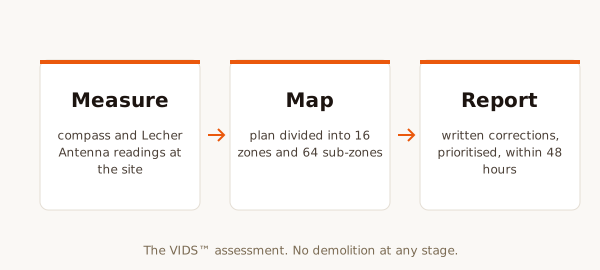
Colour is part of every correction plan we write, matched to the measured zone of each room. Our Vastu for home service explains the visit, our interior Vastu service goes further into finishes and decor, fees are on the consultation fees page, and you can book a Vastu consultation when you are ready. The written report arrives within 48 hours.