Vastu for home is where most people first meet Vastu Shastra, usually because something about the house does not feel right. A bedroom where nobody sleeps well. A kitchen that always seems cramped. A front door that opens straight onto a wall. We assess homes in Bangalore and online across India using the VIDS 16-zone method, and every correction we suggest works without breaking a wall.
This page explains what a home assessment covers, how the visit runs, what you receive and what it costs. If you already know the type of home you have, our pages on apartments, villas and independent houses go into more detail.
What Vastu for home actually looks at
A home assessment is not a list of rules read from a book. It is a reading of your specific house, measured on site. We look at:
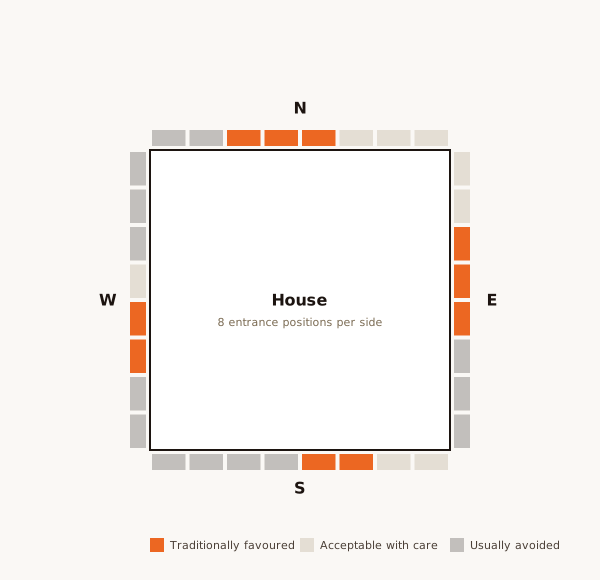
- The main entrance and which of the 32 entrance positions (padas) it falls in
- The zone of the kitchen, the stove and the sink
- Bedrooms, and who sleeps where
- Toilets and bathrooms, especially in the north-east or the centre
- The centre of the home (Brahmasthan) and whether it is open
- Water storage, both the sump and the overhead tank
- Where heavy furniture and storage sit
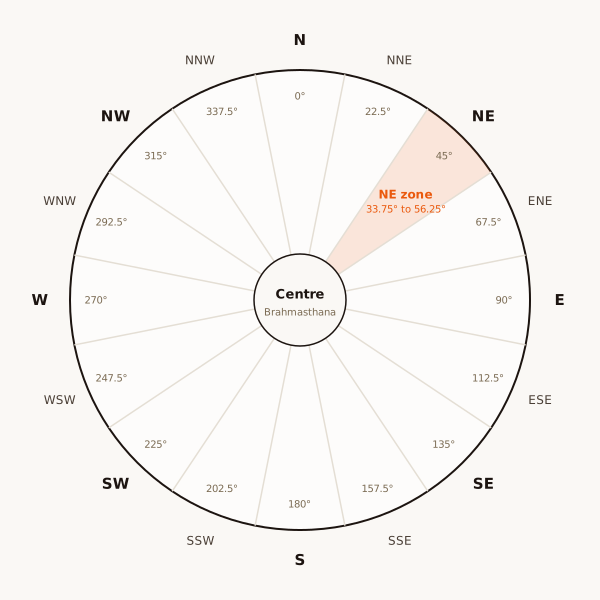
Each of these is mapped to one of 16 zones, each about 22.5 degrees wide, measured from true north.
Why we use 16 zones, not 8
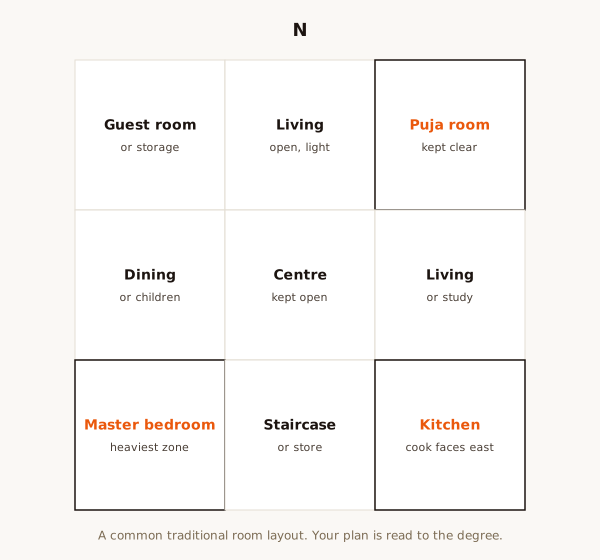
Most popular advice divides a house into eight directions. That is too coarse for a real floor plan. A north-facing entrance, for example, can sit in a very supportive pada or a weak one depending on a few feet along the same wall. Eight directions cannot tell those apart.
The 16-zone grid is described in classical texts and gives enough resolution to say something specific about each room. We explain the method in detail on our methodology page and in the 16 Vastu zones explained.
The entrance comes first
If we could only check one thing in a home, it would be the main door. The entrance decides how people and light enter the house, and in Vastu it carries more weight than any single room.
Every facing can have a good entrance. The question is where on the wall it sits. Our guides to east-facing, north-facing, south-facing and west-facing homes show the positions in detail.
Kitchen, bedrooms and toilets
After the entrance, three rooms account for most of the issues we find:
- Kitchen: the south-east is the traditional fire zone, with the north-west as the next best option. A kitchen in the north-east is common in apartments and needs care rather than demolition.
- Master bedroom: the south-west gives stability for the head of the family. Children do well in the west or east.
- Toilets: a toilet in the north-east or the centre is the issue we see most often. It is handled with colour, closure and keeping the zone clean and dry.
How a home visit works
The process is the same for every house:
- You send the floor plan and a few photos on WhatsApp
- We fix a date and give you the fee upfront
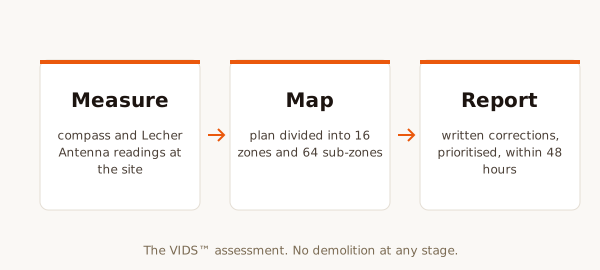
- On site we take compass readings at several points, away from steel and electrical lines, and check the plan against what was built
- We correct for magnetic declination using the NOAA declination calculator
- Within 48 hours you receive a written report with every issue ranked by priority
A visit usually takes two to four hours depending on the size of the home.
Corrections without demolition
We do not ask you to break walls, move kitchens or rebuild toilets. In an existing home, that kind of advice is expensive, disruptive and usually unnecessary. Our corrections use:
- Placement of furniture, beds and storage
- Colour on walls and floors
- Lighting, especially in dark corners and the centre
- How each room is used, and by whom
- Clearing clutter from sensitive zones
Read more in our guide to zero-demolition Vastu corrections.
What you receive
Every Vastu for home assessment ends with a written report. It includes the plan with true north marked, the 16-zone grid laid over it, a list of findings in order of priority, and the correction for each. We separate what we measured on site from what tradition recommends, so you know the basis of every point. You can see the format in our sample report.
Fees
Fees are fixed and shared before the visit:
- Bangalore apartment or row house: ₹15,000
- Bangalore villa or independent house: ₹25,000
- Online consultation from anywhere: ₹5,000
Outstation visits are quoted with travel. See all fees on the pricing page.
Signs a home may need a Vastu review
People usually contact us for one of a few reasons. They are about to buy and want an independent check. They have moved in and something feels off. Or a particular room is simply not being used the way it was meant to be.
Common things we hear:
- A bedroom where family members sleep poorly
- A study or work-from-home room where it is hard to focus
- A kitchen that feels dark, tight or always cluttered
- A front door that sticks, faces a wall or opens into a narrow passage
- A centre of the house that has become a storage area
None of these proves a Vastu problem on its own. They are reasons to look, and the reading on site tells us whether the layout is part of the picture.
The centre of the house
The Brahmasthan is the central part of the plan. Classical texts treat it as the space that should stay open, light and uncluttered. In modern homes it is often taken up by a dining table, a wall or a storage unit.
This is one of the easiest things to correct. Moving a heavy cabinet out of the centre, improving the light and keeping the floor clear can change how the whole home feels, and it costs nothing.
Water, sumps and tanks
Water storage is easy to overlook because it is outside or underground. Vastu prefers underground water such as a sump or borewell in the north-east, north or east, and overhead tanks in the south-west or west where their weight sits on the heavier side.
We check both on every independent house. In apartments, the tanks belong to the building, so we focus on what is inside your unit instead.
Colours and materials
Colour is one of the simplest tools in Vastu for home. Lighter, cooler tones suit the north and east. Warmer tones suit the south-east kitchen zone. Earthy, heavier shades suit the south-west bedroom.
We give colour suggestions room by room in the report. You do not need special paints or products. Use the brands and finishes you already like.
Homes outside Bangalore
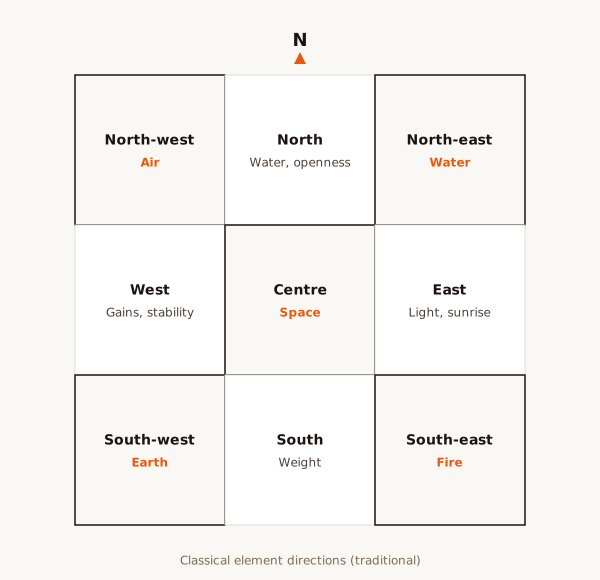
If your home is in another city or abroad, an online consultation works well. You share a clear floor plan, a compass reading taken with a phone app at a few points, and photos of each room. We prepare the same 16-zone report, and go through it with you on a video call. Many NRI families use this before buying a flat in India. An online assessment uses traditional Vastu only, the 16-zone map and the 3×3 grid drawn on your plan; geopathic stress readings need a site visit.
Why families choose Vardhini Vastu
We have worked on homes across Bangalore for more than ten years. We are not attached to any builder or product seller, so our only interest is giving you a clear and honest reading. Raghavendra Hebbur leads every assessment personally and studies the classical texts, including the Aparajitaprccha, that the method draws on. If something cannot be fixed without construction, we will tell you that plainly rather than selling a remedy.
Before you buy a home
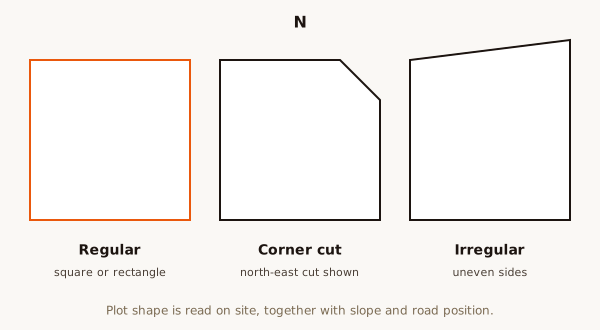
The cheapest time for Vastu for home is before you sign. Once you own a property, every change costs money. Before purchase, you can simply choose a different flat or house. Send us the plan of each option you are considering and we will rank them by how much correction each would need. For a plot or a house, our plot checklist and apartment checklist are good places to start.
A pre-purchase review from plans costs ₹5,000 and can be done online within a couple of working days, which fits inside most booking windows.
Nearby areas we cover.
Frequently asked questions.
Do I need to own the property to get a Vastu assessment?
No. Assessments are done for prospective buyers before purchase, tenants, and current owners alike.
Can this be done for an apartment, not just an independent house?
Yes. The same 16-zone VIDS™ analysis applies, adjusted to the apartment's own boundary and entrance.
Will I be asked to break walls or move the kitchen?
No. Every recommendation is zero-demolition, using placement, colour, and instrumentation-guided adjustment.
How long does a home Vastu assessment take?
The site visit typically takes two to four hours, with a written report delivered within 48 hours.
Have a property here you want assessed?
Share the property type and a floor plan on WhatsApp for an exact quote and the next available date.