Zero demolition vastu corrections work with the structure you already have rather than changing it. The most common misconception about Vastu is that a poorly placed room means construction: breaking a wall, moving a door or relocating a kitchen. In practice, most corrections used in a Vardhini Vastu consultation need none of that.
This guide explains the three categories of non-structural correction we use, how we decide which one fits a given problem, and the honest exceptions where structural change genuinely is the better answer.
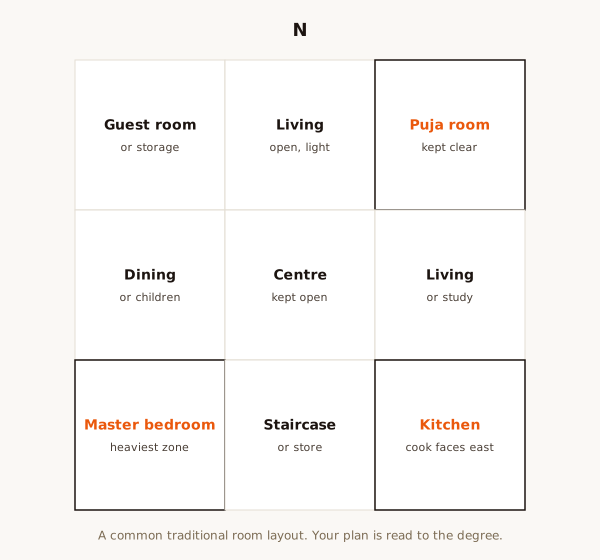
Why most Vastu problems do not need construction
A Vastu concern is usually about what happens in a zone, not about the walls that enclose it. A kitchen in the north-east is a concern because fire and heavy activity sit in the zone traditionally kept light and calm. The walls are not the issue. What happens inside them is, and that can often be changed without touching a brick.
Traditional guidance: classical Vastu Shastra includes remedial measures alongside its structural guidance. It was never solely a set of construction rules. Working within an existing structure is a legitimate application of the same traditional framework, not a compromise on it.
There is also a practical reason. In a finished home in Bangalore, demolition means dust, noise, approvals, cost and weeks of disruption. A correction that asks for all of that will often never be done. A correction that asks you to move a bed, change a colour and clear a corner usually gets done the same weekend.
Zero demolition vastu corrections: the three categories
Spatial and architectural corrections generally fall into three groups.
- Placement: where furniture, equipment or objects sit within a fixed room, and which way people face.
- Colour: which walls or surfaces receive which colour treatment, through paint, fabric, tiles or art.
- Instrumentation-guided adjustment: using a Lecher Antenna reading to identify and address geopathic stress, separate from the directional analysis.
Lighting, decluttering and changes of room use sit alongside these as supporting tools. Most reports use a mix, chosen zone by zone.
Placement corrections
Where a room’s function cannot be changed, what is inside it can. A bed, desk, stove or safe repositioned within a fixed room, sometimes by no more than a few feet or a change in facing direction, is the most frequently used correction across every property type we assess.
- Bed: head towards the south or east, away from directly under a beam, not in line with the door.
- Desk: the person seated facing north or east, with a solid wall behind.
- Stove: towards the south-east part of the kitchen, the cook facing east where possible.
- Safe or cash drawer: in the south-west or south, opening towards the north.
- Heavy storage: along the south and west walls, keeping the north-east light.
None of these needs a contractor. Most can be tried in an afternoon.
Changing how a room is used
Sometimes the simplest correction is to swap the purpose of two rooms. A bedroom in the north-east may serve better as a study or prayer space, with the family sleeping in a room closer to the south-west. A storeroom in the south-west may make a better master bedroom than the one the builder labelled as such. Room use is entirely in your hands, and it often achieves more than any amount of colour or placement.
Colour corrections
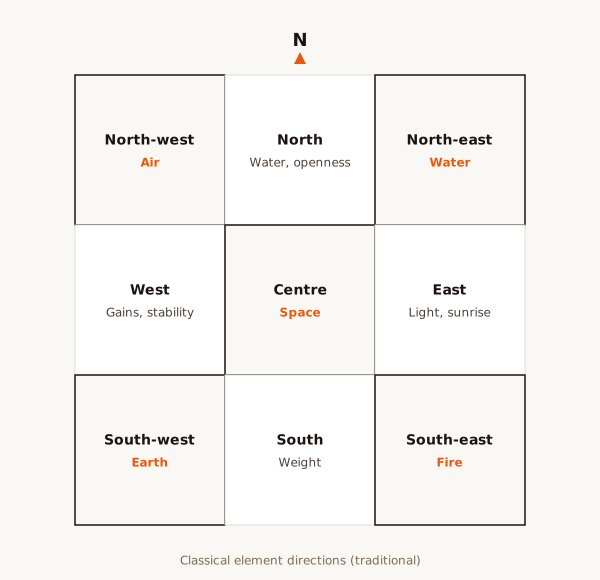
Each of the 16 zones carries a traditional elemental association, and colour is one of the more direct ways to work with that association without touching the structure. A south-east zone associated with fire responds differently to colour than a north-east zone associated with water.
As a general starting point, light and cool tones suit the north and north-east, warm accents suit the south-east, earthy and heavier tones suit the south-west, and whites or light greys suit the north-west and west. Colour does not have to mean repainting: curtains, rugs, cushions, tiles and artwork all carry it, which matters in rented homes and in rooms you have just finished decorating.
Lighting and decluttering
Two of the most effective tools cost almost nothing. A dark zone can be lifted with better lighting: a lamp in a dim north-east corner, brighter bulbs at the entrance, warm light in a south-east kitchen. Clutter, especially in the north-east and at the centre of the home, works against the open, light quality those zones traditionally need. Clearing them is often the first item in our reports.
Instrumentation-guided adjustment
A Lecher Antenna reading, where a site visit allows it, identifies geopathic stress independently of the directional zone analysis. It tells us where along the floor a stress line runs, which matters most where people sleep or sit for long hours.
Corrections here are also non-structural. The simplest is to move the bed or desk off the stress line. Where that is not possible, we suggest specific placement of neutralising objects at the identified stress point. We sell no products, and nothing we recommend needs to be bought from us. Read more on our Vastu methodology page.
How we decide which correction to use
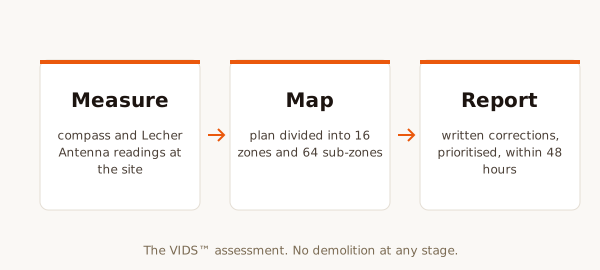
Every assessment follows the same steps, so that corrections are based on readings rather than guesswork.
- Take compass readings on site, corrected for local magnetic declination using the NOAA magnetic declination calculator.
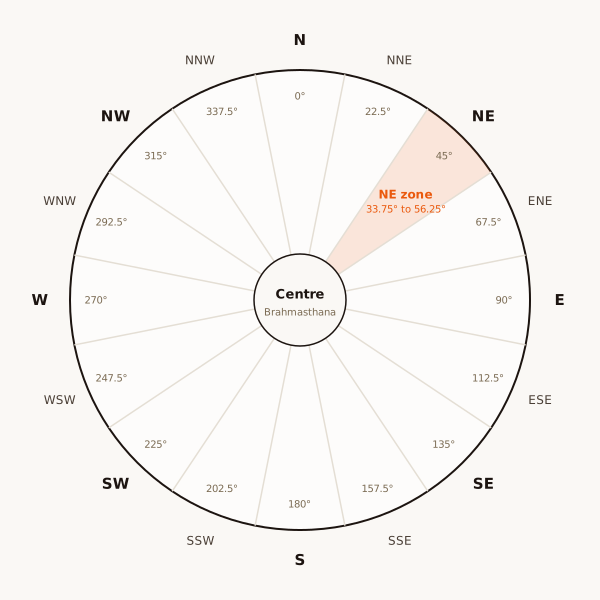
- Map the floor plan onto the 16 zones of our VIDS method, each about 22.5 degrees, measured from true north.
- Note what sits in each zone: rooms, doors, fire, water, weight, open space.
- Take Lecher Antenna readings where a visit is possible.
- List the concerns, then rank corrections by benefit against effort.
Common issues and how we approach them
These are general patterns, not case results. Each property needs its own reading.
- Kitchen in the north-east: stove moved within the kitchen towards its south-east part, colour adjusted, the north-east of the kitchen kept clean and light.
- Toilet in the north-east: door kept closed, room kept clean and dry, colour treatment and simple objects in the adjoining space.
- Main door in a difficult zone: entrance kept bright and clean, threshold and colour treated, the inside approach rearranged.
- Cut north-east corner: the remaining north-east of the plan kept open, light and uncluttered.
- Master bedroom away from the south-west: room use reconsidered, bed direction corrected.
When structural change is genuinely recommended
Zero demolition is the default approach, not an absolute rule. In new construction, where structural decisions have not yet been made, direct alignment with the zone framework is recommended where practical, and our new construction Vastu service works at the drawing stage. For existing properties, structural change is only suggested when a non-structural correction genuinely cannot address the issue, which is a minority of cases in practice. If you are already planning a renovation, see Vastu for home renovation, because that is the moment to fix what placement cannot.
What zero demolition does not mean
It does not mean that any object fixes any problem, and it does not mean buying anything from us. We do not sell yantras, pyramids, gemstones or remedy kits, and we take no commission from builders. These are traditional and practitioner-based corrective approaches, not claims of guaranteed outcomes.
What you receive
A written report within 48 hours of the consultation explains the reasoning behind each recommendation, so you understand what is being addressed and why. Each correction is marked as classical guidance or professional interpretation. You can see the format in our sample Vastu report.
Offices, shops and factories
The same approach applies to commercial and industrial property, where demolition is even less practical because work cannot stop. In an office we move cabins, desks and the reception counter. In a shop we adjust the cash counter, display weight and lighting. In a factory we relocate stock, scrap and dispatch staging around running machines, phased to fit maintenance windows.
For more, see our guides to office Vastu and industrial Vastu.
Living with the changes
Corrections work best when they become part of daily life. A bed moved once stays moved, but a cleared north-east corner fills up again within months if nobody watches it. We suggest a short check every few months: is the entrance still clear, is the north-east still light, has anything heavy crept into the wrong zone? These small habits keep the Vastu plan working long after the consultation.
Next step
For homes already built, our Vastu for existing property service applies this approach room by room, and interior Vastu covers furniture and colour in more detail. Fees are listed on our consultation fees page, and you can book a consultation whenever you are ready.