Vastu Methodology
VIDS™: sixteen zones, one written report.
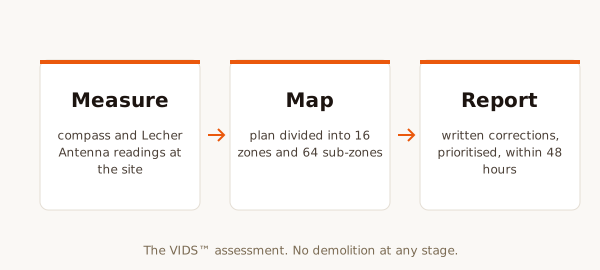
The VIDS™ vastu methodology replaces a verbal opinion with instrument readings, zone-by-zone, before a single change is recommended.
Sixteen zones, sixty-four sub-zones.
Most Vastu assessments work from four or eight cardinal directions. VIDS™ divides a property into 16 primary zones, each further split into 4 sub-zones (padas), for 64 points of analysis in total. An entrance is not simply “east-facing”: it falls in one specific pada with its own elemental signature, and the correction is prescribed for that exact position, not the general direction.
The framework draws on classical Sanskrit sources, including the Aparajitapṛcchā, a 12th-century treatise on architecture and spatial design that Raghavendra Hebbur is currently translating. Every property is different, so we do not promise results or timelines. What we do promise is that each correction is explained, low cost and easy to reverse.
Reading the ground with a Lecher Antenna.
Alongside the directional analysis, Raghavendra Hebbur is trained to detect geopathic stress using a Lecher Antenna, a tuned dipole instrument that responds to specific electromagnetic frequencies. On site, the property is walked systematically to map underground water veins, geological fault lines, and grid-line intersections that sit beneath the structure, independent of its architecture.
The assessment takes two to four hours for a typical residential property and produces a zone-by-zone map that is layered onto the VIDS™ findings, so every recommendation accounts for both the built structure and what lies beneath it.
Zero demolition, always.
Every correction, from a misaligned entrance to a defective corner, is addressed with placement, colour, elemental materials, or instrumentation-guided adjustment. No wall is broken and no room is restructured. The result is a written report with the readings behind every recommendation, delivered within 48 hours of the site visit.
Why a written vastu methodology matters
Two consultants can walk into the same flat and give two different opinions. That is the problem a fixed method solves. When the steps, the instruments and the way findings are ranked stay the same on every visit, the advice can be checked, questioned and repeated.
A written vastu methodology also protects the client. You can see which reading led to which recommendation, and you can ask why a point was marked first priority and another only optional. Nothing rests on memory or on a general rule recited at the door.
Step 1: plans, questions and context
Every consultation starts before anyone arrives on site. We ask for a floor plan, the address and a short note on what is prompting the call: a recent move, a planned renovation, trouble sleeping in one room, or a business that has outgrown its premises.
Context matters because the same layout can suit one household and not another. A home office used eight hours a day deserves more attention than a guest room used twice a year. The preparation guide lists what to keep ready.
Step 2: finding true north on site
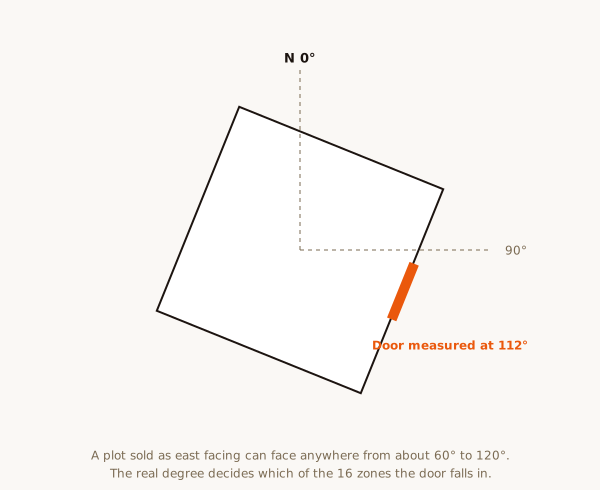
A compass points to magnetic north, which is a little different from true north. The difference, called magnetic declination, changes with location and slowly over the years. We look up the local figure using the NOAA magnetic declination calculator and apply it to every reading.
Readings are taken at several points inside the property, away from steel beams, lift shafts and large appliances, and then averaged. Outliers are discarded. Most Bangalore plots are not aligned exactly to the cardinal directions, so the exact tilt in degrees decides which zone each room falls into.
Step 3: drawing the 16-zone grid
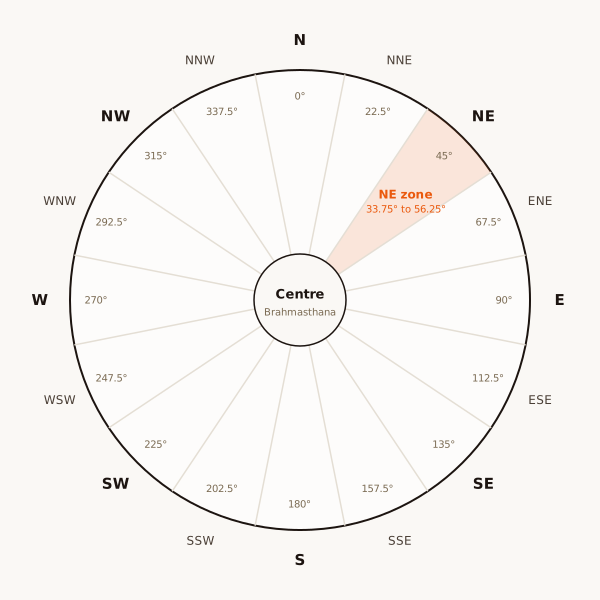
Once true north is fixed, the plan is divided from its centre into 16 zones of about 22.5 degrees each. For a rectangle the centre is simple to find. For an L-shaped flat, a plot with a cut corner or a building with an extension, the centre is worked out from the actual footprint, and any missing or extended zones are noted.
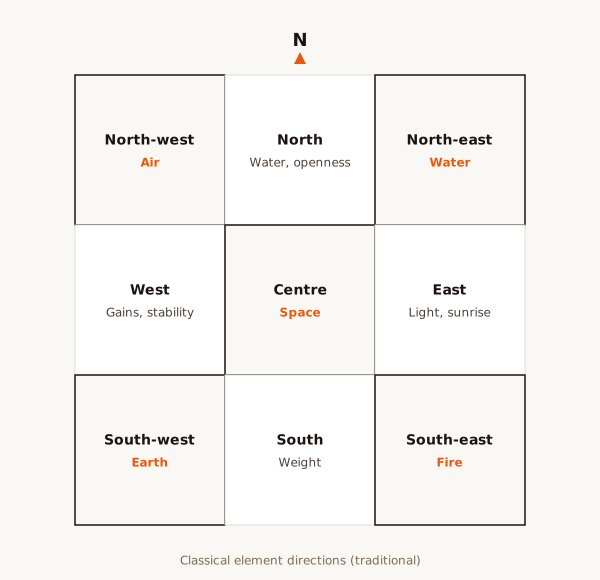
Each zone has a traditional element and function associated with it. The 16 zones explained guide covers these in detail, so the report can stay focused on your specific property.
Step 4: reading each zone for its use
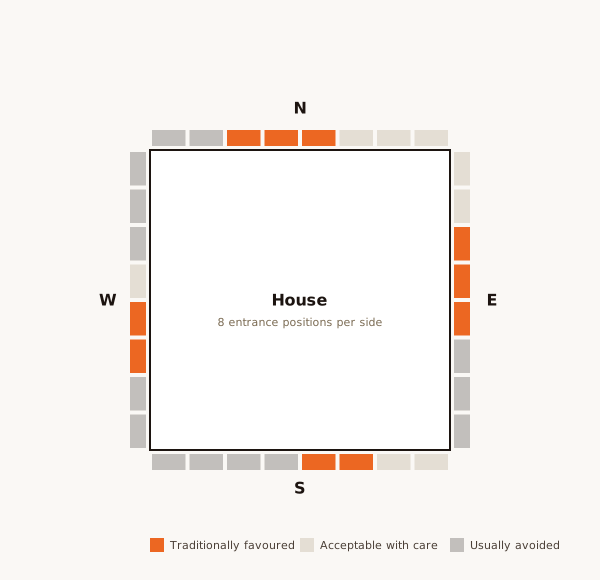
With the grid in place, every zone is checked against what actually happens there. The main entrance is located to its exact pada, not just its side of the building. The kitchen, bedrooms, toilets, staircase, storage, workstations and, in factories, machinery and raw material stores are each placed on the grid.
A finding is recorded only when the use clearly conflicts with the zone or when a zone that should be open and light is blocked or dark. Minor points are noted but kept in proportion.
Step 5: layering geopathic stress readings
Where a site visit is possible, the Lecher Antenna scan described above is mapped onto the same plan. This shows whether a bed, a desk or a seating area sits over a recorded band of disturbance.
Online consultations do not include this scan, and the report says so. The directional analysis is still complete; only the ground reading is missing.
Step 6: ranking findings by priority
Not every observation deserves equal weight. Findings are sorted into three groups:
- First priority: issues in rooms used daily, such as where people sleep, cook or work, and clear zone conflicts at the entrance.
- Second priority: changes that help but can wait, such as moving storage or reworking a study.
- Optional: small refinements in colour, lighting and decor.
This ranking lets a family or a business act on the few things that matter first, without feeling they must change everything at once.
Step 7: corrections without demolition
Corrections use placement, colour, element-based materials, lighting, room use and decluttering. Turning a bed, shifting a desk, closing a toilet door in the north-east, or bringing light into a dark corner are typical examples.
If a point genuinely cannot be fixed without construction, the report says so plainly and explains the trade-offs. The zero-demolition corrections guide shows how most issues are handled.
The written report and follow-up
The report arrives within 48 hours of the visit. It includes the zone map, every reading taken, the observations and the corrections in priority order. The sample Vastu report shows the format.
Questions after the report are answered on WhatsApp. If you are nearby and want the changes checked once they are in place, that can be arranged.
How the method adapts to each property
The steps stay the same; the scope changes. A flat is read within fixed walls and shared entrances. A villa adds the plot, compound wall and open areas. An office focuses on seating, cabins and reception. A factory adds machinery, power, storage and dispatch. A plot is assessed for shape, slope, road position and tilt before you buy.
Measured, traditional and interpretive
Each statement in a report is one of three kinds: a measurement taken on site, a principle stated in classical texts, or our reasoned interpretation of how that principle applies to a modern building. Keeping these apart is part of the method, and it is explained further in our editorial standards.
Online and on-site use of the vastu methodology
The same steps apply online. You take direction readings with a phone compass while we guide you over a call, and we check them against the floor plan. Photographs of each room stand in for the walk-through.
Two things differ. The Lecher Antenna scan is not possible remotely, and some fine detail depends on the quality of the photographs. The online versus on-site guide helps you decide which suits your property.
What the method does not do
VIDS™ does not predict events, does not depend on purchased remedies and does not treat every popular Vastu rule as fixed law. It is a structured way of looking at a building and the people who use it.
A Vastu assessment is also not a substitute for structural, legal, medical or financial advice. Where a concern belongs to an engineer or a doctor, we say so.
Who developed VIDS™
The method was developed by Raghavendra Hebbur, Certified Geo Master and founder of Vardhini Vastu, over more than ten years of practice and 3,200+ consultations. It draws on his study of classical texts, including his ongoing translation of the Aparajitaprccha. You can read more on the about page.
Fees for a VIDS™ assessment
Fees are fixed by property type. An online consultation anywhere is ₹5,000, a Bangalore apartment or row house is ₹15,000, and a Bangalore villa or independent house is ₹25,000. Commercial and industrial work starts from ₹51,000. The pricing page lists every option, including outstation visits and the ₹5,000 pre-purchase plot report.
What an online Vastu assessment covers
An online assessment uses traditional Vastu analysis only. We draw the 16-zone map from the centre of your plan, using compass readings you take with us on a video call, and lay the 3×3 grid over the same plan: the nine-square division with the Brahmasthan at the centre. Every finding comes from these two methods, such as which zone holds each door, room, kitchen, toilet and water point, and how the nine squares and the centre are used.
Geopathic stress readings with the Lecher Antenna and the Universal Aura Scanner are not part of an online assessment, because they need us physically on site. If your online report suggests a closer look is worthwhile, an on-site visit can follow.
See the method applied.
Read what clients say on Google, or book a diagnosis for your own property.
Before you book.
How is VIDS™ different from standard Vastu?
It analyses 16 primary zones split into 64 sub-zones (padas) rather than the usual four or eight directions, so corrections target one exact position instead of a general direction.
What does a Lecher Antenna measure?
Geopathic stress: underground water veins, geological fault lines, and grid-line intersections beneath a property, mapped separately from the directional VIDS™ analysis.
How long until I see results?
There is no fixed timeline, and we do not promise one. Some clients notice the home feels calmer soon after decluttering and better lighting; other changes take longer. Every correction is explained in the report so you can judge it for yourself.