Vastu for bedroom planning is about rest: where the room sits in the home, which way you sleep, and how the bed, storage and doors relate to each other. After the entrance and the kitchen, the master bedroom is the room we are asked about most often, and it carries some of the most consistent guidance in classical Vastu.
This guide covers the traditional recommendations for the master bedroom and other bedrooms, the sleeping direction, bed placement, storage, mirrors and colour, and what to do when a room simply does not allow the ideal layout. As always, we separate classical guidance from what we measure on site, and every correction is zero-demolition.
Why Vastu for bedroom planning matters
We spend roughly a third of our lives in the bedroom. Classical Vastu treats it as the place of rest, privacy and renewal, and places it in zones associated with stability rather than movement.
In practical terms the bedroom is also where small things add up: a bed under a beam, a wardrobe blocking the window, a bright screen facing the pillow. A good Vastu bedroom reading looks at both the zone of the room and the details inside it.
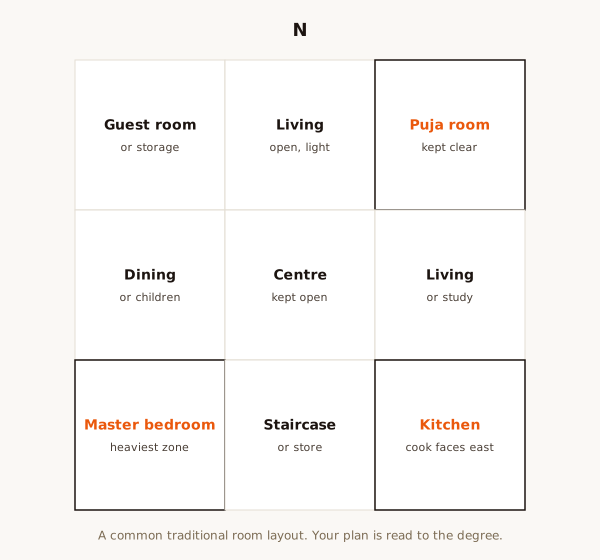
The master bedroom in the South-West
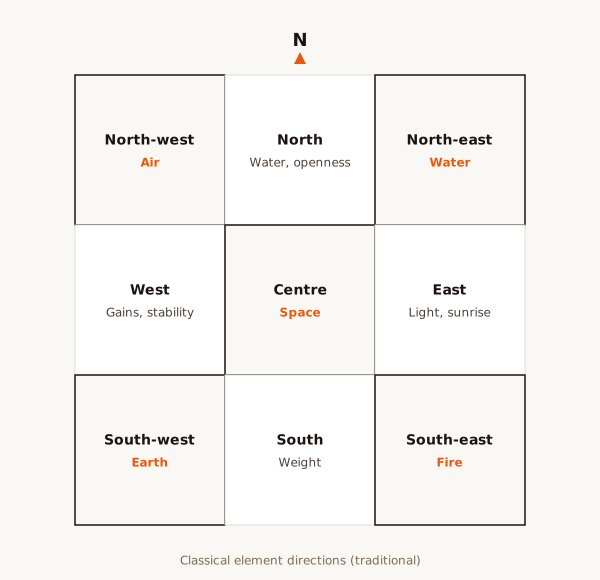
Traditional guidance: the South-West is the most favoured zone for the master bedroom, the room of the head of the household. It is associated with the earth element, weight and stability, and Vastu tradition holds that whoever sleeps there gains steadiness in decisions and relationships.
What we measure: in Bangalore the South-West side of a home is usually the warmest in the afternoon, and thick walls and heavy furniture there keep the rest of the house cooler. Every property is different, so a full assessment considers the exact zone alongside the rest of the layout rather than treating South-West as an automatic answer.
Other bedrooms: children, guests and elders
Beyond the master bedroom, traditional Vastu offers these broad preferences:
- West: well suited to children and young adults, and for study-cum-bedrooms
- North-West: guest rooms and rooms for those who stay for a shorter time
- South: a good secondary bedroom, especially for elders
- East: suitable for children, though the North-East corner is usually kept for lighter use
A bedroom in the South-East, the fire zone, is traditionally less favoured for couples, and a bedroom in the North-East is usually advised against for the master bedroom. Neither is a reason to panic; both are situations we see regularly and correct with placement and colour.
Which direction to sleep in
Head to the South is the most commonly cited recommendation, followed by head to the East. Head to the North is generally advised against in classical Vastu guidance. Head to the West is treated as acceptable in many traditions, particularly for guest rooms.
You will often read a magnetic explanation for this rule. We present it as traditional guidance, because the popular magnetic theory has not been established by controlled research. What we can say is that the South and East headboard positions usually leave the bed against a solid wall, which most people find more restful.
Bed placement within the room
Within the bedroom itself, the bed is ideally placed towards the South-West part of the room, with the headboard against a solid wall. Other points that come up in nearly every Vastu for bedroom reading:
- Avoid sleeping directly under an exposed beam.
- Leave walking space on both sides of the bed where possible.
- Avoid placing the bed directly in line with the door.
- Keep the space under the bed clear rather than packed with storage.
- Use a single mattress across a double bed rather than two separate ones, a common traditional preference for couples.
None of these needs construction. Most are resolved by turning or shifting the bed by a few feet.
Wardrobes and storage
In Vastu, heavy wardrobes and lofts belong on the South or West walls of the room, where weight is traditionally welcome. The North-East corner of the bedroom is kept as light and open as possible. In many flats the built-in wardrobe sits on the wrong wall, and a free-standing chest of drawers or a cleared loft can help rebalance the room.
Mirrors, screens and electronics
Traditional Vastu advises against a mirror that faces the bed directly, and many people simply find it unsettling to see movement in a mirror at night. A dressing mirror placed on the North or East wall, or one that can be covered, is a common solution.
Televisions, laptops and phones near the bed are a modern question the old texts never faced. Practically, screens and bright standby lights disturb sleep, so we suggest keeping them out of the sleeping area or switched off at night.
Colours and lighting
For the master bedroom, earthy and warm neutral tones suit the South-West: soft browns, beige, muted peach. Lighter shades of blue or green suit bedrooms in the West or North-West. Very bright reds and harsh whites are usually avoided in rooms meant for rest.
Lighting should be layered and warm, with a dim option for the evening. A dark corner in the North-East of the room is worth lighting or clearing, since tradition keeps that part of every room light.
Attached bathrooms
Attached toilets are standard in modern homes, and in Vastu terms they are not a problem in themselves. What matters is where they sit. A toilet in the North-East of the bedroom suite is the one we pay most attention to. Keeping the bathroom door closed, the space dry and well ventilated, and the bed not directly in line with the bathroom door are the usual first steps.
Children’s bedrooms and study corners
For children, the West and East are both traditional choices, with the study table placed so the child faces North or East while working. Shelves and heavier storage go on the South or West walls. Keeping a children’s room uncluttered is the simplest and most useful Vastu advice we give parents.
Bedrooms in apartments
In apartments, bedroom positions are fixed by the floor plate, so the reading focuses on what can change: which room becomes the master bedroom, where the bed goes and how storage is arranged. We read the zones of the unit itself, not the tower. Our guide to Vastu for home explains how the whole flat is mapped.
When the ideal layout is not possible
Sometimes the bed can only face one way because of windows, doors or the room’s size, and that way is North. This is a common, practical constraint. A written assessment looks first, from a Vastu point of view, at whether a different room could become the master bedroom, or whether a different layout works. If neither is possible, it recommends specific corrections suited to that situation rather than a general rule.
Geopathic stress and how we take the reading
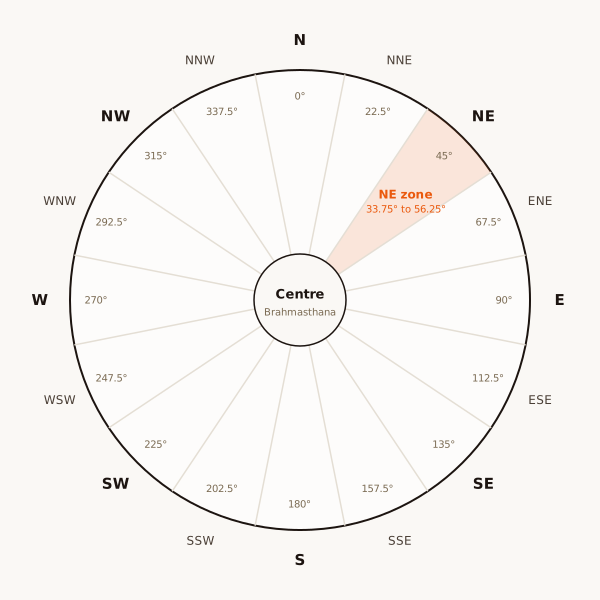
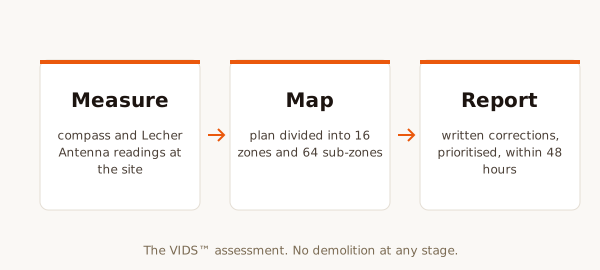
On a site visit we take compass readings away from metal, correct them for magnetic declination using the NOAA magnetic declination calculator, and place each bedroom on the 16 zone grid. Where a visit allows it, we also use a Lecher Antenna to check the sleeping position for geopathic stress, such as underground water lines, and suggest moving the bed if a disturbed spot is found.
Online consultations cover the directional analysis using your floor plan and compass photographs. You can read more about the grid in our guide to the VIDS 16 zone framework. An online assessment uses traditional Vastu only, the 16-zone map and the 3×3 grid drawn on your plan; geopathic stress readings need a site visit.
Common bedroom issues we see
As general observations from Bangalore homes, not findings for any particular one: the master bedroom placed in the North-East because it has the best view, beds positioned with the head to the North to fit a wardrobe, home offices squeezed into the bedroom with the desk facing South, and heavy storage stacked in the North-East corner of the room. All of these are workable with placement changes.
Corrections without demolition
Bedroom Vastu corrections are usually the simplest in the house. Turning or moving the bed, relocating a wardrobe, changing the colour of one wall, removing a mirror, improving the lighting, or swapping which room is used as the master bedroom covers the great majority of cases. We sell no products, and our guide to zero-demolition corrections explains the approach.
Getting your bedroom assessed
Bedrooms are read as part of every home Vastu consultation. If you would like yours reviewed, our Vastu for home and Vastu for apartment pages explain the service, and the sample report shows how bedroom recommendations are written. When it suits you, you can book a Vastu consultation.