Vastu for kitchen planning is one of the most consistently agreed areas of classical Vastu. Because cooking is tied to the fire element, the kitchen has a clear traditional home in the South-East, and most schools agree on the main points: where the kitchen sits, which way the cook faces, and how fire and water are kept apart.
Real homes rarely follow the ideal exactly, particularly apartments where the builder fixed the plumbing long before you arrived. This guide sets out the traditional Vastu guidance, what we measure in Bangalore kitchens, and the proportionate, zero-demolition corrections we use when a kitchen sits somewhere else.
Why the kitchen matters in Vastu
The kitchen is where food, and so health, is prepared for the whole household. Classical Vastu treats it as the seat of Agni, the fire element, and gives its placement more attention than almost any room except the entrance and the master bedroom.
It is also the room where elements meet most directly: fire at the stove, water at the sink, air through the windows and the chimney. A good Vastu reading of a kitchen looks at how these sit together, not just at the zone of the room.
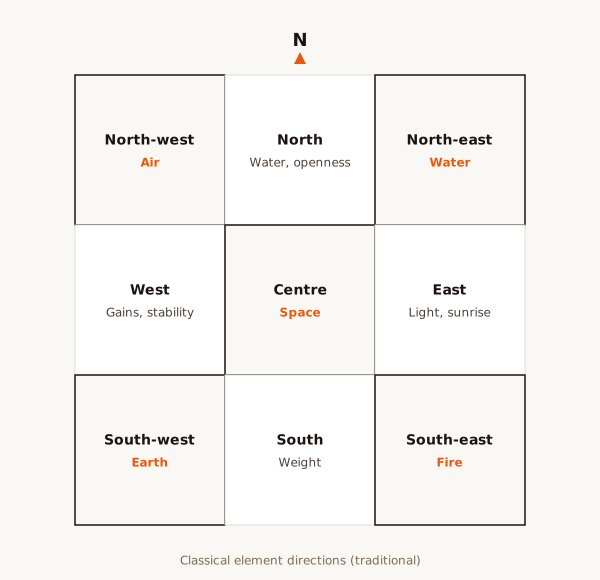
The South-East: the traditional first choice
Traditional guidance: the South-East is the zone of fire, so it is the preferred position for the kitchen. Within the kitchen itself, the stove is ideally placed in the South-East corner of the room.
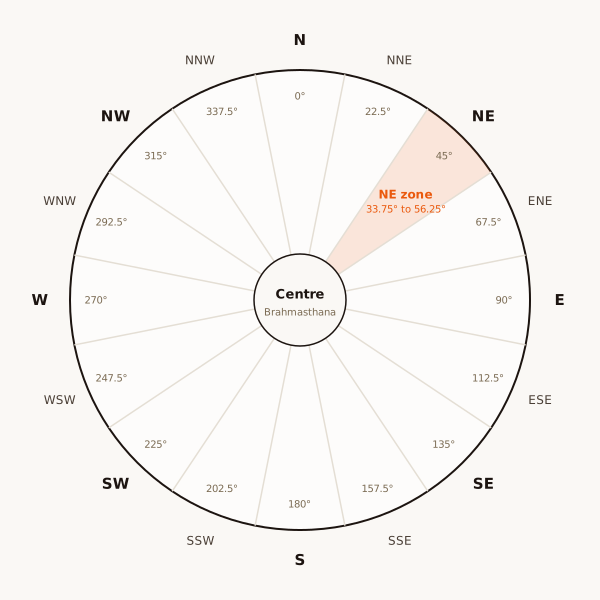
What we measure: on a 16 zone grid the kitchen often spans more than one zone, for example South-East and South-South-East, or East-South-East and South-East. We note exactly where the stove, sink and refrigerator fall, because the placement of the fire point matters more than the outline of the room.
The North-West and the zones to avoid
The North-West is the usual second choice for a kitchen in traditional Vastu, as the zone of air supports fire. Some positions are generally advised against:
- North-East: the zone of water and clarity, traditionally kept light and free of fire
- South-West: the zone of stability, preferred for the master bedroom
- The centre, or Brahmasthana: kept open and uncluttered
- Directly beside or opposite a toilet
Advised against is not the same as unusable. Kitchens in these zones are common, and the right response depends on the exact reading.
Which direction to face while cooking
Traditional guidance recommends facing East while cooking, regardless of which zone the kitchen itself is in. When East is not possible, North is the usual alternative. Facing South while cooking is generally avoided.
In practice this often means turning the hob or swapping the positions of the hob and the chopping area. An East facing platform also tends to catch morning light, which makes the kitchen pleasant to work in.
Stove, sink and the fire and water balance
Traditional guidance generally advises keeping the stove and the sink separated rather than directly adjacent, based on the fire association of the stove and the water association of the sink. A gap of counter space, or placing them on different platforms of an L or U shaped kitchen, is usually enough.
The sink and water purifier are best placed towards the North-East part of the kitchen, and the stove towards the South-East. When the two must share a wall, a clear working surface between them keeps them apart.
Refrigerator, storage and appliances
In Vastu practice the refrigerator is typically placed in the South-West, West or North-West of the kitchen, and kept a little away from the corner. Heavy storage, grain and utensils suit the South and West walls. Microwave ovens and other heating appliances follow the stove and are placed in the South-East where possible.
Lighter items and open shelves suit the North and East walls. Keeping the North-East corner of the kitchen clear of heavy units is one of the simplest Vastu for kitchen changes we recommend.
Entrance, windows and ventilation
A kitchen door in the North, East or West is traditionally preferred. Windows on the East allow morning light; a window or exhaust fan near the stove keeps smoke and heat moving out. Good ventilation is both classical advice and plain common sense.
Chimneys and exhaust ducts are best routed to the outside wall rather than towards the centre of the home.
Colours and materials
In Vastu, warm colours suit the fire element: soft orange, peach, warm yellow and terracotta. Shades that are very dark or very cold are usually avoided on the main walls. For platforms, natural stone is a traditional choice, and lighter tones keep the space bright.
Colour is one of the most useful tools we have, because it can rebalance a kitchen that sits in a less favoured zone without any construction.
Dining space and the puja shelf
The dining area is traditionally placed in the West or adjacent to the kitchen, so that the family sits facing East or North while eating. In many compact flats the dining table sits at the edge of an open kitchen, which works well.
Traditional Vastu prefers a separate puja area rather than a shelf inside the kitchen. Where space forces it, a small, clean shelf on the North-East wall of the kitchen, away from the stove, is the usual compromise.
Kitchens in apartments and open plans
In apartments the kitchen position is set by the building, and the plumbing stack rarely moves. Open kitchens add a further question, because the fire zone now merges with the living room. We read the zones of the unit itself and focus on what can change: the stove position, the direction of cooking, storage and colour.
Our apartment buying checklist shows how to check the kitchen before you buy, and Vastu for apartment explains the full service.
When the kitchen is in the North-East
A North-East kitchen is one of the most common situations in existing homes and apartments. It does not automatically mean relocation. A written assessment recommends proportionate, zero-demolition corrections: moving the stove towards the South-East part of the room, facing East to cook, keeping the North-East corner of the kitchen light and clear, adjusting colours and improving light and ventilation.
Relocating a kitchen is a construction decision. We only raise it when a renovation is already planned, and say so plainly.
How we assess a kitchen
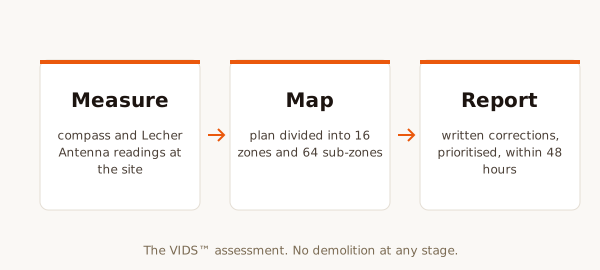
On a site visit we take compass readings away from steel counters and appliances, which can distort a needle, then correct them for magnetic declination using the NOAA magnetic declination calculator. The kitchen, stove, sink and refrigerator are each placed on the 16 zone grid. You can read about the grid in our guide to the VIDS 16 zone framework.
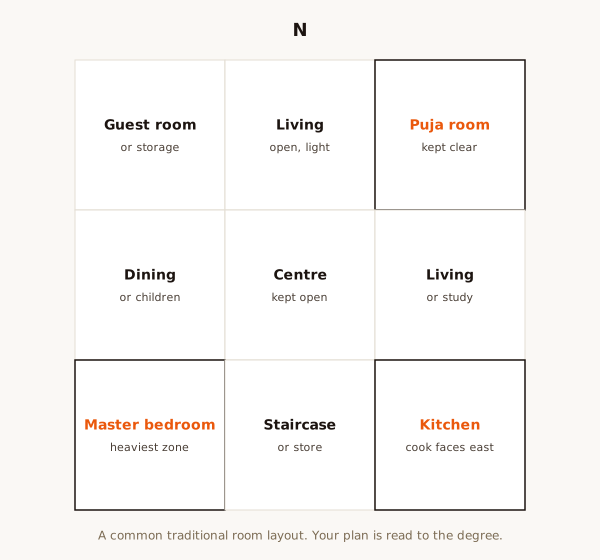
Online consultations use your floor plan, photographs of the kitchen and a compass reading. The directional analysis is the same. An online assessment uses traditional Vastu only, the 16-zone map and the 3×3 grid drawn on your plan; geopathic stress readings need a site visit.
Common kitchen issues we see in Bangalore
As general patterns rather than findings for any particular home, we often see kitchens in the North or North-East of apartments, the hob and sink set side by side on a single straight platform, refrigerators wedged into the North-East corner, cooking platforms that make the cook face South, and toilets that share a wall with the stove. Each has a practical response.
Corrections without demolition
Kitchen Vastu corrections focus on the stove position and cooking direction, separation of the stove and sink, appliance and storage placement, colour, lighting and ventilation. We sell no products and recommend nothing that needs to be bought from us. Our guide to zero-demolition corrections explains the wider approach.
Planning a Vastu for kitchen layout in a new home
If you are building or renovating, the kitchen is the easiest room to plan well at drawing stage. We mark the South-East and North-West zones on the plan before the architect fixes the plumbing, so the stove, sink and service area can be placed together with the minimum of compromise.
A few points we check on every new kitchen plan:
- The stove platform falls in the South-East part of the room, with the cook facing East.
- The sink and water purifier sit towards the North-East part, on a separate platform from the hob.
- The kitchen does not share a wall with a toilet, and the utility area sits to the West or North-West.
- There is a window or exhaust on an outside wall close to the stove.
Our pages on Vastu for new construction and Vastu for home renovation explain how we work with architects and contractors at each stage.
Getting your kitchen assessed
The kitchen is read in every home Vastu consultation, alongside the main door and the bedroom. Our Vastu for home page explains the service, and the sample report shows how kitchen recommendations are set out. When you are ready, you can book a Vastu consultation.