Sleeping direction vastu guidance answers a simple question that many families ask us: which way should the head point when you lie down in bed? It is one of the oldest and most widely followed rules in Indian homes, and it is also one of the easiest to apply, because it usually needs nothing more than turning or moving a bed.
This guide separates what tradition says from what we actually measure in Bangalore homes. It covers adults, couples, children, guests and elderly parents, explains how the bedroom zone and the bed position work together, and sets out what a change of sleeping direction can and cannot do. Nothing here needs demolition, and nothing here asks you to buy anything.
What sleeping direction means in Vastu
In Vastu, the sleeping direction is the compass direction your head points towards while you lie in bed. If the headboard is against the South wall, your head points South and your feet point North. People often confuse this with the direction the bed faces, so we always describe it by the head.
The rule sits alongside two other questions that matter just as much: which zone of the home the bedroom occupies, and where in the room the bed stands. A correct head direction in a poorly placed, cluttered bed corner does very little on its own. We look at all three together.
Traditional guidance on head direction
Traditional guidance: classical texts in the Vishvakarma tradition, and the household customs that grew from them, describe the South and the East as the preferred head directions for sleep. The West is generally treated as acceptable. The North is the one direction traditionally avoided for the head while sleeping.
- South: the most widely recommended head direction for the head of the family and for adults in general.
- East: recommended for children, students and anyone who wants an early, light-filled start to the day.
- West: acceptable where South and East are not practical.
- North: traditionally avoided for the head; the feet may point North.
You will often read that the North rule exists because of the earth’s magnetic field acting on the body. That is a popular modern explanation, not something we can confirm by measurement, and we do not present it as science. We present the rule as tradition, followed for a very long time, and simple to respect.
The bedroom zone matters as much as the head direction
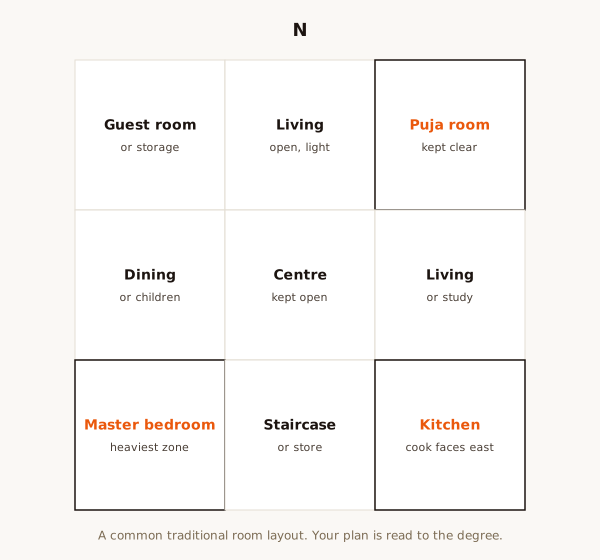
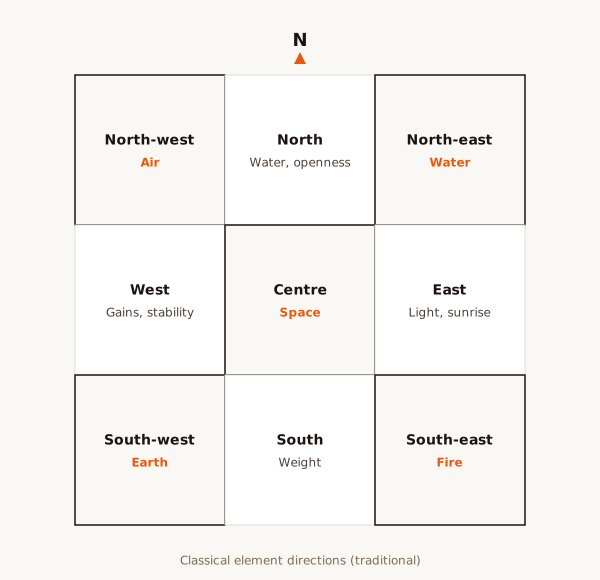
Traditional guidance: the master bedroom belongs in the South-West, the zone associated with earth, stability and the head of the household. Children’s rooms suit the West or North-West, and guest rooms the North-West. The North-East is kept light and open, so a bedroom there is not ideal.
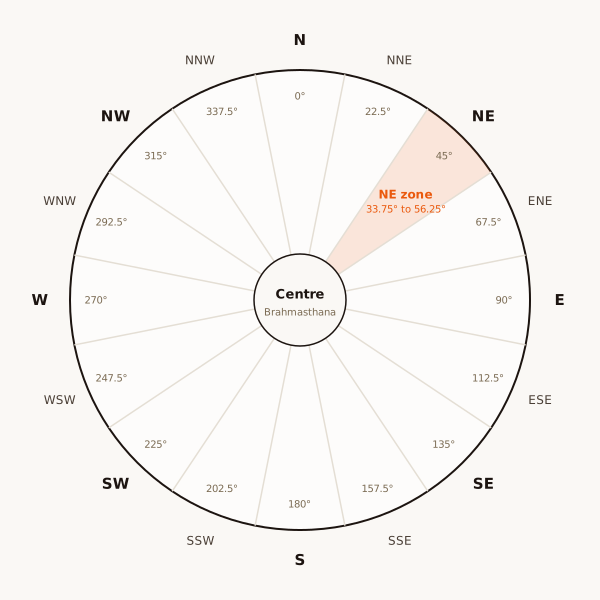
What we measure: we divide the home into 16 zones of about 22.5 degrees each, measured from true north on site and corrected for magnetic declination. A builder plan marked as South-West is often a few degrees off once corrected, and in compact flats one bedroom can straddle two zones. Our 16 Vastu zones explained guide shows how this works, and our Vastu for bedroom guide covers the rest of the room.
Sleeping direction vastu for adults and couples
For the main bedroom, the standard Vastu advice is a headboard on the South wall, so both partners sleep with their heads to the South. If the South wall has the door or a large window, the West wall is the usual second choice, with the head to the West.
Couples sometimes ask whether each person needs a different direction. Tradition does not require it, and in a shared bed it is not practical. One head direction for the bed is enough. If one partner works night shifts and sleeps by day, the same direction still applies; what changes is the need for good curtains on the East and North windows.
Children and students
For children and teenagers, the East head direction is the most common recommendation. It is associated in tradition with learning, freshness and the morning sun. A South head direction is also fine for children; it is only the North that is traditionally avoided.
- Place the headboard on the East or South wall where the room allows.
- Keep the study desk separate from the bed, ideally facing North or East.
- Avoid placing the bed directly under a beam or a heavy loft.
- Keep screens and chargers away from the head end of the bed.
For very young children who still sleep with their parents, follow the direction of the main bed. Change it when they move to their own room.
Guests, elderly parents and shared rooms
The guest room is traditionally placed in the North-West, the zone of air and movement, which suits people who stay a short while. A West or South head direction works well there. We do not ask families to rearrange a guest bed for a two-night visit; the rule matters more for rooms used every night.
Elderly parents are usually best in a ground-floor or easily reached room in the South-West or South, with the head to the South. Practical safety comes first: a clear path to the bathroom, a night light, and a bed at a comfortable height. Vastu never overrides those.
When the room does not allow South or East
In many Bangalore apartments the bedroom is small, the door is on one wall, the wardrobe on another and the window on a third. Only one wall can take the bed. If that wall gives you a North head direction, these are the usual options, in the order we try them:
- Rotate the bed on the same wall so the head points East or West, if the room is wide enough.
- Swap the wardrobe and the bed, if the wardrobe is free-standing.
- Swap rooms with another family member, if another bedroom suits better.
- Accept the room as it is and improve everything else: clutter, light, ventilation and the bed position within the room.
There is no need to break a wall or move a door for a sleeping direction. Our zero-demolition corrections guide explains the wider approach.
Bed position within the room
In sleeping direction vastu, head direction is only part of the picture. Where the bed stands in the room matters for comfort and is part of every bedroom reading we do.
- Headboard against a solid wall, not a window.
- Bed not directly in line with the door, so you are not lying with your feet towards the doorway.
- No exposed beam running over the bed; if one exists, a false ceiling or moving the bed is the usual answer.
- No large mirror facing the bed.
- Storage under the bed kept to bedding and soft items, not old papers and broken things.
- A little space on both sides of the bed for couples.
What we measure on site
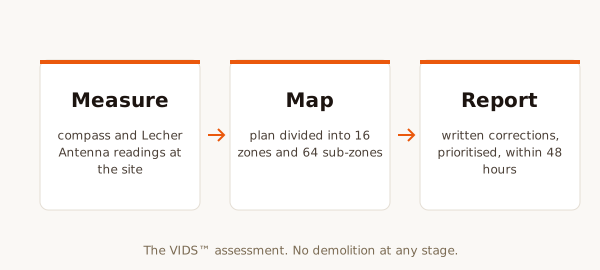
On a visit we take a compass reading from true north, correct it for magnetic declination, and mark the 16 zones on the plan. You can see the declination for any location using the NOAA magnetic declination calculator. In Bangalore the figure is small, but it still shifts zone boundaries.
Where a site visit is possible, we also take a Lecher Antenna reading across the bedroom to check for geopathic stress lines, and we note where the bed sits in relation to them. If a line crosses the bed, moving the bed is a simple, low-cost response. The full process is described on our Vastu methodology page.
What a change of direction can and cannot do
We want to be plain about this. Turning a bed to face the traditionally preferred direction is a respectful, low-cost way to follow Vastu. It can make a bedroom feel calmer when combined with a cleaner layout, better light and less clutter.
Sleeping direction vastu is not a treatment. It will not cure insomnia, high blood pressure or any other condition, and it will not change finances or relationships. If you are sleeping badly, please speak to a doctor. Anyone who promises health results from a sleeping direction is promising more than layout can deliver.
Common mistakes we see in Bangalore flats
- A bed pushed against a window to save space, with the head under the glass.
- A heavy loft or wardrobe directly above the headboard.
- A television on the wall facing the bed and running late into the night.
- The North-East corner of the bedroom used as a store for suitcases.
- The bed turned to a correct direction but blocking the wardrobe or the bathroom door.
Each of these Vastu issues can be fixed with furniture placement alone, usually in an afternoon.
A quick sleeping direction checklist
- Head to the South or East where possible; West is acceptable; avoid North.
- Master bedroom in the South-West zone where the plan allows.
- Headboard on a solid wall, bed not in line with the door.
- Nothing heavy above the head.
- Bedroom kept clear, ventilated and dark at night.
Getting your bedroom assessed
Sleeping direction is checked for every bedroom in our Vastu home consultations, along with the room zones, the entrance and the kitchen. Our Vastu for home page explains the service, the sample Vastu report shows what you receive within 48 hours, fees are on the consultation fees page, and you can book a Vastu consultation when you are ready.