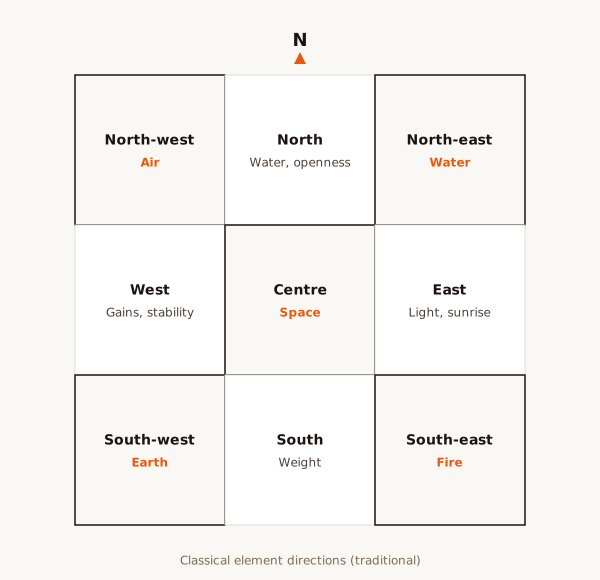
Vastu for pooja room planning is less about strict rules and more about giving prayer a calm, clean and well-lit place in the home. Classical texts give the North-East a special status as the zone of water and openness, and most families we meet would like their puja space there if the plan allows it.
Many Bangalore homes, flats in particular, simply have no spare room in that corner. This guide sets out the traditional guidance, what we actually measure on site, and practical options for wall-mounted units, shared rooms and homes where the North-East is already used for something else. None of it needs demolition.
Why the puja space deserves care
For most households the puja space is used every day, often first thing in the morning. It is where the family pauses, lights a lamp and gathers its attention. Whatever your tradition, a space that is clean, quiet and set apart helps that habit.
Our Vastu approach to this room starts with respect for the family and its practice. Our job is not to tell anyone how to pray. It is to make sure the place they pray in is well positioned, comfortable, safe and free from the clutter and disturbances that creep into busy homes.
A well placed puja space supports calm and routine. It does not, on its own, bring wealth, cure illness or settle family matters, and we do not suggest otherwise.
The North-East: the traditional first choice
Traditional Vastu guidance: the North-East, called Ishanya, is associated with water, clarity and the start of the day. It receives the early morning light, and classical texts recommend keeping it open, light and clean. That is why Vastu treats it as the preferred home for the pooja room.
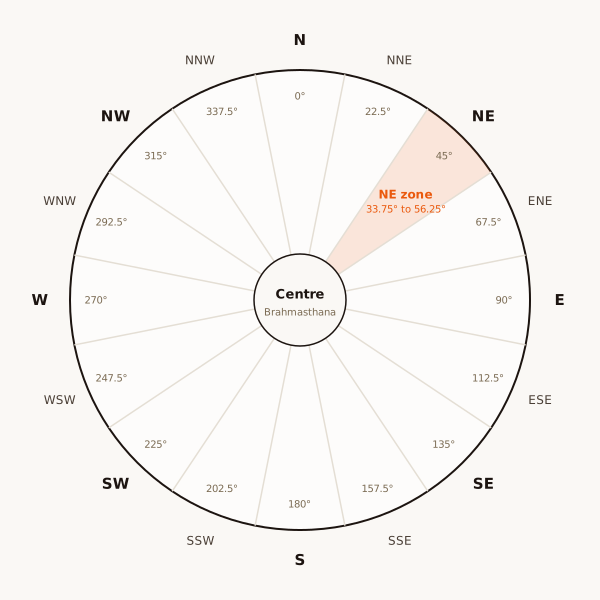
What we measure: we divide the home into 16 zones of about 22.5 degrees each, measured from true north rather than from the builder plan. The North-East zone is narrower than most people imagine, so a room that looks like the corner on paper often falls partly in East-North-East or North-North-East. The 16 zones explained guide shows how the wheel is laid over a plan.
East and North as alternatives
When the North-East is not free, two zones are widely accepted in Vastu for prayer:
- East: associated with morning light and fresh starts, and a natural place for a lamp and a small altar.
- North: associated with water and growth, and quiet enough for a dedicated shelf or cabinet.
- North-North-East and East-North-East: the two zones that flank the North-East, which often suit a wall-mounted unit well.
In practice we look at the whole room, not just the compass. A puja shelf in the East of a bright living room is usually better than a cramped North-East corner beside a shoe rack.
Zones and places traditionally avoided
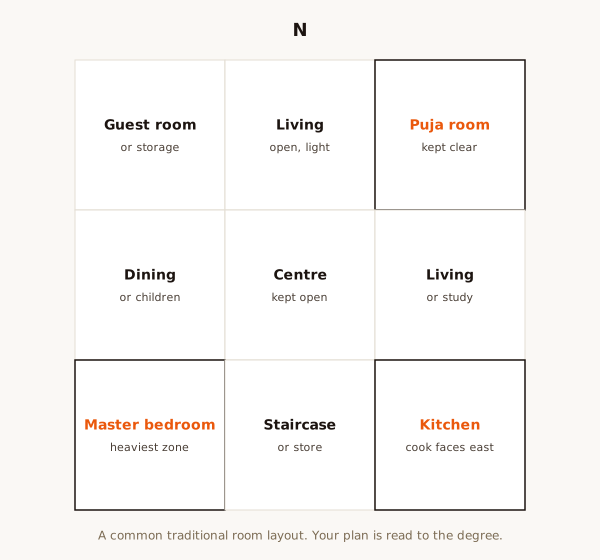
Traditional Vastu guidance: most schools advise against a puja space in the South and South-West, under a staircase, directly opposite a toilet door, or on a wall shared with a toilet or bathroom. A puja unit inside a bedroom is also discouraged, though in compact flats it is sometimes unavoidable.
If a bedroom is the only choice, we suggest a closed cabinet in the East or North-East of that room, with doors that can be shut at night, kept well away from the head of the bed. The rules on sleeping zones are covered in our Vastu for bedroom guide.
Which way to face during prayer
Traditional Vastu guidance: the person praying faces East or North. That means the deities or images face West or South, and the altar sits on the East or North wall of the room.
Idols and pictures are kept above floor level, usually on a raised platform or shelf, so that they are roughly at chest height when you sit or stand in prayer. Many families follow the custom of keeping home idols modest in size and few in number, with damaged or broken idols respectfully removed rather than left on the altar.
If your mandir already faces another way, a small change in which wall it stands against is usually enough. This is one of the easiest Vastu corrections in any home.
Vastu for pooja room in flats and apartments
Most apartments in Bangalore come without a dedicated prayer room, and builders often leave a niche in the kitchen or living area. That is workable. Common Vastu-friendly arrangements we see and support:
- A wall-mounted unit in the North-East or East part of the living room.
- A tall cabinet mandir with closable doors in the dining area.
- A puja shelf in the kitchen, kept on the North-East side and away from the stove and sink. Our kitchen guide explains the fire and water balance there.
- A corner of a study or guest room that is otherwise lightly used.
For whole-flat planning, our Vastu for apartment service reads each room against the 16 zones before you settle the furniture.
Wall-mounted and cabinet mandirs
In Vastu terms, a good wall-mounted unit can serve as well as a separate room. A few practical points:
- Fix it on a wall that lets you face East or North while praying.
- Mount it so the idols are above your seated eye level but not so high that you have to reach up to light the lamp.
- Avoid the wall behind a television, above a shoe rack or backing onto a toilet.
- Use the drawer below for puja items, cloth and oil only. Do not store shoes, medicines or bills there.
- Keep a small heat-proof tile or brass plate under the lamp.
When the North-East is not available
This is the question we are asked most often, and the answer is rarely dramatic. If the North-East holds a toilet, a staircase or a kitchen, we do not ask you to move it. Instead we:
- Choose the best available alternative zone for the puja space, usually East or North.
- Keep whatever room sits in the North-East as light, clean and uncluttered as its use allows.
- Remove heavy storage, unused furniture and dark colours from the North-East where possible.
- Use warm, steady lighting in the new puja space so it reads as a place set apart.
The approach follows our wider zero-demolition corrections method: proportionate, practical and reversible.
Lamps, colours, materials and storage
Traditional Vastu guidance: the lamp is placed on the South-East side of the altar, the corner associated with fire. Light colours such as white, cream, pale yellow or soft green are preferred for the walls. Wood and marble are the usual materials.
Practical safety: a lamp and incense need air. In closed cabinets we suggest a vent or a door left open while the lamp burns, a clear gap above the flame, and no curtains or paper decorations within reach. We see scorched cabinet tops more often than you might expect.
Vastu asks that the space be kept for prayer. Old calendars, piles of prasad packets, stacked photographs and spare keys tend to accumulate here. A short monthly clear-out does more for the room than any new object.
Common puja room issues we see in Bangalore homes
- A mandir fixed on a wall that backs onto an attached bathroom.
- A cabinet placed under the internal staircase of a duplex.
- A puja shelf above the head of the bed in the master bedroom.
- A lamp left burning in a closed wooden cabinet with no ventilation.
- A cluttered North-East corner holding the shoe rack, while the puja unit sits in the South-West.
Each of these Vastu issues can be resolved with a change of wall, a change of cabinet or a clear-out. None of them needs a contractor.
How we assess the puja space
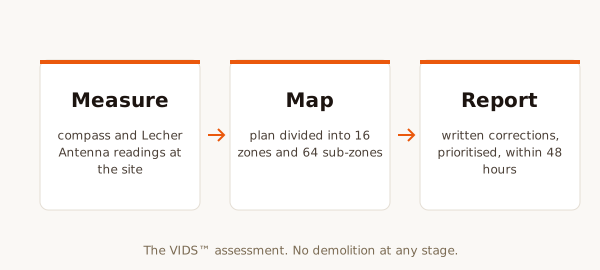
On a site visit we take compass readings at several points, away from steel and electrical panels, and correct them for local magnetic declination using a reference such as the NOAA magnetic declination calculator. We then lay the 16 zones over a measured plan and mark where the puja space sits, what surrounds it, and which walls are shared with wet areas.
For online consultations we work from your floor plan and a guided set of photos and phone compass readings. Either way, the full method is described on our Vastu methodology page, and you receive a written report within 48 hours. An online assessment uses traditional Vastu only, the 16-zone map and the 3×3 grid drawn on your plan; geopathic stress readings need a site visit.
Vastu for pooja room in independent houses and villas
In an independent house or villa there is usually space for a dedicated room, and the classical Vastu guidance can be followed more closely. We look for a ground-floor room in the North-East or East, with the person praying facing East or North.
- Traditional Vastu guidance: a door with two shutters and a low threshold sets the room apart from the rest of the house.
- The room should not sit directly below a toilet or bathroom on the upper floor. We check the floor above on every duplex and villa visit.
- A basement or a space under the staircase is not a good place for a puja room.
- A small window or vent on the East or North wall brings morning light and lets lamp smoke clear.
If you are still at drawing stage, our Vastu for villa service marks these zones before walls are fixed, which is the simplest time to get the vastu for pooja room details right.
Puja room Vastu myths we hear
Families often arrive worried by advice they have read or been told. A few points worth clearing up:
- A puja space outside the North-East does not bring bad luck. Vastu offers alternatives, and a calm East or North location is perfectly sound.
- You do not need to buy special objects. Good Vastu here is about placement, light and cleanliness. We sell no products and recommend none.
- Bigger is not better. A modest, well kept altar suits a home more than a large one that is hard to maintain.
- Fear has no place in prayer. Vastu is a planning discipline, and we explain what layout can and cannot do in plain terms.
Getting your home assessed
The puja space is read in every home Vastu consultation, along with the entrance, kitchen and bedrooms, so recommendations fit together rather than pulling in different directions. Our Vastu for home page explains the service, our fees are published on the consultation fees page, and you can book a Vastu consultation whenever you are ready.