Vastu for apartment owners and buyers starts from a simple fact: you cannot move the building, the lift core or the main lobby. What you can read, and adjust, is your own flat. We assess apartments in Bangalore and online across India using the VIDS 16-zone method, measured against the boundary of your unit rather than the plot the tower stands on.
This page explains what we look at inside a flat, the issues we see most often in high-rise and mid-rise buildings, how the visit runs, what you receive and what it costs. Every correction we suggest works without breaking a wall.
What a Vastu for apartment assessment covers
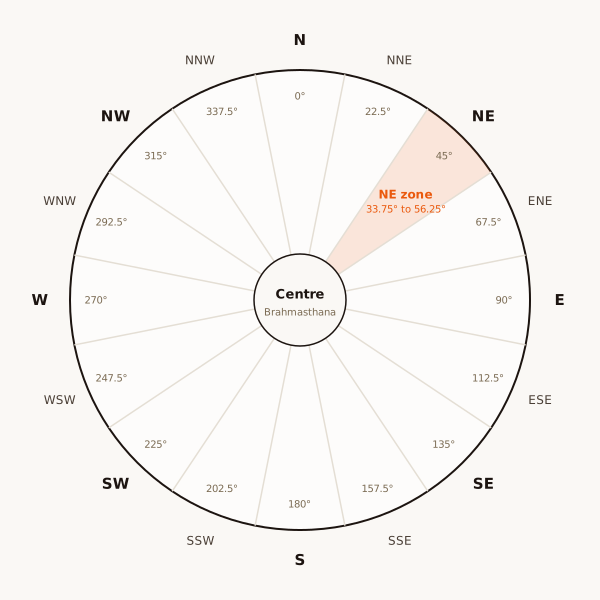
An apartment is read as a complete home inside a shared shell. We draw the 16-zone grid over your carpet area, centred on the middle of the unit, and then check how each space falls on it.
- The main door of the flat and which entrance position it sits in
- The kitchen, the cooking platform and the sink
- Bedrooms, especially the one used by the earning members of the family
- Toilets and bathrooms, and whether any fall in the north-east or the centre
- Balconies, utility areas and the open sides of the flat
- The centre of the unit and whether it is blocked by walls or storage
We also note the floor, the direction the building faces and the position of the lift and stairs, because they affect how you approach your door. They do not change the zone reading of the flat itself.
Reading the unit, not the tower
Many buyers are told a flat is good or bad because the building faces a certain way. That is only part of the picture. Two flats on the same floor, one on each side of the lift, can have entrances in very different zones and kitchens in opposite corners.
So our first step is always to measure the unit you are actually living in or buying. The flat boundary, including balconies that are part of your carpet area, becomes the plot for the purposes of the 16-zone grid. Shared corridors and common terraces are noted but not counted as part of your home.
Zone by zone in a typical flat
A few placements matter more in apartments because the layout is fixed by the developer and repeated floor after floor.
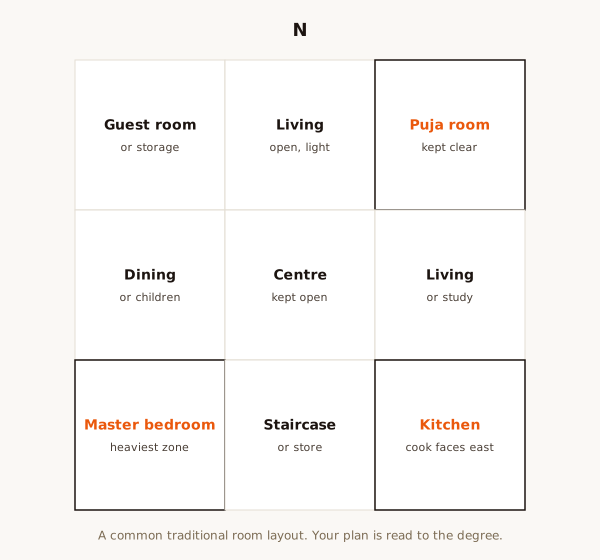
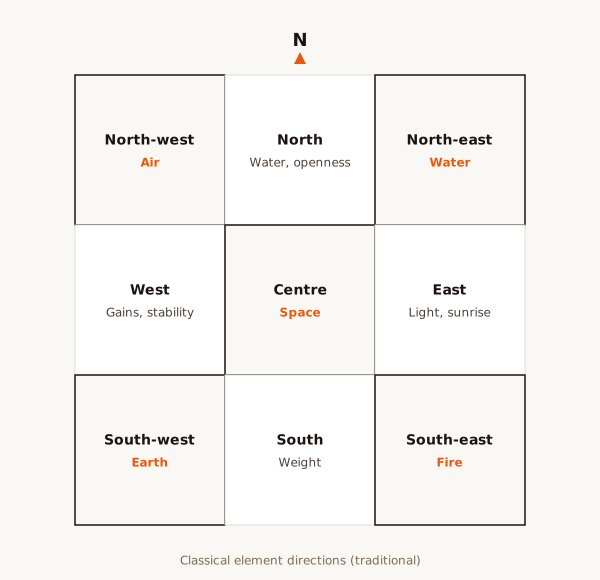
- North-east: ideally light and open. In flats this is often where a toilet or a utility balcony has been placed, which we flag first.
- South-east: the natural zone for the kitchen and the stove. Many builder layouts get this right; some put the kitchen in the north-west, which is workable with care.
- South-west: suits the master bedroom and heavy storage. Watch for a balcony or a large window here that leaves the zone exposed.
- North-west: works well for a guest room or a second bedroom, and sometimes for the kitchen.
- Centre: should stay as open as possible. Long internal corridors and a dining table here are fine; a pillar or a store room is not ideal.
These are starting points, not verdicts. The exact degree reading decides how strong or weak a placement is, which is why we measure rather than guess.
The entrance of the flat
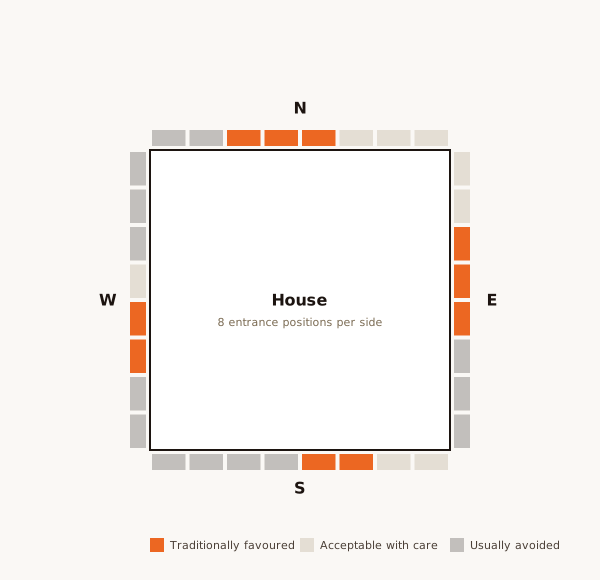
The door of your flat is the entrance we read, not the gate of the society. We locate it within the 32 entrance positions (padas) around the boundary. Some positions on a north or east wall are very supportive; a few are weak even on a favoured side.
When the entrance sits in a weak position, we do not ask you to move the door. We work with the threshold, lighting, colour on the frame and the first view as you enter. Our guide to the main door and entrance explains the padas in more detail.
Common issues we see in apartments
A typical flat we see in a Bangalore high-rise has a fairly sensible layout with one or two awkward placements that the developer could not avoid. The most frequent are:
- A toilet in the north-east corner of the unit
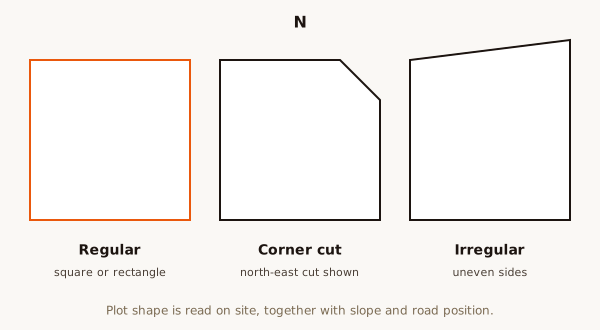
- A cut corner, where the shape of the flat is missing a zone because of the building design
- A kitchen and a toilet sharing a wall, or one directly above the other on the next floor
- The main door facing a lift, a staircase or another flat door at close range
- Heavy wardrobes in the north and east, leaving the south-west light and open
- A balcony in the south-west used as the only sit-out
None of these makes a flat unliveable. Each has a practical response, and the report ranks them so you deal with the most important first.
How the visit or online review works
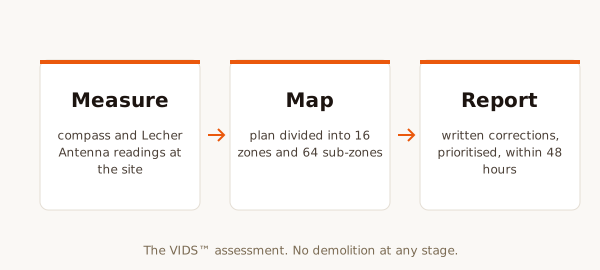
In Bangalore we usually visit. A typical apartment takes two to three hours. We take a compass reading at several points inside the flat, away from steel and appliances, and correct it for magnetic declination using the NOAA calculator so the grid is set to true north. Where a visit is possible, we also take a Lecher Antenna reading to check for geopathic stress at bed positions.
If you are outside Bangalore, an online consultation works well for most flats. You share a floor plan, a few photos and a compass reading taken with our guidance, and we run the same 16-zone analysis remotely. Our note on how to prepare lists what to keep ready. An online assessment uses traditional Vastu only, the 16-zone map and the 3×3 grid drawn on your plan; geopathic stress readings need a site visit.
Corrections without demolition
Apartment owners rarely have the option to move walls, and tenants have even less. So our recommendations stay inside what you can change:
- Changing which room is used for what, for example swapping a study and a guest bedroom
- Moving the bed, the desk or the cooking position within a room
- Colour on walls, doors and soft furnishings, chosen by zone
- Lighting, especially in dark north-east or centre areas
- Decluttering and shifting heavy storage to the south and west
If a problem genuinely needs construction to fix, we will tell you plainly. Our page on zero-demolition corrections shows the range of options we use.
What you receive
Within 48 hours of the visit or online session you receive a written report. It includes the 16-zone map of your flat, the entrance reading, a room-by-room assessment and a prioritised list of corrections. You can see the format on our sample Vastu report page.
We do not sell products, and nothing in the report requires you to buy anything from us. Follow-up questions on the report are answered by message.
Fees for an apartment assessment
Fees are fixed and published, so you know the cost before you book:
- Bangalore apartment or row house, site visit: ₹15,000
- Outstation apartment, site visit: ₹21,000 plus travel
- Online consultation from anywhere: ₹5,000
Full details are on our pricing page.
Vastu for apartment buyers: before you sign
The best time to check a flat is before you commit. If you are choosing between units in the same project, we can compare them so you know which layout needs the least correction. Our apartment buying checklist covers what to look at on your own during a site visit.
Tenants can use the same review before signing a rental agreement. The method does not change; only the decision you are making does.
Who this is for
This assessment suits families buying a flat, people who have just moved in, tenants choosing between options and owners who feel a particular room in the flat does not work. If you own an independent home instead, see Vastu for villa or independent house Vastu.
Why Vardhini Vastu
Raghavendra Hebbur has worked as a Vastu consultant for more than ten years, based in Bangalore. The method is Scientific Vastu: measured zones, true north, and recommendations you can test in daily use. He also studies the Aparajitaprccha, a classical architectural text, which informs how the 16 zones are read.
We take no commission from builders and sell no remedies. You can read more about Vardhini Vastu or see how the VIDS method works.
Gated communities and row houses
Row houses and villas inside a gated layout sit between a flat and an independent home. They share a compound and often a common wall, but each unit usually has its own small front and back yard. We read the unit boundary including those yards, so a row house review covers a little more ground than a flat.
Common areas such as the clubhouse, the society gate and the internal roads are noted for context. They are outside your control, so the report focuses on your own unit and how you use it. If you are deciding between a flat and a row house in the same project, we can review both layouts in one session.
Living with a fixed layout
Most people who ask us about vastu for apartment living are not planning to move. They want the flat they have to work better. That is a realistic goal. A clear entrance, a kitchen used in the right part of the room, a bed placed in a supportive zone and an open centre make a noticeable difference to how a home feels day to day, without touching the structure.
Nearby areas we cover.
Frequently asked questions.
Can Vastu be assessed if I don't own the building's exterior?
Yes. The assessment reads the unit's own entrance and internal layout, not the building structure.
Does floor level (which storey) matter?
It's noted, but the 16-zone analysis is unit-specific, not floor-specific.
Can this be done before signing a rental agreement?
Yes. The same review works for tenants evaluating a flat before renting.
How is this different from Vastu for an independent home?
The method is identical; only the boundary reference changes, from the plot to the unit itself.
Have a property here you want assessed?
Share the property type and a floor plan on WhatsApp for an exact quote and the next available date.