Vastu plants for home is a topic almost every family asks about, usually starting with the tulsi and the money plant. Plants are one of the gentlest parts of Vastu: they can be moved in minutes, they bring light and air into focus, and none of them needs a wall to come down.
This guide sets out the traditional guidance on where plants belong by direction, which plants tradition prefers indoors and outdoors, and what we actually check on a site visit. As always we keep measured facts, traditional guidance and interpretation apart, and we make no promises about money, health or luck.
Why plants matter in Vastu
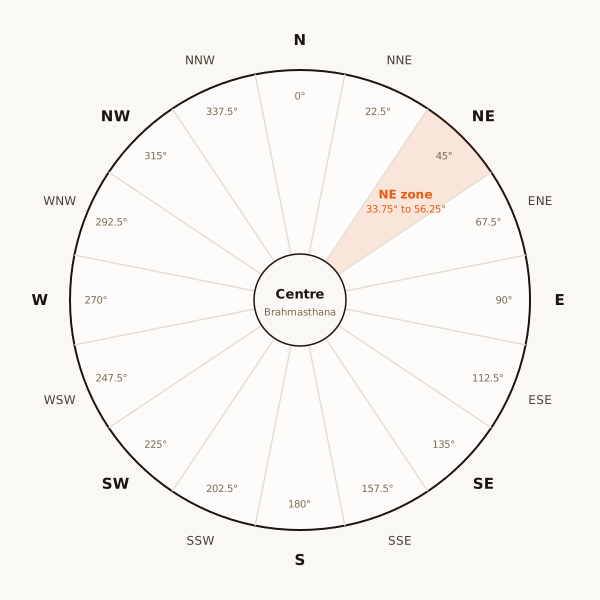
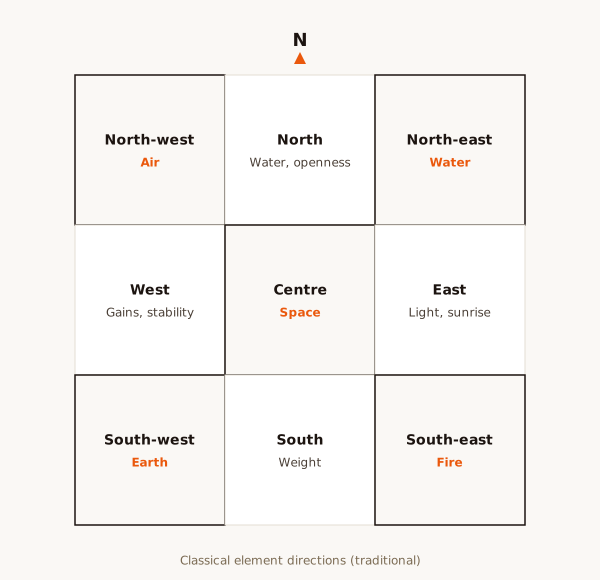
Classical Vastu reads a site by direction, and plants follow the same logic as everything else: light, low and open things belong where tradition wants the site light and open, and heavy, tall things belong where it wants weight. Trees and shrubs are also a practical tool for shade, privacy and cooling, which is why the guidance makes sense on the ground as well as in the texts.
Vastu plants for home: traditional guidance by direction
Traditional guidance: the common classical preferences are as follows.
- North and East: small flowering plants, herbs and low planting; keep these sides open to morning light.
- North-East: keep it the lightest and most open part of the site; a tulsi or a few small plants are fine, heavy planting is not.
- South and West: larger, taller plants and trees, which also give shade from the hot afternoon sun.
- South-West: the heaviest planting and large trees, kept clear of the house walls.
- Centre (Brahmasthan): kept open; tradition avoids trees and heavy planters here.
This matches the guidance in our balcony and open space guide.
Tulsi: where to keep it
The tulsi is traditionally kept on the North, East or North-East side of the home, in good light, in a clean planter, often in a raised tulsi katta in independent houses. In a flat, an East or North facing balcony or window ledge is the usual choice.
Practical points matter as much as direction: tulsi needs several hours of sun, regular water and good drainage. A tulsi that is struggling in a dark corner is not doing anyone any good.
Money plant: what tradition says
The money plant (pothos) is popular indoors because it tolerates low light. Many households keep it in the South-East, which is linked with fire and energy in the five element scheme, or in the North. Tradition generally avoids letting it trail on the ground or dry out.
To be clear: we do not claim that a money plant brings money. It is a hardy, attractive plant that suits many indoor corners. Read it as decoration with a traditional preference, not as a financial remedy.
Plants tradition avoids indoors
Traditional guidance generally avoids thorny plants such as cactus inside the home, except where they sit outside or on a terrace, and avoids bonsai in living spaces in some schools. Dead, dried or diseased plants are always removed promptly. Plants with milky sap are usually kept outdoors, which is sensible with small children and pets in any case.
These are traditional preferences, and they vary between schools. If a plant you love does not fit, moving it to a balcony or garden is usually enough.
Trees on the plot
For independent houses and villas, large trees are traditionally preferred towards the South and West of the plot, set back from the house so roots and shade do not affect the structure or block northern and eastern light. Tradition avoids a large tree directly in front of the main door and avoids trees in the centre of the plot.
If a large tree already stands in the North-East, we never recommend cutting it on Vastu grounds alone. We keep the immediate North-East corner of the house light and open instead and note the tree in the report.
Balconies, terraces and window boxes
In apartments the balcony is usually the main garden. A North or East balcony suits flowering plants and herbs. A South or West balcony suits larger potted plants that shade the glass. Keep heavy planters off the North-East corner of a terrace, and check the slab load and drainage with your building management before adding large pots.
What we check on site
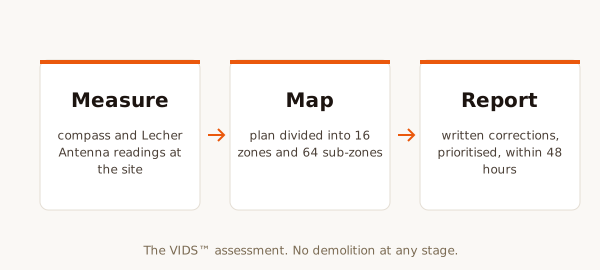
We measure the true-north direction of the plot and the building with a compass and correct it for magnetic declination, which you can look up for any location on the NOAA magnetic declination calculator. We then note where trees, planters and open ground sit on the 16-zone map, where shade falls through the day and whether any planting blocks light or air.
Plant notes go into the report as placement suggestions, ranked below the entrance, kitchen, toilets and bedrooms. See the full process on our Vastu methodology page.
What plants can and cannot do
Plants improve light, air, shade and how a home feels, and that is reason enough to place them thoughtfully. They do not change the measured shape of a plot, and they are not a cure for health, money or relationship problems. We say this plainly because many sellers say otherwise. Our guide to Vastu myths covers several of these claims.
Vastu plants for home in apartments
Most Bangalore flats have one or two balconies and a few window ledges, so the real choice is which balcony gets which plants. Put herbs, flowering plants and the tulsi on the balcony that gets morning sun, which is usually the East or North side. Use the South or West balcony for larger potted plants and creepers that shade the glass from the afternoon heat; that is both the traditional preference and a practical cooling measure.
Indoors, keep plants near windows rather than in dark corners, and avoid placing heavy planters in the North-East corner of the living room.
Plants in offices and shops
In offices, a few healthy plants near the North or East windows are the usual traditional choice, with larger plants in the South-West corner if space allows. Reception areas often keep a plant on the North or East side of the entrance. In shops, keep plants clear of walkways and display shelves, and remove any that wilt; a dying plant at the entrance is the one thing every school agrees on. See our Vastu for office page for the wider layout.
Garden layout for independent houses
For an independent house, think of the garden in two halves. The North and East parts of the plot stay low and open: lawn, low shrubs, flower beds, a tulsi katta and paving. The South and West parts carry the height and weight: trees, tall hedges, a pergola or a heavy planter wall. This keeps morning light reaching the house and gives shade from the afternoon sun, which in Bangalore comes from the west and south-west for much of the year.
Keep the centre of the plot open, keep large roots well away from foundations and the sump, and plan drainage so water runs towards the North or East where possible. Our compound wall guide covers the boundary itself.
Common plant mistakes we see
- A large planter or tree blocking the North-East corner of the house.
- A tulsi in a dark corner that never gets sun.
- A cactus collection inside the living room.
- Dried or dead plants left on the balcony for months.
- A healthy old tree cut down because of online advice.
All of these are solved by moving or replacing plants, never by construction.
Plants in bedrooms, kitchens and the pooja area
Bedrooms: tradition keeps the number of plants small, with a few low, leafy plants near the window rather than large plants beside the bed. Kitchens: herbs on an East or North window sill are the common choice; keep plants away from the stove and the sink splash area. Pooja area: the tulsi is traditionally kept outside or near the pooja space rather than inside a closed pooja cupboard, so it gets the light it needs. Fresh flowers for the pooja are a daily custom and are removed once they wilt.
Care matters as much as direction
A healthy plant in an ordinary spot is better than a struggling plant in the “right” zone. Match each plant to the light it actually needs, water it on a routine, use pots with drainage holes and saucers that do not overflow onto the floor, and repot when roots crowd the pot. On balconies, check that pots do not block drainage outlets during the monsoon. These are simple habits, and they are what tradition means when it says plants should be kept healthy.
Vastu plants for home: rules people often confuse
Three points cause most of the confusion we hear about Vastu plants for home. First, the tulsi and the money plant follow different preferences: the tulsi is linked with the North, East and North-East, while the money plant is commonly kept in the South-East or North. Second, “no plants in the North-East” is a misreading; tradition wants the North-East light and open, so a tulsi or a few small plants are fine, but heavy planters and trees are not. Third, Vastu plants for home are not remedies: they improve light, air and how a home feels, and they do not change the measured layout. Keeping these three points clear avoids most of the worry that online lists create.
A quick plant checklist
- Tulsi on the North, East or North-East side, in sun.
- Small plants and herbs North and East; large plants and trees South and West.
- Keep the North-East and the centre light and open.
- No thorny plants indoors; remove dead plants promptly.
- Never cut a healthy tree on Vastu grounds alone.
- Check slab load and drainage before heavy planters on a terrace.
Getting your home assessed
Plants are checked as part of a full home reading. See our Vastu for home service, the sample Vastu report you receive within 48 hours, and fees on the consultation fees page. You can try your own plan first in the free 16 Zone Vastu Chakra Tool.