Vastu myths spread faster than Vastu itself. A relative hears that south-facing houses bring trouble, a video says a mirror can cancel any defect, a shop sells a crystal pyramid for the north-east corner, and suddenly a perfectly good home feels wrong. Most of these ideas come from half-remembered rules, from selling products, or from fear.
This guide takes thirteen common beliefs and checks each one in the same four steps: what people believe, what the classical tradition actually says, what can be measured on site, and our practical view after more than ten years of consultations in Bangalore. We keep traditional guidance, measurement and interpretation clearly apart, so you can judge each point yourself.
How we test Vastu myths
Scientific Vastu, as we practise it, separates three things. Measured facts: the true-north direction in degrees, zone boundaries, where sunlight enters, how air crosses the home, and what each room is used for. Traditional guidance from classical texts such as the Aparajitaprccha and the wider Vishvakarma tradition. Interpretation: our judgement on applying that guidance to a real family. None of the traditional ideas has mainstream scientific proof, and we never claim it does. Where a myth fails even on its own traditional terms, we say so.
Myth 1: South-facing houses are always bad
What people believe: a south-facing home brings illness, debt or bad luck, and should be avoided at any price.
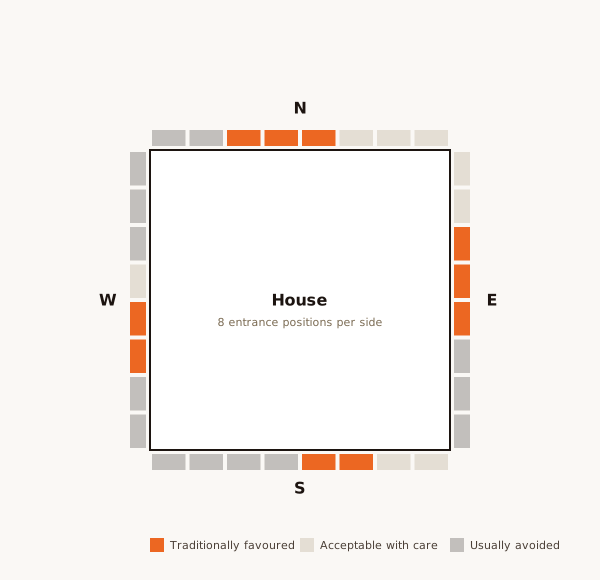
What tradition actually says: classical texts divide each side of a building into entrance positions and describe good and poor ones on all four sides, including the south. No side is condemned as a whole.
What can be measured: the exact angle of the entrance, which can be measured to the degree, and the light: in Bangalore, at about 13 degrees north, the noon sun sits to the south for most of the year, so south-facing fronts receive strong light.
Our practical view: a well-planned south-facing home is often excellent. Read our south-facing house Vastu page before rejecting one.
Myth 2: You must break walls to fix Vastu
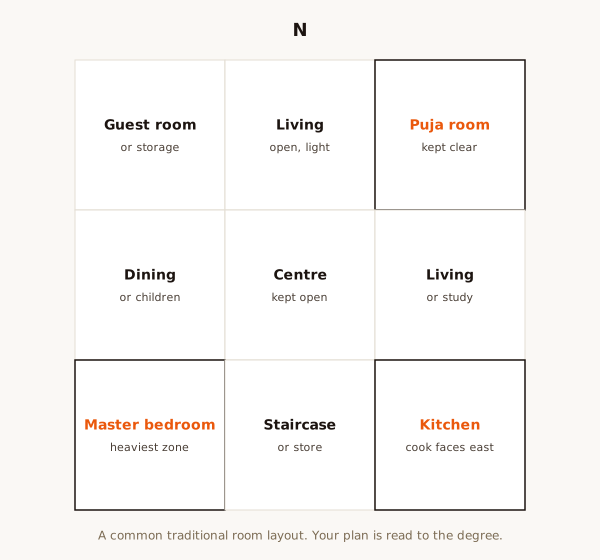
What people believe: if the kitchen or bedroom is in the wrong place, only demolition will help.
What tradition actually says: the texts describe ideal layouts for new construction. They do not instruct anyone to demolish a sound home.
What can be measured: room use, furniture position, sleeping and working directions, storage weight and light, all of which can change without touching a wall.
Our practical view: almost every home can be improved through placement, colour, lighting and room use. See zero-demolition Vastu corrections.
Myth 3: You need pyramids, crystals or yantras
What people believe: a product placed in the right corner neutralises any defect.
What tradition actually says: classical architectural texts are about site, proportion, orientation and room placement. They do not prescribe plastic pyramids or shop-bought crystals.
What can be measured: nothing about these objects changes light, air or layout.
Our practical view: we sell no products and take no commission. Our approach to Vastu remedies is practical changes only.
Myth 4: A toilet in the north-east ruins a home
What people believe: a north-east toilet makes the whole house unlucky and must be removed.
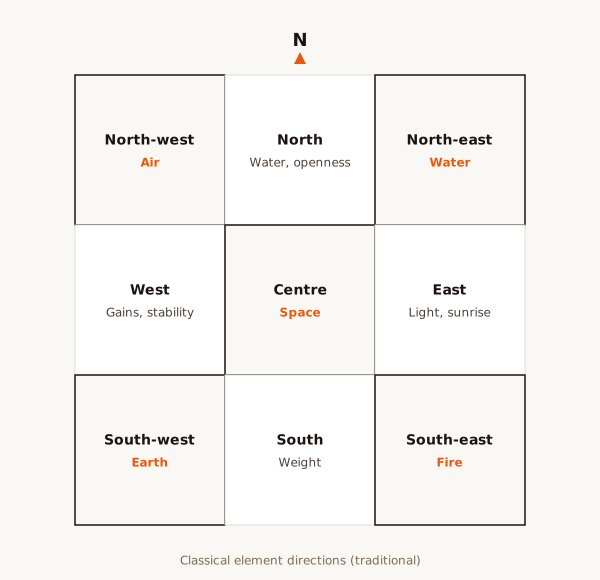
What tradition actually says: the north-east is traditionally kept clean, light and open, and a toilet there is not preferred. That is guidance about a zone, not a verdict on a home.
What can be measured: the toilet zone, ventilation, damp and whether the room is kept clean and closed.
Our practical view: it is a point to manage, not a disaster. Keep it clean, ventilated, dry and closed, and use the rest of the north-east well.
Myth 5: Mirrors fix everything
What people believe: a mirror can double a good zone or cancel a missing corner.
What tradition actually says: mirrors are not a central subject in the classical texts. Their use as a cure is modern practice.
What can be measured: a mirror reflects light and makes a space look larger. It does not change the shape of the plot.
Our practical view: a mirror can brighten a dim north or east wall. It is not a cure, and one facing a bed can disturb sleep for some people.
Myth 6: A phone compass reading is enough
What people believe: open a compass app at the door and you know your direction.
What tradition actually says: orientation is the foundation of the whole system, so it should be exact.
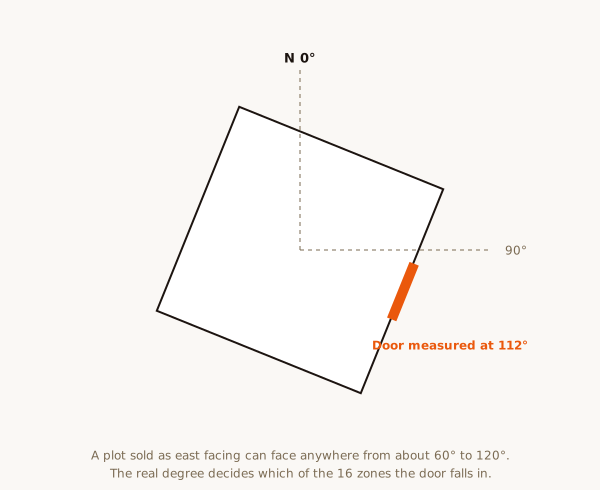
What can be measured: phone compasses are thrown off by steel, magnets, speakers and wiring, and magnetic north differs from true north by a declination that varies by place and year. The NOAA magnetic declination calculator gives that correction.
Our practical view: take several readings away from metal and electronics, then correct to true north. Our Vastu methodology explains how we do it.
Myth 7: The facing direction decides everything
What people believe: east and north are good, south and west are bad, end of story.
What tradition actually says: the texts look at the whole plan: entrance position, room zones, open space, slopes and levels.
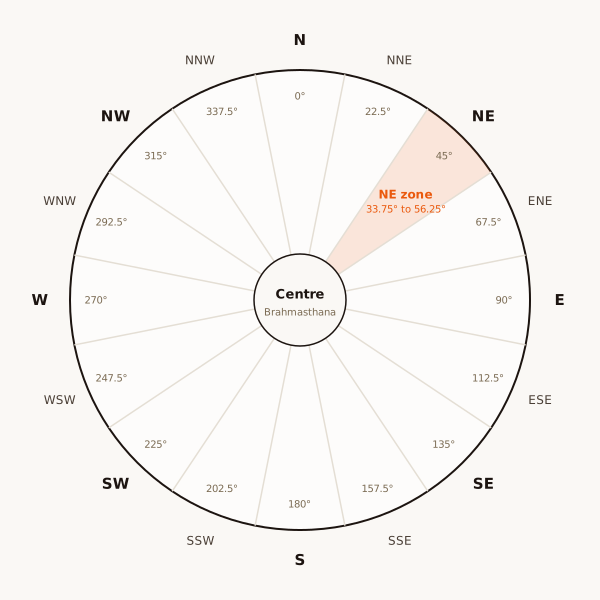
What can be measured: the 16 zones of about 22.5 degrees each and what sits in each one.
Our practical view: facing is only one input. Our guide to the 16 Vastu zones shows why.
Myth 8: Apartments cannot follow Vastu
What people believe: Vastu only works on an independent plot.
What tradition actually says: the texts were written for buildings on land, so applying them to a flat needs interpretation.
What can be measured: the flat’s own centre, its zones, entrance and room use can all be measured exactly.
Our practical view: a flat is read as its own unit. See Vastu for apartment.
Myth 9: Vastu guarantees wealth, marriage or health
What people believe: fix the layout and money, a wedding or a cure will follow.
What tradition actually says: classical texts describe auspicious outcomes in their own language. That is tradition, not evidence.
What can be measured: light, ventilation, movement, clutter and how usable a home is.
Our practical view: layout can make a home calmer and easier to live in. It cannot promise life outcomes. Anyone who guarantees them is selling something.
Myth 10: The kitchen must be in the south-east or nothing works
What people believe: a kitchen anywhere else spoils the home.
What tradition actually says: the south-east is the preferred fire zone, with the north-west a recognised alternative.
What can be measured: the kitchen zone, cooking direction and the positions of hob and sink.
Our practical view: a kitchen elsewhere is managed through cooking direction and layout. Our Vastu for kitchen guide explains.
Myth 11: Every cut or irregular plot is doomed
What people believe: any missing corner makes a property unusable.
What tradition actually says: regular shapes are preferred, and cuts in some corners are noted more seriously than in others.
What can be measured: the size and zone of the cut relative to the whole plan.
Our practical view: small cuts are common and usually manageable through use of space. See plot facing direction Vastu.
Myth 12: Vastu is the same as astrology
What people believe: a Vastu reading needs your birth chart.
What tradition actually says: classical Vastu texts are architectural: site, measure, orientation and building.
What can be measured: directions, dimensions and room use, none of which depends on a horoscope.
Our practical view: we practise Scientific Vastu and do not mix it with astrology.
Myth 13: Energy instruments prove Vastu scientifically
What people believe: dowsing tools give scientific proof of good or bad energy.
What tradition actually says: geopathic stress readings belong to the Geo Vastu tradition, not the classical texts.
What can be measured: the instruments give practitioner readings. Lecher Antenna and similar radiesthesia tools are not accepted by mainstream science.
Our practical view: Raghavendra Hebbur uses them only as one layer, never to frighten anyone and never to sell a product.
How to check a claim yourself
Most of these beliefs travel by word of mouth, through family groups, short videos and well-meaning neighbours. Each retelling drops a condition or a nuance until a mild preference becomes a hard rule. Before you act on any claim about your home, it helps to ask a few simple questions.
- Where does it come from? Ask whether the rule is from a named classical text, a later practice, or a seller. A rule that ends with a product to buy deserves extra care.
- Is it about a zone or about the whole home? Classical guidance usually describes preferences for one area. It rarely condemns an entire property.
- Can it be measured? Direction, angle, light, ventilation and room use can all be checked. Luck, prosperity and energy cannot be measured in the same way.
- What does it cost to try? Moving a bed, turning a desk or clearing a corner costs almost nothing. Breaking a wall or buying an expensive object costs a lot and is hard to reverse.
- Does it frighten you? Good advice should leave you clearer and calmer, not anxious. Fear is a sales tool, not a method.
A practical test is to write the claim down in one sentence, then add what would have to be true for it to work. If the answer depends only on trust, treat it as tradition or opinion, not as fact. If it depends on light, air, layout or how you use a room, it is something you can check and improve. Safety, structure, wiring and health questions always belong with licensed engineers, electricians and doctors, whatever any rule of thumb says.
Getting your home assessed
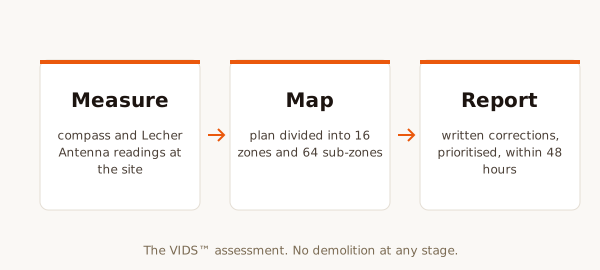
If a myth has left you worried about your own home, a measured reading usually settles it. Our Vastu for home service explains the visit, fees are on the consultation fees page, the written report arrives within 48 hours, and you can book a Vastu consultation whenever you are ready.