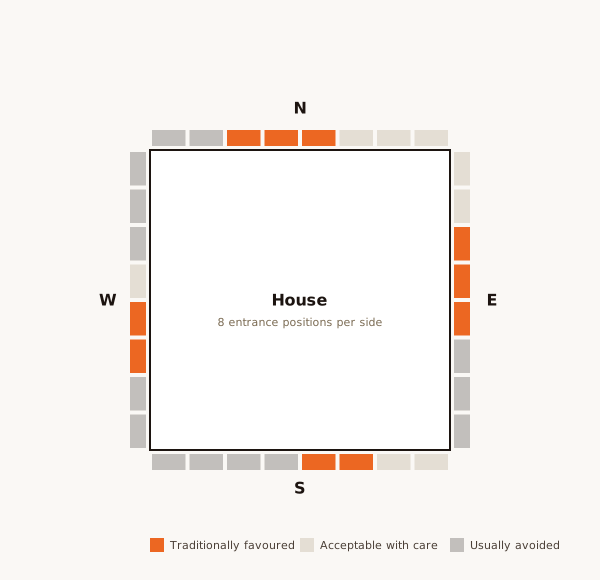
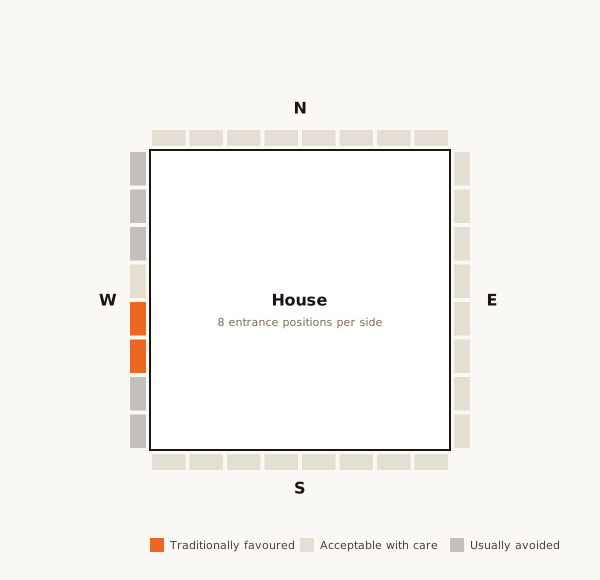
The 32 entrances Vastu system is the classical method for deciding exactly where a door should sit along a wall. Each of the four sides of a plot or building is divided into eight equal parts, called padas, which gives 32 possible entrance positions in all. Tradition names some padas on every side as favourable and others as best avoided. It is the reason a north-facing house is not automatically good and a south-facing house is not automatically bad.
This guide explains where the 32 padas come from, how to count them on your own wall, which positions are commonly treated as favourable, and what to do if your door sits elsewhere. We keep traditional guidance separate from measurement, and we never suggest moving a door without a good reason.
Where the 32 padas come from
The padas come from the Vastu Purusha Mandala, the square grid that classical texts lay over every site. In the 9×9 grid of 81 cells, the outer ring holds 32 cells, eight on each side, and each one is assigned to a deity. Those deities lend their names to the 32 entrance positions.
Read as building practice, the system is a way of keeping doors away from corners, where structure is strongest and where wind and heat behave differently, and of placing entrances where they let light and air into the house. Different texts and practitioners vary slightly on which padas they favour, so we state the commonly used positions and say where opinions differ.
How to count the padas on your wall
Counting is simple once true north is fixed:
- Take a compass reading and correct it for local declination with the NOAA magnetic declination calculator.
- Measure the full length of the wall or plot boundary on the side where the door sits.
- Divide that length into eight equal parts. Each part is one pada.
- Number the padas clockwise from the corner: on the east side from the north-east corner, on the south side from the south-east corner, on the west side from the south-west corner, and on the north side from the north-west corner.
- Mark where the centre of the door opening falls.
The pada is read for the main entrance of the house or flat, and separately for the compound gate if there is one. A door can span two padas; we then read the one that holds most of the opening.
East side entrances
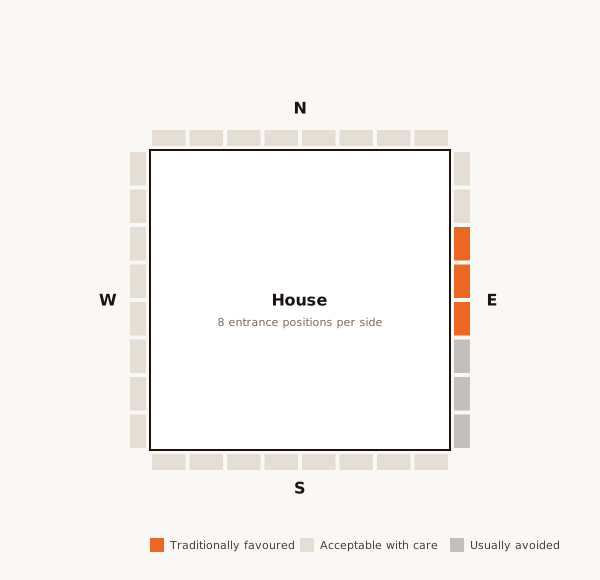
Counting from the north-east corner, the eight east padas are traditionally named Shikhi, Parjanya, Jayanta, Mahendra, Surya, Satya, Bhrisha and Antariksha. The positions most often treated as favourable are the third and fourth, Jayanta and Mahendra, with the fifth, Surya, also accepted by many practitioners. Padas at the extreme corners are generally avoided.
An east entrance also brings morning sun into the house, which is one practical reason for its good reputation. See east-facing house Vastu for the full reading of an east-facing home.
North side entrances
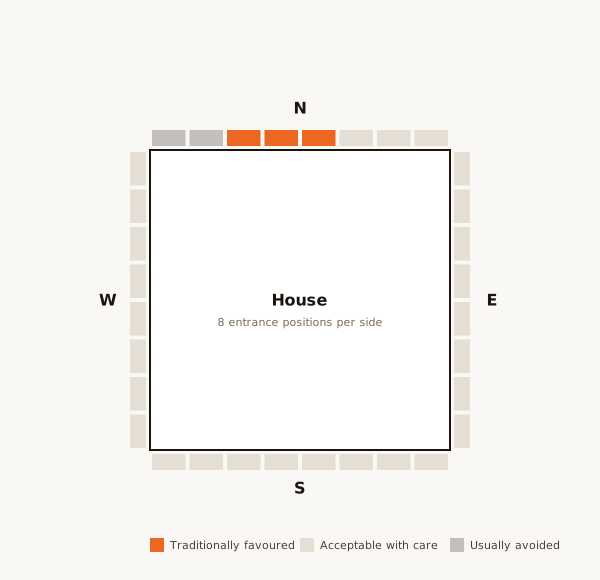
Counting from the north-west corner, the eight north padas are traditionally named Roga, Naga, Mukhya, Bhallata, Soma, Bhujaga, Aditi and Diti. The third, fourth and fifth, Mukhya, Bhallata and Soma, are the positions most often favoured. Some practitioners also accept the eighth, nearest the north-east corner.
North entrances are popular in Bangalore and are generally easy to work with. See north-facing house Vastu.
South side entrances
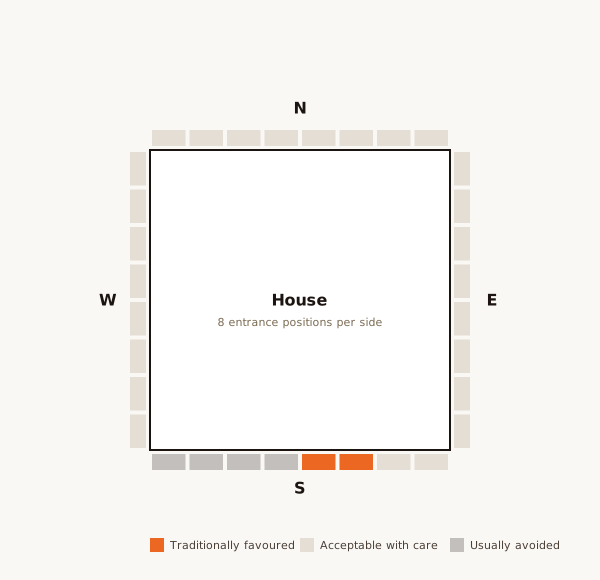
Counting from the south-east corner, the eight south padas are traditionally named Anila, Pusha, Vitatha, Grihakshata, Yama, Gandharva, Bhringaraja and Mriga. The third and fourth, Vitatha and Grihakshata, are the positions commonly treated as favourable. The padas towards the south-west corner are generally avoided.
This is the single most useful fact for anyone worried about a south-facing home: a door in the third or fourth south pada is a classically accepted entrance. See south-facing house Vastu.
West side entrances
Counting from the south-west corner, the eight west padas are traditionally named Pitru, Dauvarika, Sugriva, Pushpadanta, Varuna, Asura, Shosha and Papayakshma. The third and fourth, Sugriva and Pushpadanta, are the positions most often favoured, and some practitioners also accept the fifth, Varuna.
West entrances receive strong afternoon sun in Bangalore, so we also look at shading. See west-facing house Vastu.
Gates, flats and diagonal plots
Compound gates. The gate of a plot is read on the boundary wall in the same way, and it does not have to line up with the house door. Each is read on its own line.
Apartments. For a flat, we read the main door of the flat on the wall of the flat, not the entrance of the tower. Many flats on the same floor have different padas even though they share a corridor.
Diagonal plots. When a plot is turned by around 45 degrees, its sides face the corner directions. The pada system still applies, but the counting is adapted. Our pages on north-east-facing and south-west-facing homes explain how.
If your door is on a less favoured pada
Most doors are not moved, and most do not need to be. Our usual approach is practical:
- Confirm the reading. A door close to the boundary between two padas is often better than it first appears.
- Use the door well: good light at the entrance, a clean threshold and nothing heavy blocking it.
- Where a second door exists on a better pada, consider making it the main daily entrance.
- In a renovation, a door frame can sometimes shift by a short distance within the same opening, which may move it into the next pada.
- Before construction, place the door correctly from the start at almost no extra cost.
We never suggest buying objects to correct an entrance. See zero-demolition corrections and Vastu for main door and entrance.
How we read your entrance
On site, we measure the wall, take readings at several points and fix true north before dividing the wall into its padas. For an online assessment, we guide you through compass readings and work on your floor plan with the 16-zone map and a 3×3 grid, and we read the entrance position from the measured drawing.
The written report, delivered within 48 hours, records the pada of the main door and gate and sets out any corrections in order of ease. See our methodology for each step.
Why the pada matters more than the facing
Most people describe a house by its facing: east-facing, north-facing and so on. Classical Vastu is more precise. The 32 entrances Vastu system says that every side has good and weak positions, so the facing alone tells you very little. Two east-facing flats on the same floor can read very differently because their doors fall on different padas.
This is also why we are cautious about lists that label whole directions as lucky or unlucky. A south-facing home with its door in the third or fourth pada follows the classical guidance well, while a north-facing home with its door tight against the north-west corner does not. When people bring us a property they have been told to avoid, the entrance pada is often the first thing we check, and it frequently turns out to be acceptable.
Vastu tradition also reads the path of entry: what you see and pass through after the door. A door that opens straight onto a toilet, a staircase or a blank wall is read differently from one that opens into a bright living area. We note these as part of the entrance reading.
Using the 32 entrances Vastu system before you buy
If you are comparing flats or plots, the entrance pada is a quick and objective check. Ask for the floor plan with the north arrow, then confirm the direction on site with a compass. Divide the entrance wall into eight equal parts and see where the door falls. If the plan shows a different north from your reading, trust the measured reading and correct it for declination.
For plots, check where the gate can go on each road-facing side, since a corner plot may give you a choice of padas. Our checklists for buying an apartment and buying a plot include the 32 entrances Vastu check alongside slope, shape and the position of the kitchen and bedrooms. A pre-purchase reading costs far less than a correction later.
Your next step
If you are choosing a flat, buying a plot or planning a house, the entrance is one of the first things worth checking. A Vastu reading of the door pada takes only a few minutes on site, and it is part of every Vastu assessment we do. You can book a consultation online or on site in Bangalore and receive a measured, written report within 48 hours.