Kitchen direction Vastu starts from one classical idea: the kitchen is the fire room of the house, and fire belongs in the south-east. Every other kitchen position is read in relation to that ideal. In real Bangalore homes, kitchens sit in almost every zone, so this guide goes through them one by one, from the best placements to the ones tradition avoids, and explains what to do in each case without rebuilding.
We read the kitchen by its measured zone from the centre of the house or flat, and we keep the traditional guidance separate from what we observe on site, such as light, ventilation and how the kitchen is actually used.
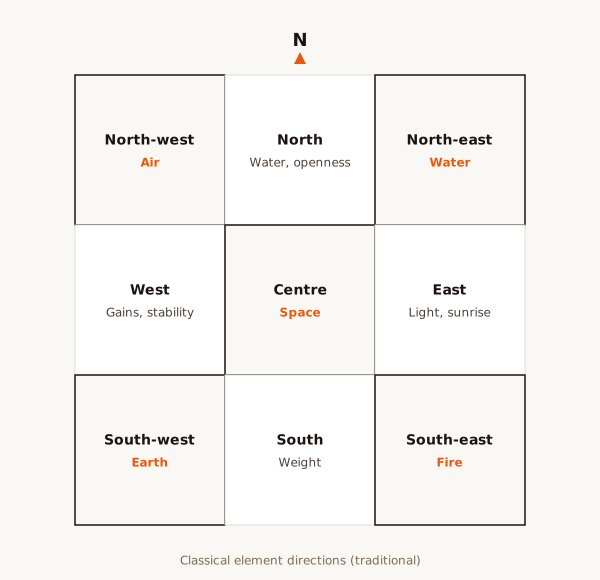
Why the south-east
In the five-element scheme, the south-east is Agneya, the corner of fire. A kitchen there sits in its natural element. There is also a practical side: in Bangalore the south-east receives morning sun, which dries and warms the room early in the day, while the hottest afternoon sun falls on the west. See Vastu five elements.
How we read a kitchen
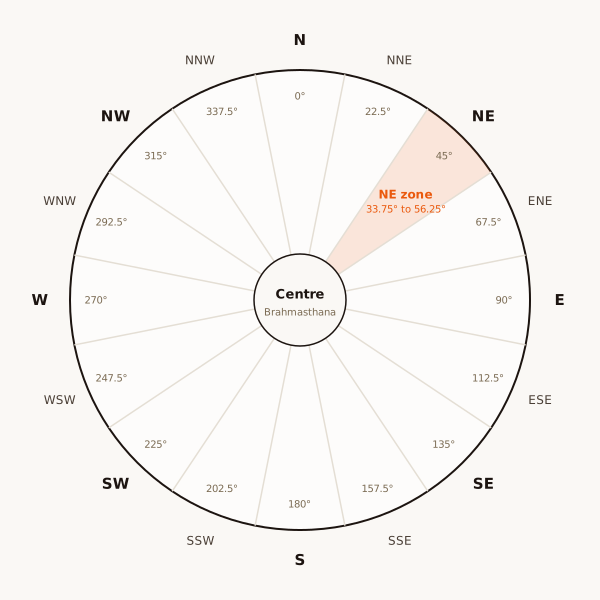
We measure from true north, corrected for magnetic declination, which you can check with the NOAA magnetic declination calculator. We find the centre of the house or flat, draw the 16 zones, and read the kitchen by the zone holding most of its floor. We then read the stove, sink and storage within the kitchen.
A kitchen at the edge of a zone reads very differently from one in its middle, so we never judge from the brochure arrow alone. See the 16 Vastu zones.
Preferred zones
- South-East (SE): the classical first choice.
- East of South-East (ESE): close to the ideal and widely accepted.
- South of South-East (SSE): widely accepted, especially with the stove placed towards the south-east corner of the kitchen.
If your kitchen is in one of these zones, the work is about arrangement inside the room, not position.
The accepted alternative: north-west
Tradition names the north-west, Vayavya, as the accepted alternative to the south-east. Many older homes placed the kitchen here, and many builder flats do the same. With the stove placed in the south-east part of the kitchen and good ventilation, a north-west kitchen follows classical guidance well.
West of North-West (WNW) is read in the same way. North of North-West (NNW) is accepted by some practitioners and read with care.
Zones to avoid
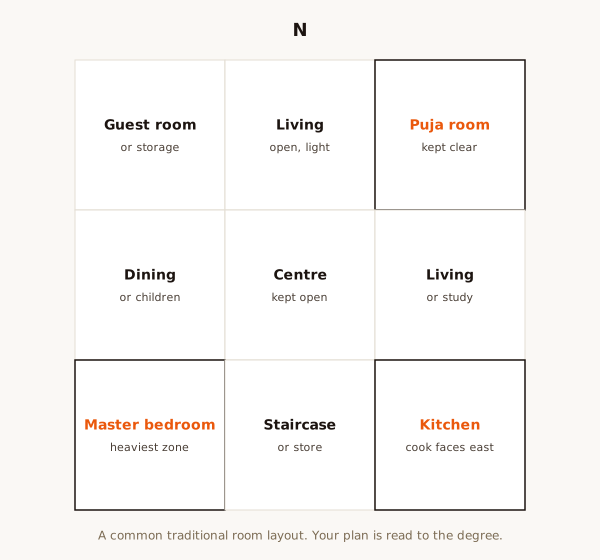
- North-East (NE): the water zone and the most sensitive corner. A kitchen here is the placement tradition most strongly avoids.
- Centre: tradition keeps the centre open. A central kitchen is common in some flats and is read with care. See Brahmasthan Vastu.
- South-West (SW): the zone of earth and stability, traditionally kept for the master bedroom.
- North of North-East (NNE) and East of North-East (ENE): generally avoided because they adjoin the north-east.
Zones that depend on the plan
- East (E): accepted by some practitioners with the stove in the south-east part of the room.
- South (S): accepted in some readings, especially towards the south-east.
- North (N): generally discouraged, since the north is an open, water-associated direction.
- West (W), West of South-West (WSW) and South of South-West (SSW): read case by case.
For these we look at the whole plan and tell you where practitioners disagree.
Inside the kitchen
- Stove: in the south-east part of the kitchen, with the cook facing east, or north as an alternative.
- Sink and water: in the north-east part of the kitchen, apart from the stove.
- Refrigerator: in the south-west, west or north-west part.
- Storage of grains and heavy items: along the south and west walls.
- Window and exhaust: on the east or north side where possible.
See Vastu for kitchen for a fuller layout guide.
Corrections without demolition
- Move the stove to the south-east part of the kitchen if the gas line allows.
- Reposition the cook so that they face east while cooking.
- Keep water and fire apart within the room.
- Use warm, earthy colours in a kitchen outside the south-east.
- Improve ventilation with an exhaust fan or chimney.
- In a renovation, check whether the cooking counter can shift within the same room.
We sell no products and suggest none. See zero-demolition corrections.
Kitchens in Bangalore apartments
Builder flats in Bangalore commonly place the kitchen beside the entrance, opening onto a utility balcony. Depending on which way the flat faces, that puts the kitchen anywhere from the south-east to the north-east. Mirror-image flats on the other side of the same tower flip the reading entirely, which is why two neighbours can get very different answers for an identical plan.
Ask for the plan of your own flat, not the typical floor plan, and confirm its direction on site. In a flat the kitchen cannot move, so kitchen direction Vastu for apartments is mostly about the stove position, the direction the cook faces, colour and ventilation. See 2BHK flat Vastu and Vastu for apartment.
Open kitchens and kitchen islands
Open kitchens that flow into the dining and living area are now common. Tradition reads the cooking zone, meaning where the stove actually sits, rather than the whole open space. An island hob in the centre of a large open plan can place fire in the Brahmasthan, which tradition avoids, so where possible we suggest keeping the hob on a wall counter in the south-east part and using the island for preparation and dining.
Open kitchens also carry smoke and smell into living spaces, so a good chimney and cross ventilation matter here as much as any Vastu rule.
Kitchens by house facing
East-facing homes: the kitchen often falls in the south-east at the front, which suits tradition well. Check that it has not been placed in the north-east beside the entrance. See east-facing house Vastu.
North-facing homes: the kitchen usually sits at the rear south-east or in the north-west. Both can work. See north-facing house Vastu.
South-facing and west-facing homes: the south-east or north-west kitchen is usually achievable with careful planning, and the stove direction becomes the key detail.
Kitchen direction Vastu in new construction
In a new house the kitchen should be fixed in the south-east or north-west at the first sketch, along with the gas line, the water supply and the drainage. Planning these together lets the stove sit in the south-east part of the kitchen and the sink in the north-east part without awkward plumbing. See Vastu for new construction and 30×40 house plan Vastu.
Office pantries and commercial kitchens
The same principle carries into workplaces. An office pantry suits the south-east of the floor. Restaurant and hotel kitchens are read by the same zones on a larger scale, with the main cooking line in the south-east and cold storage towards the south-west or west. See Vastu for hotels and restaurants and Vastu for office.
Questions we hear about kitchen direction Vastu
My kitchen is in the north-east. Should I move it? Not necessarily. Moving a kitchen is expensive. We first look at the stove position, the cook facing direction, colour and light. If you are already planning a major renovation, we will tell you whether a move is realistic.
Can the stove and sink be on the same counter? Yes, with some distance between them. Tradition keeps fire and water apart, which also makes a kitchen safer to work in.
Does the colour of the kitchen matter? Warm tones suit the fire zone. See Vastu colours for home.
Independent houses, villas and duplexes
In an independent house the kitchen usually sits on the ground floor, and its zone is read from the centre of the ground floor plan. The dining area works best between the kitchen and the living room, often near the centre, which keeps the centre in shared daily use rather than closed off.
Villas and duplexes sometimes add a second kitchen upstairs or a dry kitchen beside a wet kitchen. Each is read by its own zone. A dry kitchen used only for light preparation can sit in a wider range of zones, while the main cooking kitchen should follow the south-east or north-west. Where a family keeps a separate outdoor or service kitchen, the same reading applies to it within the open space around the house.
Before you buy a house, check the kitchen zone along with the toilets and the master bedroom. Our pre-purchase Vastu check covers all three.
Your next step
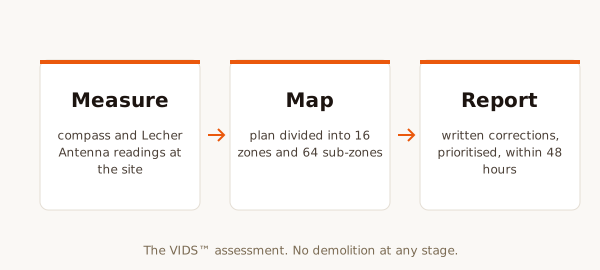
If you want your kitchen read with its exact zone, book a consultation online or on site in Bangalore and receive a measured, written report within 48 hours. The report lists the kitchen zone, the stove and sink positions, and the changes worth making first.