Plot facing direction vastu is one of the first things buyers ask about, and the honest answer is more nuanced than a single favoured direction. Every facing can work. Each one brings its own traditional strengths and its own specific corrections, and the exact entrance position within the boundary usually matters more than the broad direction.
In this guide we explain what the classical Vastu tradition says about east, north, south and west facing plots, what we actually measure on plots around Bangalore, and how to weigh direction against shape, slope, roads and surroundings before you commit to a purchase.
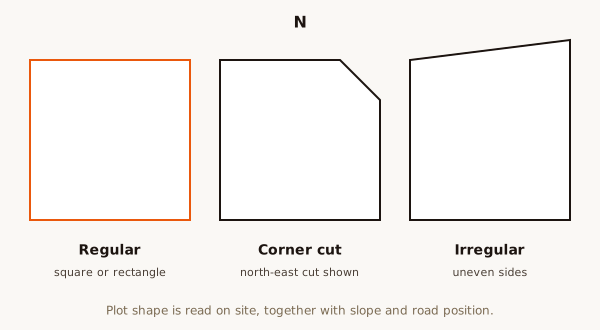
What plot facing direction vastu actually means
The facing of a plot is the direction you look towards when you stand inside the plot and face the main road. A plot with the road along its east boundary is east facing. That is simple in principle, but three things complicate it in practice.
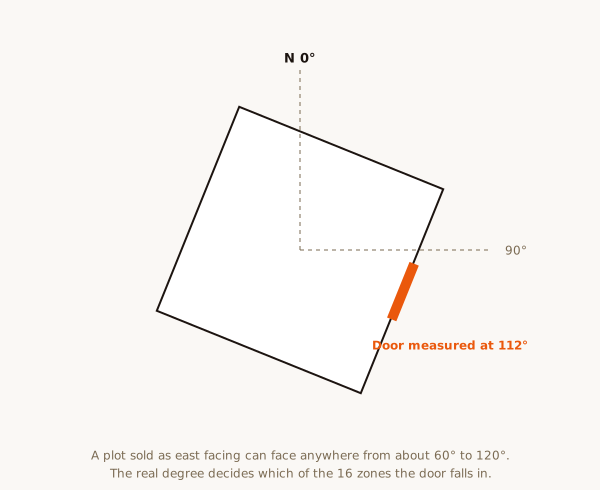
- Many plots are not aligned to the cardinal directions. A plot may face 15 or 20 degrees away from true east.
- Corner plots have two roads and so two possible facings.
- Layout plans and brochures describe facing loosely, sometimes from the road name rather than from a compass.
What we measure: the true bearing of the road side boundary, taken with a compass on site and corrected for local magnetic declination using the NOAA magnetic declination calculator. In our VIDS method the plot is divided into 16 zones of about 22.5 degrees each, so we can say precisely which zone the road side and any proposed gate fall into.
Why facing gets so much attention
Traditional guidance: north and east facing plots are favoured in classical Vastu, east for the rising sun and morning light, north for its traditional association with Kubera and wealth. That preference has spread well beyond the Vastu tradition. In many Indian property markets, including parts of Bangalore, north facing plots often carry a price premium simply because more buyers want them.
In plot facing direction vastu, facing is a useful first filter. It tells you which side the gate and main door will most likely be on, and how sunlight will fall across the house. It does not, on its own, tell you whether the finished home will work well. That depends on several other factors we cover below.
East facing plots
East facing plots are traditionally considered favourable, linked with the rising sun and new beginnings. In Bangalore they also bring practical benefits: soft morning light into the front rooms and a cooler west side at the back if it is planned well.
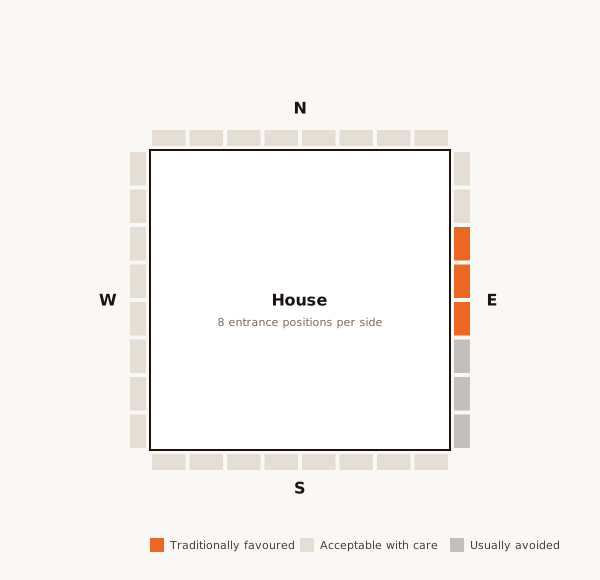
The specific placement of the entrance within the east boundary still matters more than the direction alone. Traditional guidance prefers the gate and main door towards the north half of the east side, closer to the north-east. The far south-east end of the east boundary is treated with more caution. For house planning detail, see east facing house Vastu.
North facing plots
North facing plots are traditionally the most sought after in Vastu, and that traditional preference is one reason they are often priced higher. They receive steady, indirect light on the road side for most of the year, which suits living areas and work spaces.
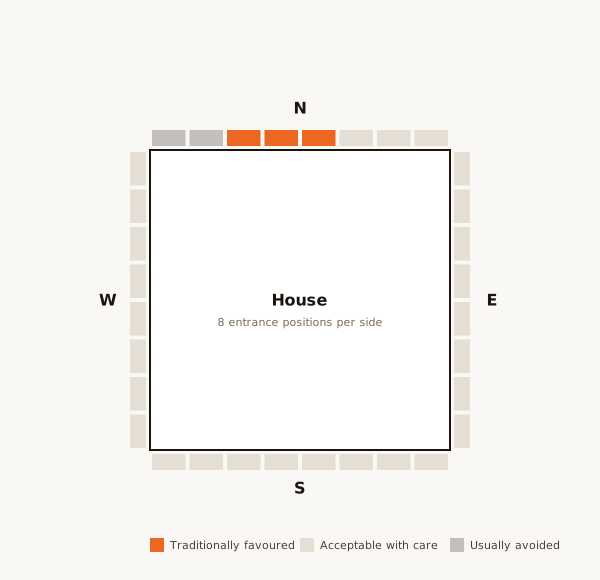
As with east facing land, the entrance zone is the deciding detail. The north-east half of the north boundary is usually preferred for the gate and door. The far north-west end can work for some uses but needs more care. Our north facing house Vastu page explains the room layout that follows.
South facing plots
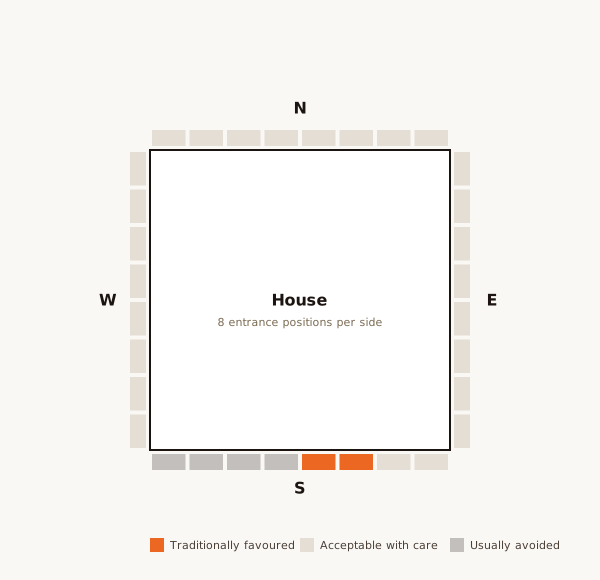
South facing plots are the direction most commonly seen as unfavourable. That reputation is stronger in popular belief than in some classical texts, which treat south facing plots as workable with correct entrance placement and specific corrections. They are often priced lower, which can be a real advantage for a buyer who plans carefully.
Traditional guidance places the entrance towards the south-east side of the centre of the south boundary rather than the south-west end. The rest of the plan then keeps the south and south-west solid and heavier, with the master bedroom in the south-west and open space towards the north-east. See south facing house Vastu for the full layout.
West facing plots
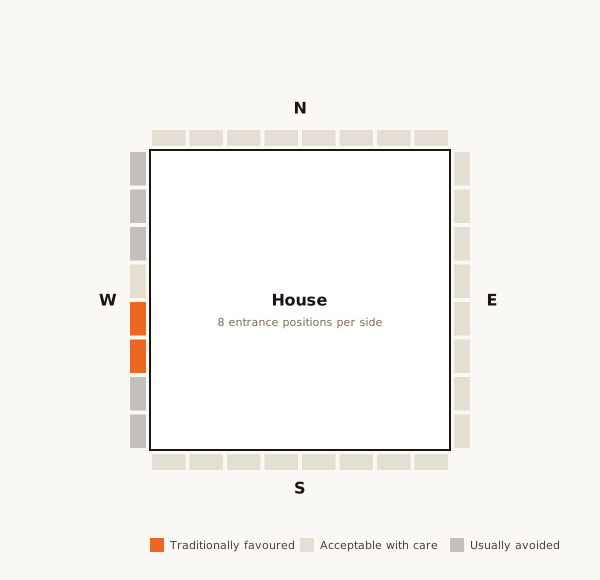
West facing plots sit between north or east and south in traditional preference. They are generally considered workable with attention to entrance placement, and they are common enough in most cities that they are not treated as a serious obstacle.
The gate usually works best towards the north-west side of the centre of the west boundary. The practical point in Bangalore is the afternoon sun on the road side, which shading, planting and window placement can handle well. Read more on west facing house Vastu.
Corner plots and two-road plots
A corner plot faces two directions at once. Traditional guidance values a north-east corner plot highly, with roads on the north and east, and treats a south-west corner plot with more care. North-west and south-east corners sit in between.
Two roads also mean two possible gates. We usually advise one main gate in the better zone and, if a second gate is needed for parking, a secondary gate placed with equal care. A corner plot often costs more, so it is worth checking that the extra road actually works for you in Vastu terms before paying for it.
Roads, T-junctions and dead ends
A road that runs straight into the plot from the front, at a T-junction, is treated with caution in the classical tradition. How much it matters depends on which zone the road meets. Some positions, such as a road meeting the north-east end of a north or east boundary, are considered acceptable, while others are generally avoided.
Dead-end roads limit movement and can leave a plot feeling cut off, though they are often quiet and safe. What we do: map the line of each road and junction onto the 16 zones, so the advice is based on where it actually meets the boundary, not on a general rule of thumb.
What matters more than the broad direction
In plot facing direction vastu, the direction alone does not decide whether a plot is a good or poor choice. A south facing plot with a well placed entrance can outperform a north facing plot with a poorly positioned one. In a full assessment we weigh the compass facing alongside these factors.
- The exact degree of facing within the direction.
- Corner or mid-block position.
- The shape of the plot and any cut or extended corners.
- The slope of the land and the direction it falls towards.
- Neighbouring buildings, open land, water bodies and tall structures.
- Where the entrance can realistically go once setbacks and the building plan are considered.
Common mistakes we see buyers make
These patterns come up often in pre-purchase consultations across Bangalore.
- Accepting the facing stated in the brochure without checking it with a compass.
- Rejecting a good south or west facing plot without looking at the entrance options.
- Paying a premium for north facing land that has a cut north-east corner.
- Ignoring a T-junction or a high-tension line because the facing looks right.
- Fixing the house plan with an architect before the Vastu review, then trying to adjust later.
How we assess a plot’s facing
For a pre-purchase plot facing direction vastu review we need a survey sketch or site plan with dimensions and a marked north, plus photographs from each boundary side. We can work online from these, or visit the plot in Bangalore and take our own compass readings. Where a visit is possible we also take Lecher Antenna readings across the land to check for geopathic stress.
The pre-purchase plot report is ₹5,000 and arrives in writing within 48 hours, with the facing, the zone of each boundary, the best entrance positions and any concerns stated plainly. Full fees are on our consultation fees page.
Planning the house to suit the facing
On a vacant plot there is nothing to demolish, so this is the best moment to get the layout right. Once the facing and entrance zone are fixed, the rest of the plan follows: kitchen towards the south-east, master bedroom in the south-west, an open or light north-east, staircases and heavy storage to the south or west. Our new construction Vastu service works alongside your architect at the drawing stage.
Sources: classical and interpretive
Traditional: the preference for north and east, the caution around south-west openings and road hits, and the importance of the entrance zone come from classical texts in the Vishvakarma tradition, including the Aparajitaprccha. Interpretive: applying those principles to modern layouts, setbacks and Bangalore road patterns is professional judgement, and our report marks which is which.
Before you sign for a plot
If you are comparing two or three plots, a short written review before you pay an advance is far easier than correcting a layout later. Work through our before buying a plot Vastu checklist, read the Vastu for plot service overview, and when you have the survey sketch ready you can book a consultation.