Staircase Vastu matters most in duplexes, villas and independent houses, where a flight of stairs is one of the heaviest and most permanent elements in the plan. Classical Vastu has clear views on where stairs belong, which way they should turn as you climb and how the space beneath them is used. It also has views on what to avoid, and a North-East or central staircase is the one families ask us about most.
This guide covers internal and external stairs in Bangalore homes. It separates traditional guidance from what we measure on site, explains the clockwise rule, and sets out what can be done about an existing staircase without demolition. Rebuilding a staircase is genuine construction, and we say so plainly when that is the only route.
Why stairs matter in Vastu
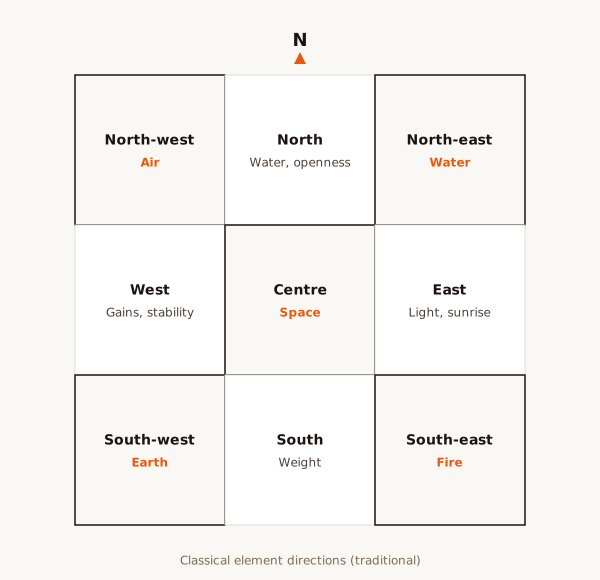
A staircase is heavy, it is used many times a day and it connects floors. Vastu reads weight and movement as two of the most important qualities of any part of a house. Heavy masses belong in the South and West, while the North and East are kept lighter and more open. A staircase placed against that logic sits in the plan for the life of the building.
There is also safety. Stairs cause more household accidents than any other part of a home, so a good staircase Vastu review always looks at lighting, handrails and the comfort of each step as well as direction.
Traditional zones for a staircase
Traditional Vastu guidance: the South, West and South-West are the preferred zones for a staircase, because they suit weight. Many schools also accept the South-East and North-West, especially for external stairs.
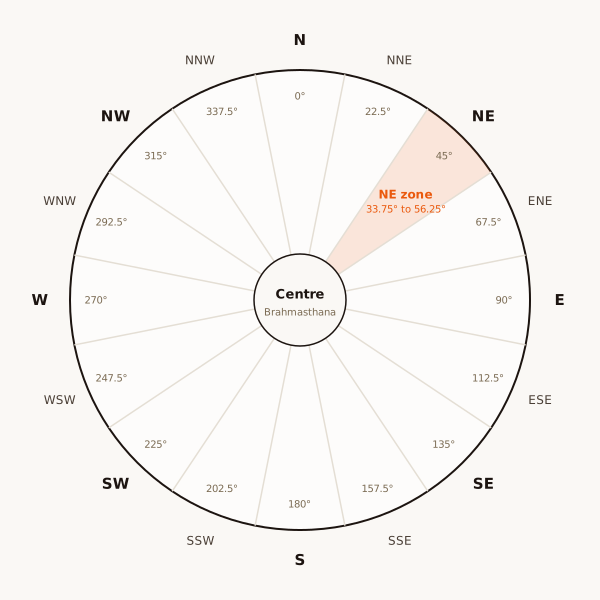
What we measure: we divide the house into 16 zones of about 22.5 degrees each, measured from true north on site and corrected for declination. A staircase that the builder plan shows in the West may actually start in West-North-West and end in North-West. Our 16 zones explained guide shows how the wheel is laid over a plan.
Zones traditionally avoided
Traditional Vastu guidance: two positions are discouraged above all others:
- The North-East: the zone Vastu keeps lightest and most open. A heavy staircase here is the opposite of what the classical texts advise.
- The centre of the house: the Brahmasthana, which Vastu keeps clear of weight, walls and heavy structures.
A staircase rising directly in front of the main door is also traditionally discouraged, partly for Vastu reasons and partly because it makes the entrance feel rushed and cramped.
The clockwise rule
Traditional Vastu guidance: a staircase should turn clockwise as you climb. Seen from above, the person going up should move from North towards East, East towards South, South towards West, or West towards North. In a straight flight, climbing from North to South or from East to West, so that you rise towards the South or West, is preferred.
Many existing stairs in Bangalore houses turn anticlockwise because of how the plot and the entrance were laid out. This is common. We note it in the report, but on its own it is not a reason to rebuild.
Number of steps
Some families follow the custom of an odd number of steps in each flight, and a few older traditions use a counting rule so that the last step lands on a favourable count. We mention these customs where families ask. In our Vastu reports they rank far below position, light and safety, and we would never suggest altering a sound staircase to change its count.
Internal staircases in duplexes and villas
In a duplex or villa the internal staircase usually rises from the living or dining area. Good staircase Vastu here looks at a few things together:
- The staircase starts in the South, West or South-West part of the ground floor.
- It does not face the main door directly.
- The landing and the top of the stairs are well lit, ideally by daylight.
- There is no puja space, toilet or kitchen tucked under it.
- The upper floor lands in a hall or passage rather than straight into a bedroom.
Our Vastu for villa service reads the staircase together with the rooms it connects.
External staircases in independent houses
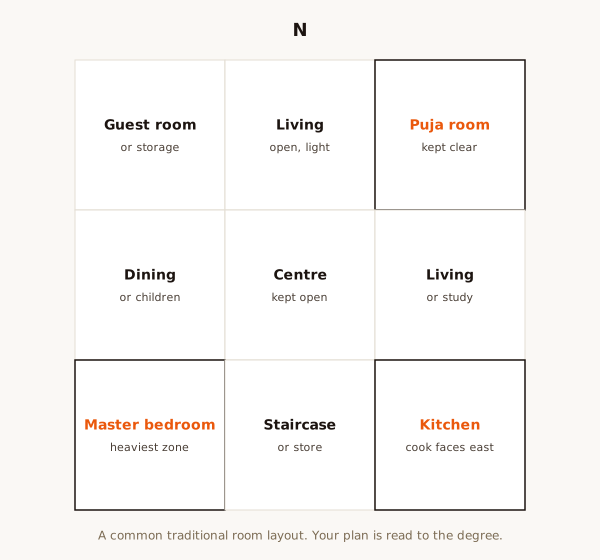
Many independent houses in Bangalore have an external staircase leading to a rented upper floor or a terrace. Traditional Vastu guidance places these on the South, West or South-West side of the building.
- Avoid an external staircase that covers the North-East corner of the plot.
- Keep it clear of the main entrance and of East or North facing doors.
- Make sure it does not block morning light into the ground floor rooms.
- Give it a sound handrail and lighting for night use.
If you are buying a house with a separate upper floor, our independent house Vastu service reads both floors together.
Using the space under the stairs
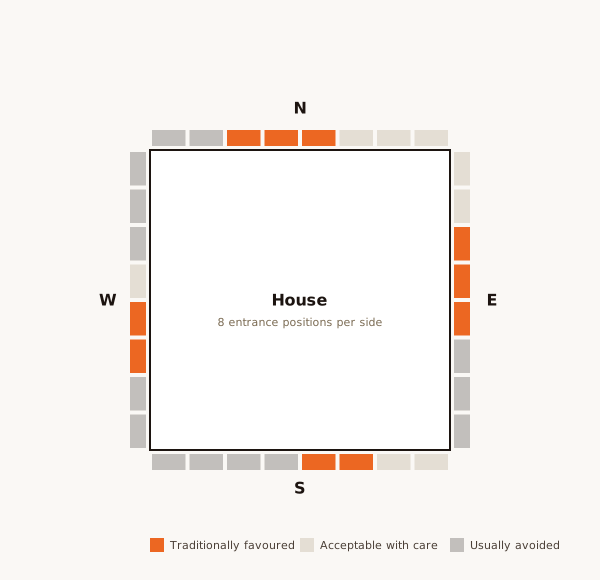
The space under a staircase is tempting, especially in compact duplexes. Traditional guidance is cautious about it, but light use is fine.
- Suitable: storage of luggage, seasonal items and things used now and then, a small closed cabinet, a shoe cupboard if there is no better place.
- Traditionally avoided: a puja space, a toilet, a kitchen, a study desk or a bed.
Keep the area clean and closed. An open heap of old boxes under the stairs is both a Vastu concern and a fire risk. Our Vastu for pooja room guide explains better places for the altar.
Spiral and floating staircases
Spiral staircases are traditionally discouraged in Vastu, and they are also harder to climb with shopping, children or age. Where one exists, usually to a terrace, we suggest keeping it in the South-West or West, well lit and fitted with a firm rail. Floating and open-riser stairs are a design choice; they are acceptable when positioned in suitable zones and made safe for small children.
When the staircase is in the North-East
This is the staircase Vastu situation we see most in older Bangalore duplexes. Rebuilding the staircase is major construction and rarely justified. Instead we suggest:
- Light colours on the staircase walls and treads.
- Good lighting along the flight and at the landing.
- Nothing heavy stored underneath, and the area under the stairs kept open and clean.
- The rest of the North-East zone kept clear of heavy furniture and clutter.
- Heavier furniture and storage moved to the South and West to restore balance.
These corrections follow our zero-demolition corrections approach.
Colours, materials and lighting
Stone, wood and good quality tiles all work. Choose finishes that are not slippery when wet, especially on external stairs during the monsoon. Light, warm colours make a staircase feel open and help people see each step. Every flight should have a light switch at both the top and the bottom.
Common staircase issues we see in Bangalore homes
- An internal staircase rising in the North-East of a duplex living room.
- A puja shelf or a powder room built under the stairs.
- An external staircase on the North side covering the entrance.
- A dark landing with no window and a single weak bulb.
- Old furniture and paint tins stacked under the stairs.
Each of these is addressed with use, light and storage changes. Where construction is truly needed, we say so in the report.
How a staircase Vastu assessment works
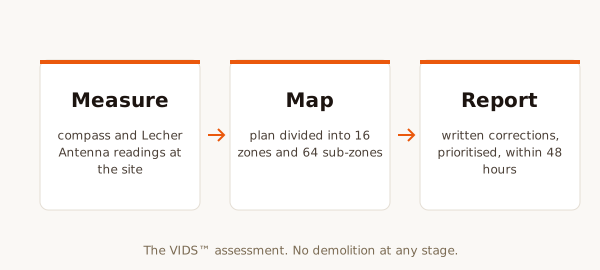
On a site visit we take compass readings at several points, away from steel and electrical panels, and correct them for declination using a reference such as the NOAA magnetic declination calculator. We lay the 16 zones over a measured plan of each floor and mark the start, turn and landing of every staircase, along with the direction of climb.
The full method is described on our Vastu methodology page. You receive a written report within 48 hours, with traditional guidance and our measured findings set out separately.
Planning stairs in a new house
At drawing stage, staircase Vastu is simple to get right. We mark the South, West and South-West zones before the architect fixes the structural grid, check the direction of climb and keep the North-East and the centre free. Our Vastu for new construction service works with your architect from the first sketch.
Questions to ask before you build or buy
Whether you are reviewing an architect’s drawing or walking through a finished duplex, a few questions about the stairs save a lot of later regret:
- Where does the staircase start and end once north is corrected on the plan?
- Which way does it turn as you climb?
- Is there daylight on the landing, and a switch at both ends of every flight?
- Are the treads deep enough and the risers low enough for elderly parents and small children?
- What has been planned for the space underneath, and is it easy to keep clean?
- Does the top of the stairs open into a passage or straight into a bedroom?
If the answers are mostly good, small issues can be managed later. If several are poor, it is worth discussing changes before the structure is cast.
Getting your home assessed
Staircases are read in every home Vastu consultation for duplexes, villas and independent houses, along with the entrance, kitchen and bedrooms. Our Vastu for home page explains the service, fees are on the consultation fees page, and you can book a Vastu consultation whenever it suits you.