What is a Vastu consultation? In simple terms, it is a structured assessment of a property against a directional and elemental framework, ending in a written report that tells you what we found and what to do about it. It is not a ritual, a sales pitch for products or a general impression. It is a reading of one specific building, measured and documented.
At Vardhini Vastu, every consultation uses VIDS, our 16-zone method, whether we stand in your living room in Bangalore or work from a floor plan you send from another city. This guide explains each step, what we measure, what you receive and how much it costs, so you know exactly what you are booking before you book it.
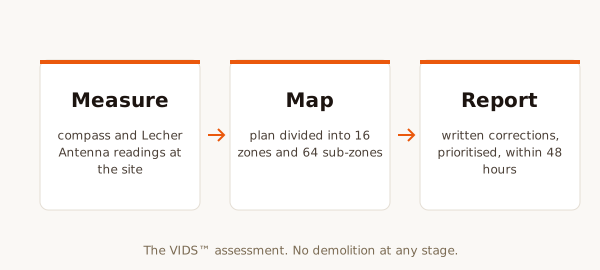
What is a Vastu consultation, in plain terms
Think of it as a survey with a specific lens. A building surveyor checks structure and services. We check orientation: which direction each room, door, water point and fire point falls in, and whether that placement supports how the space is actually used.
The classical texts, including the Aparajitaprccha and the wider Vishvakarma tradition, describe ideal layouts for new construction. Most people, though, call us about a home or office that already exists. So the real question in most consultations is not “is this perfect?” but “what here matters most, and what can we change without breaking anything?”
The six steps we follow every time
Every consultation follows the same sequence, so nothing is left to mood or guesswork:
- Understand: who lives or works in the space, how it is used and what prompted the call
- Observe: walk the site, or study the floor plan and photographs
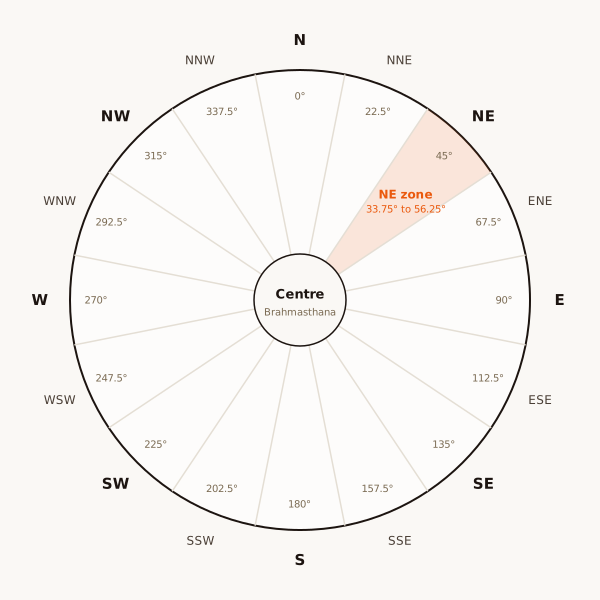
- Analyse: map the layout onto 16 directional zones from the true centre
- Diagnose: identify which zones carry the wrong function, weight or clutter
- Recommend: specific corrections, ranked by priority
- Balance: check that the corrections work together rather than fixing one zone at the cost of another
The last step is easy to skip and important. Moving a heavy cupboard out of one zone only helps if it does not end up blocking another.
Traditional guidance and what we measure
We keep two things separate in every report, because mixing them is where most confusion comes from.
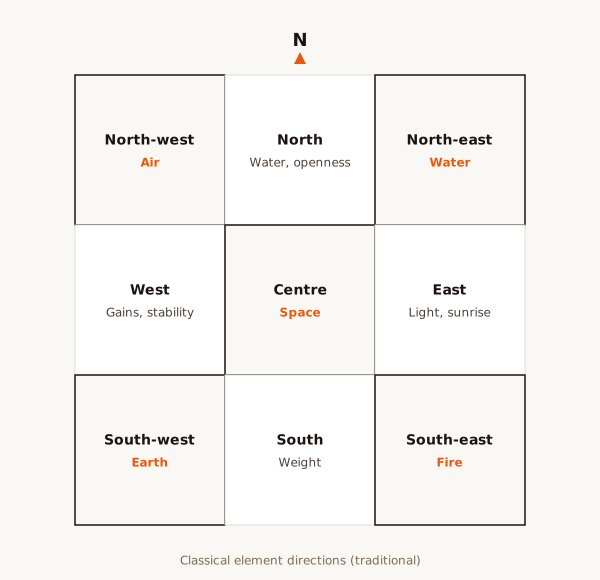
Traditional guidance: the classical rules about direction and element. North-east linked with water and openness, south-east with fire, south-west with earth and weight, north-west with air and movement, and the centre kept open.
What we measure: the actual readings on your site. True north, the real angle of the main door, which zone each room falls in, the position of the centre, and where possible, geopathic stress readings with a Lecher Antenna.
A rule only becomes a recommendation once a measurement shows it applies to your building. That is the difference between a consultation and a list of tips copied from the internet.
What happens during an on-site visit
For a typical home in Bangalore, the visit takes about 2 to 4 hours. Larger villas and commercial sites take longer. During the visit we:
- Take compass readings at several points, away from steel, wiring and appliances that pull the needle
- Correct the magnetic reading to true north using the local declination
- Mark the centre (Brahmasthan) on the floor plan
- Walk every room and note use, furniture, storage and water points
- Take Lecher Antenna readings for geopathic stress where the site allows
Magnetic declination is the angle between magnetic north and true north. It changes by location and slowly over time. We check it using the NOAA magnetic declination calculator so the zone map starts from the right line.
How an online consultation differs
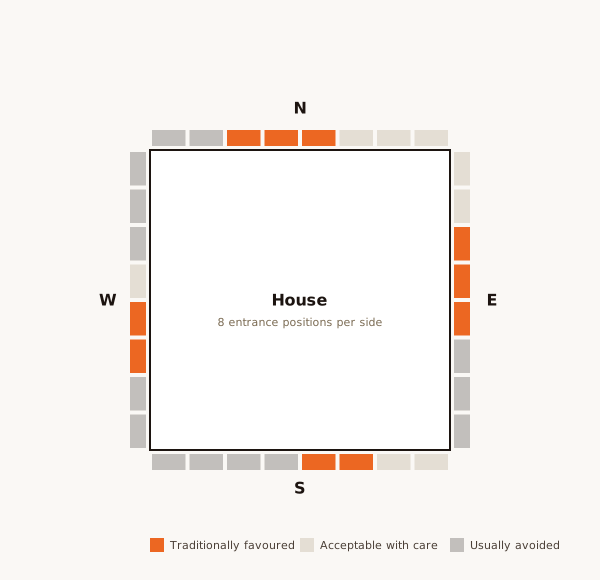
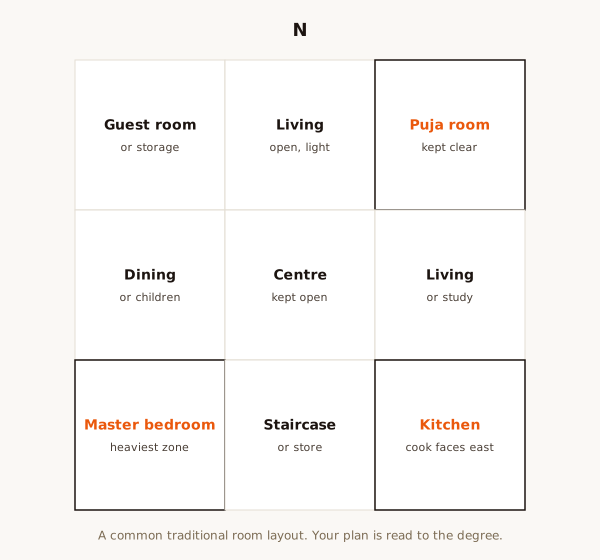
An online consultation runs the same directional analysis from a floor plan, photographs and a compass reading you take at the main door. The 16-zone mapping is identical. What it cannot include is the Lecher Antenna reading, which needs someone physically on site. An online assessment uses traditional Vastu only, the 16-zone map and the 3×3 grid drawn on your plan; geopathic stress readings need a site visit.
Online works well for homes outside Bangalore, for NRIs and for pre-purchase checks where you cannot yet access the property. Our article on online vs onsite consultations goes into the trade-offs in more detail.
Common issues a consultation picks up
Across Bangalore apartments, independent houses and offices, a few patterns appear again and again:
- A toilet or a heavy store room in the north-east
- A kitchen stove in the north or north-east instead of the south-east
- The master bedroom in the north-west or north-east instead of the south-west
- A cluttered or built-over centre
- A main door in a zone that needs extra care, often on a south or west road
- Overhead water tanks or heavy loads placed in the north-east
None of these is a reason to panic. Each has a range of practical responses, and the report tells you which ones apply to your building.
Corrections without demolition
Our default is zero demolition. Most corrections use placement, room use, colour, lighting and decluttering. A typical report might suggest shifting the head of a bed, swapping two rooms, moving heavy storage to the south-west, changing a wall colour, adding light to a dull corner or clearing the centre.
Sometimes a problem genuinely needs construction, such as a poorly placed staircase in a plot you have not yet built on. When that is the case, we say so plainly and explain the options. See zero-demolition corrections for more examples.
What you receive after the consultation
You receive a written report within 48 hours of the assessment. It contains:
- Your zone map, drawn from true north
- Room-by-room observations, separating traditional guidance from what we measured
- Recommendations ranked by priority, so you know what to do first
- Notes on anything that would need an architect or contractor
You can see the format on our sample Vastu report page. The report is yours to share with family, your architect or your interior designer.
What a consultation costs
Fees are fixed by property type and published openly:
- Online, anywhere: ₹5,000
- Bangalore apartment or row house: ₹15,000
- Bangalore villa or independent house: ₹25,000
- Outstation apartment: ₹21,000 plus travel
- Outstation villa: ₹30,000 plus travel
- Commercial or industrial: from ₹51,000
- Pre-purchase plot report: ₹5,000
Full details are on the consultation fees page. We sell no products and take no commission from builders, so the fee is the only thing you pay us.
Homes and businesses: same method, different focus
The framework does not change between property types. What changes is where we spend the most attention. In a home, it is rest, the kitchen, the entrance and family areas. In an office, it is leadership seating, the accounts function, the reception and how people move. In a factory, it is machinery, heat, storage and dispatch.
For property-specific detail, see Vastu for home, Vastu for office and industrial Vastu.
What a consultation is not
It helps to be clear about the edges. A consultation from us does not include astrology, horoscopes, gemstones or remedies you have to buy. We do not promise guaranteed financial, health or relationship results, and you should be cautious of anyone who does.
What we do offer is a careful reading of your space, based on classical principles and on-site measurement, with practical steps you can take. Our methodology page explains the VIDS framework in full.
Who should book one, and when
The best time is before you commit: before buying, before signing a lease, before an interior designer finalises a layout. The second-best time is now, if something in your home or workplace feels persistently off and you want a structured view of it.
If you are unsure what to send or ask, our guide on how to prepare for a consultation lists everything in one place.
Common myths about Vastu consultations
A few beliefs put people off booking, so it is worth addressing them directly.
- Myth: Vastu always means breaking walls. In practice, most Vastu corrections we suggest are about placement, use and light.
- Myth: a Vastu consultant will sell you remedies. We sell nothing beyond the consultation itself.
- Myth: Vastu only applies to new construction. Most of our Vastu work is on homes and offices already built and lived in.
- Myth: one bad direction ruins a property. Vastu looks at the whole layout; a single zone rarely decides anything on its own.
A good Vastu consultation should leave you calmer and clearer, not anxious about every corner.
How to get the most from your Vastu consultant
Be specific about why you are calling. “Sleep has been poor since we moved” or “we are deciding between two flats” gives the Vastu assessment a clear focus. Share how each room is really used, not how the builder labelled it. Ask questions during the visit, and ask again once you have read the report. Vastu advice works best when the family or team understands the reasoning behind it, because then the changes tend to stay in place. Finally, keep the report: it remains useful when you renovate, rearrange or plan your next move.
Next step
So, what is a Vastu consultation in the end? A measured, written answer to the question “what in this space needs attention, and what can I do about it without breaking walls?” If that is what you are looking for, you can read about our residential consultations or simply book a consultation when you are ready.