This before buying plot vastu checklist covers what to verify before you pay an advance on land. A plot is the one property type where a Vastu review before purchase has the most room to matter, because there is no existing structure to correct around. Every decision about the house is still open.
The checklist runs in the order we follow on site: facing, shape, corners, slope, roads, surroundings and the realistic position of the entrance. It is written for buyers in and around Bangalore, but the principles apply to any residential plot.
Why a plot is the best moment for Vastu
Once a house is built, Vastu work becomes a matter of adjusting room use, colour, lighting and furniture around fixed walls. That can achieve a lot, but it is always working within limits. On an empty plot, the same principles can shape the gate, the main door, the kitchen, the bedrooms and the open spaces from the start.
The cost of a review is also small compared to the cost of the land. A short written report before purchase can save a buyer from a plot with a problem that no layout can fully solve, or give confidence that a cheaper plot is in fact perfectly workable.
Step 1: Confirm the facing with a compass
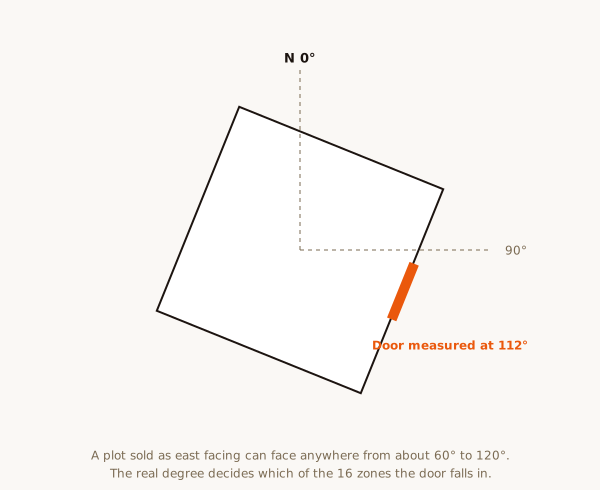
- Check the facing direction with a compass rather than assuming it from the road name or the seller’s description.
- Note which side the entrance road runs on, and whether it is a through road, a dead end or a T-junction.
- If it is a corner plot, note which two directions the corner faces.
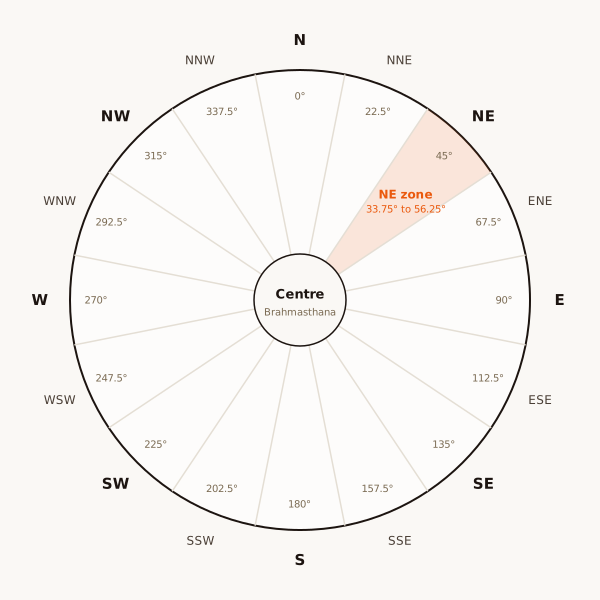
What we measure: the bearing of each boundary from true north. A phone compass gives a rough idea, but readings drift near vehicles, poles and steel. We correct site readings for local magnetic declination with the NOAA magnetic declination calculator, then place each boundary in our 16 zone VIDS grid, with each zone about 22.5 degrees wide. For what each facing means, see plot facing direction Vastu.
Step 2: Check the shape and boundary
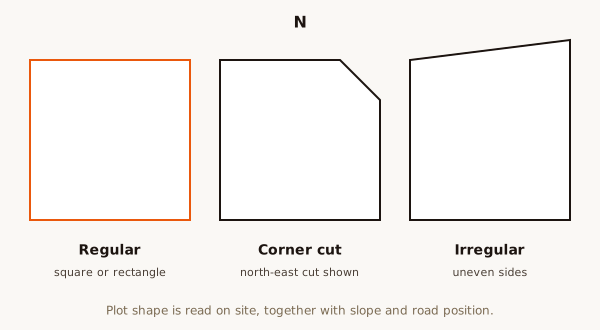
- Overall shape: a regular square or rectangle is traditionally preferred over an irregular or triangular plot.
- Proportion: a plot that is very long and narrow limits how the house can be arranged.
- Boundary lines: check that the survey sketch matches what is on the ground.
Practical tip: an irregular plot is not automatically a poor choice. Many corrections for shape issues involve how the building itself is positioned within the boundary, which is far easier to plan before construction than after. A regular house footprint placed carefully inside an irregular plot often resolves most of the concern.
Step 3: Look for cut and extended corners
- Any cut or missing corner, particularly in the north-east, south-west or south-east.
- Any extension beyond a regular boundary, and which direction it extends towards.
Traditional guidance: a cut north-east corner is the most discussed concern in Vastu, because the north-east is the zone kept open, light and clean. An extension towards the north-east is generally welcomed. Extensions towards the south-west, south-east or north-west are treated with more caution. What we check is the size of the cut or extension relative to the plot, since a small kink in a boundary wall is not the same as a missing quarter.
Step 4: Read the slope and the levels
- Is the land level, or does it slope? Which direction does it fall towards?
- Is the plot higher or lower than the road and the neighbouring plots?
- Where does rainwater collect after a heavy shower?
Traditional guidance prefers land that is higher in the south and west and lower towards the north and east, so water drains to the north-east. In Bangalore, many layouts are levelled before sale, so the natural slope may only show after rain. Levels can usually be adjusted during construction, but it is better to know the starting point.
Step 5: Study the roads around the plot
- Width and traffic of the main road.
- Any road that meets the plot head on, forming a T-junction.
- A dead-end road, which can be quiet but limits movement.
- On corner plots, which road the main gate will open onto.
A road meeting the plot head on is treated with caution in the classical texts, though some positions are acceptable. The answer depends on the exact zone the road meets, which is why we map it on the plan rather than apply a blanket rule.
Step 6: Note the surroundings
- Proximity to any water body, and which side of the plot it sits on.
- Neighbouring structures: anything unusually tall or low relative to the plot.
- High-tension lines, mobile towers or transformers close to the boundary.
- Open drains, dumping areas or heavy commercial use next door.
Traditional guidance favours water and open land to the north and east, and taller or heavier neighbours to the south and west. Where a site visit is possible, we also take Lecher Antenna readings across the land to check for geopathic stress, which can influence where we suggest placing bedrooms.
Step 7: Check where the entrance and house can sit
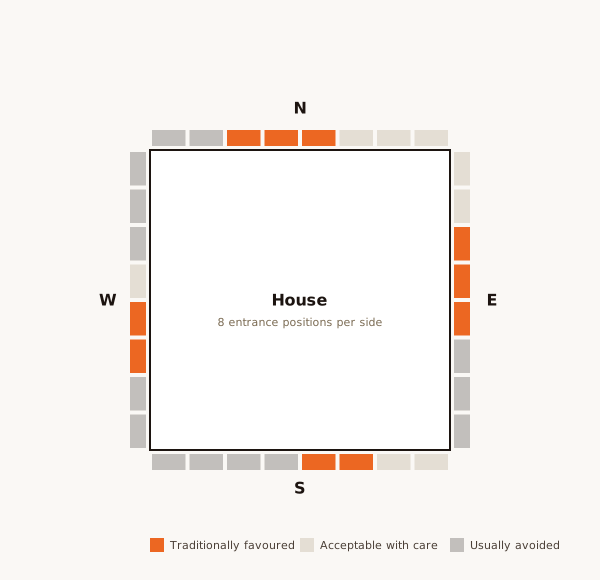
Setbacks, local building rules and the size of the plot decide where the house can actually stand. Before buying, sketch the buildable area and check that the main door can fall in a good zone on the road side. If the only realistic entrance position falls in a difficult zone, the plot needs more careful thought, and our report will say so plainly.
The before buying plot vastu checklist at a glance
- Facing confirmed with a compass and corrected to true north.
- Shape regular, or a clear plan for placing a regular house within it.
- No significant cut in the north-east; extensions noted and measured.
- Slope and drainage understood, ideally falling to the north or east.
- Roads, junctions and gate options mapped.
- Surroundings checked for water, tall neighbours, power lines and drains.
- Entrance zone confirmed within the buildable area.
Documents to bring to an assessment
A survey sketch or site plan with dimensions and a marked north direction is the most useful document for a pre-purchase consultation. Add photographs of the plot from each boundary side and from the road, plus a short video walking the boundary if a physical visit is not possible. Our guide on how to prepare for a Vastu consultation lists what else helps.
What this checklist cannot tell you
This checklist is a starting point for your own preliminary review, not a substitute for a full assessment. Several items interact with each other: a slight slope may balance a small cut corner, or a good road may be undone by a poor entrance zone. Those interactions are easier to weigh correctly with a written, zone by zone reading.
Online review or site visit
We can review a plot online from the survey sketch and photographs, or visit in Bangalore to take our own readings. The pre-purchase plot report is ₹5,000 and is delivered in writing within 48 hours, so it fits within most negotiation timelines. The difference between the two routes is explained in online vs onsite Vastu consultation, and all fees are on our consultation fees page.
Questions to ask the seller or developer
Some Vastu points cannot be seen on a site visit and need to be asked. Get these answers in writing where you can.
- Is the survey sketch current, and does it show a marked north?
- Are the boundaries fixed, or could the road be widened in future and change the frontage?
- What will be built on the neighbouring plots, and to what height?
- Where will the layout place transformers, sumps and drainage lines?
- Is there any filled land, old well or tank under the plot?
An old well or filled pond under a plot is worth knowing about for both structural and Vastu reasons, so it is always worth asking.
Common mistakes buyers make with plots
- Paying an advance first and asking for a Vastu review afterwards.
- Rejecting a workable south or west facing plot on reputation alone.
- Overlooking a cut north-east corner because the facing looks right.
- Trusting a layout map for north instead of a compass reading.
- Assuming the architect will fix any Vastu issue at the drawing stage.
None of these is unusual. A short pre-purchase Vastu review exists precisely to catch them while the decision is still yours.
Next step
For the service overview, see Vastu for plot. Once you have bought, our new construction Vastu service works with your architect on the plan. Buying a flat instead? Use the apartment buying Vastu checklist. When the survey sketch is ready, you can book a consultation.