This industrial vastu complete guide explains how we read factories, sheds and warehouses. In short: heavy machinery and stock sit in the south and west, the north-east is kept open and light, fire and power equipment go to the south-east, finished goods and dispatch move through the north-west, and the owner’s office sits in the south-west.
A factory is not a large house. Its purpose is to move material through a sequence of steps, so we read the plot and the sheds first and then trace the process itself. Most of the corrections we suggest are layout changes made around running operations. Rebuilding a shed is never part of our advice.
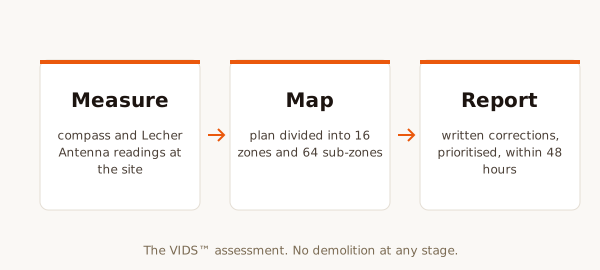
What industrial Vastu actually looks at
We read an industrial site in three layers: the land, the buildings on it, and the process that runs inside them. The classical texts describe the first two in some detail. The third is where professional interpretation comes in, because no 12th century author had a CNC machine or a diesel generator in front of him.
- The plot: its shape, its slope, its corners and how the road meets it.
- The gate and internal roads: where trucks enter, turn and leave.
- The sheds: their orientation, their weight and their open areas.
- The elements: where fire, water, weight and open space sit on the plan.
- The process: the path material takes from receiving to dispatch.
- The people: the owner’s cabin, accounts, security and staff facilities.
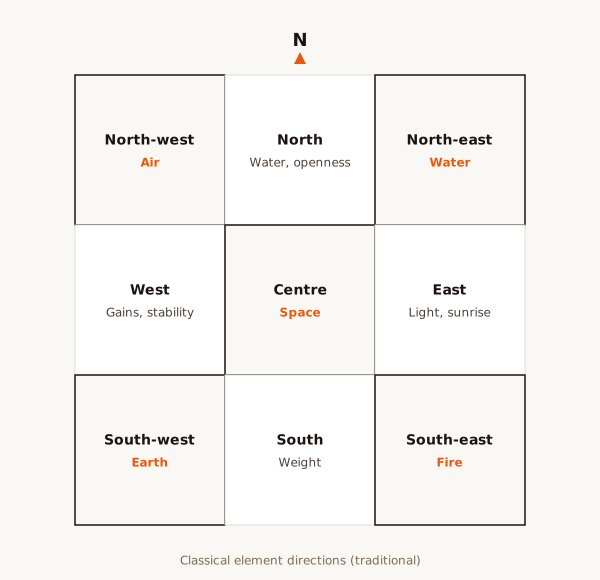
Traditional guidance: each direction carries an element and a quality, and a building works well when its uses match those qualities. What we measure: the actual bearing of each shed and room from true north, the position of each major load and fire source, and, where a visit is possible, Lecher Antenna readings for geopathic stress across the floor.
Think in terms of the process
Raw material arrives at the gate, is unloaded, stored, issued to the line, processed, inspected, packed, held and dispatched. Each of those steps has a natural zone. Storage of heavy raw stock suits the south-west and west. Processing with heat suits the south-east. Packing and holding suit the north-west, where Vastu places air and movement. The north-east, the zone of water and clarity, is best left light.
A typical small fabrication unit we see on the edges of Bangalore has grown in stages. The first shed was planned, the second was added where space allowed, and the store moved wherever there was a gap. The result is material crossing the site two or three times. When we redraw the flow so that it moves in one broad direction, the Vastu corrections and the practical improvements usually point the same way.
The industrial plot: shape, slope and gate
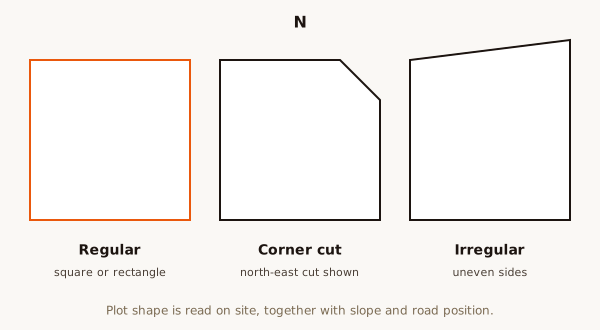
For a new or vacant industrial plot, the classical checks apply. Traditional guidance: a regular square or rectangular shape, no cut or missing corner in the north-east, the land sloping down towards the north or east, and road access that supports a good gate position. Extensions in the north-east are welcomed, while extensions in the south-west are treated with caution.
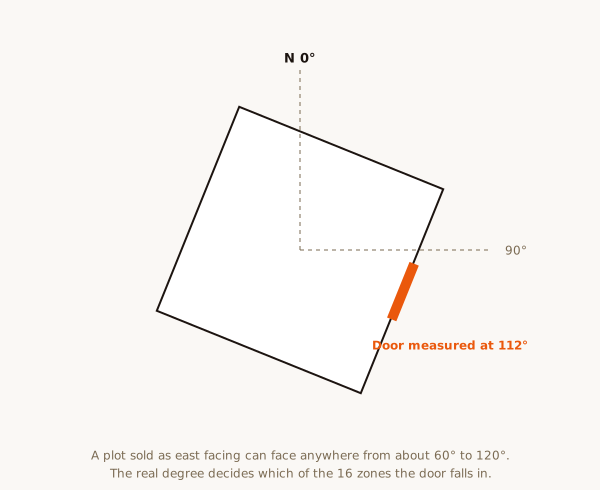
What we measure: the true bearing of each boundary, the levels across the plot, and the exact gate position against the 16 zones. A plot that faces slightly off a cardinal direction can place a gate in a very different zone from the one the brochure suggests. If you are still choosing land, see Industrial Plot Vastu and our guide to plot facing direction.
Zone by zone: the industrial vastu complete guide table
The table below summarises where the main industrial functions sit best. It is a starting point. On site we adjust it to the real shape of the plot and the way the process runs.
| Area | Preferred zone | Reason |
|---|---|---|
| Heavy machinery, raw material | South, west, south-west | Weight and stability |
| Boilers, furnaces, transformers, DG sets | South-east | Fire element |
| Water tanks, borewell | North-east, north | Water element |
| Finished goods, dispatch | North-west | Air element, movement |
| Owner and accounts office | South-west | Control and stability |
| Open area | North-east, centre | Kept light and unobstructed |
Heavy machinery and raw material
Presses, lathes, moulding machines and stacks of steel or granules are the heaviest things on site. Traditional guidance puts weight in the south, west and south-west so that the plan feels anchored. In practice this also tends to keep heavy foundations away from the open north-east, which is where we prefer light movement and natural light to enter.
When heavy machines already sit in the north-east, we do not ask for them to be moved immediately. We look at what can shift easily: raw material stacks, spare dies, scrap bins and racks. Clearing those from the north-east and moving them south or west often changes the feel of the shed long before any machine needs to move.
Fire and power: boilers, furnaces, transformers, DG sets
The south-east is the fire zone in Vastu, so boilers, furnaces, kilns, heat treatment, transformers, panels and DG sets suit this part of the site. The north-west is an acceptable second choice for some power equipment. The north-east is the zone we most want to keep clear of fire and heavy electrical loads.
Transformers and DG sets are often placed by the electricity supplier or by the cable route, and moving them is expensive. Where one sits in a difficult zone, we work on everything around it: keeping its surroundings clean, moving combustible stock away, and balancing the zone with lighter uses rather than adding more load.
Water: tanks, borewells, sumps and effluent
Underground water in the north-east or north is the classical preference: sumps, borewells and underground tanks. Overhead tanks, which are heavy, are better placed in the south-west or west. Effluent treatment and drainage outlets usually suit the north-west or the west, away from the north-east.
Finished goods and dispatch
The north-west is linked with air and movement, so finished goods staging, packing and the dispatch bay suit this zone. The aim is that goods leave quickly rather than sitting. When finished stock is held in the south-west for long periods, owners often describe the same thing: stock that does not move as fast as it should. We note that as an observation, not a promise, and we move the staging area where the site allows.
The owner’s cabin, accounts and staff areas
The owner or plant head sits best in the south-west, facing north or east. Accounts suits the south-west or south, with cash and records kept steady. Security sits near the gate, ideally in the north-west or south-east of the gate. Canteens can work in the south-east, and toilets in the north-west or west. For more detail, see our articles on the CEO and manager cabin and the accounts and finance department.
Common issues we see in Bangalore industrial units
These patterns come up again and again. None of them is a reason to panic, and most have practical answers.
- Scrap, pallets or old machinery piled in the north-east corner of the plot.
- A transformer or DG set in the north-east because that was where the cable arrived.
- Dispatch and receiving sharing one gate, so material crosses itself.
- The owner’s cabin near the gate in the north-east, with the back to the door.
- Overhead tanks on the north-east corner of the shed roof.
- A later shed extension that cuts or extends a corner of the plan.
How we assess a working site
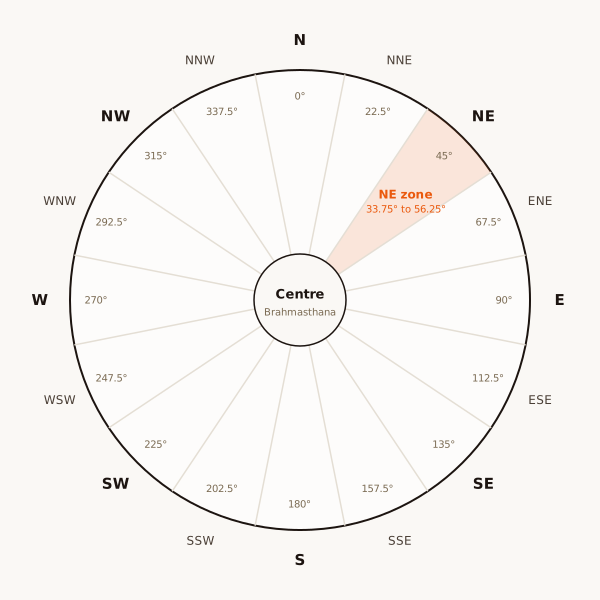
We walk the site while it runs. We take compass readings at several points, away from steel structures and heavy motors that disturb the needle, and we correct them for local magnetic declination using the NOAA magnetic declination calculator. The plan is then divided into the 16 zones of our VIDS method, each about 22.5 degrees, measured from true north.
Where a visit is possible, we also take Lecher Antenna readings across the floor to check for geopathic stress, particularly where people sit for long hours. Industrial sites need more time than a home, so we plan the visit with the plant head to avoid shift changes and sensitive operations. You can read more about our approach on the Vastu methodology page.
Corrections without stopping production
We plan corrections in phases that fit maintenance windows and normal stock movement. Typical steps include:
- Relocating raw material and spare stock to the south and west.
- Clearing the north-east of scrap, pallets and unused equipment.
- Moving dispatch staging towards the north-west.
- Adjusting the owner’s seating and desk orientation.
- Using colour, lighting and signage to strengthen weak zones.
- Re-routing internal movement so material flows in one direction.
If something genuinely needs construction, such as a boundary wall that blocks the only good gate position, we say so plainly and explain why. We sell no products and take no commission from builders or suppliers.
Sources: what is classical and what is interpretation
Traditional: element directions and the importance of the north-east and south-west come from classical texts in the Vishvakarma tradition, including the Aparajitaprccha that Raghavendra Hebbur studies. Interpretive: mapping those principles to transformers, DG sets, CNC lines and effluent plants is professional interpretation. We keep the two separate in every report so you know which advice rests on which basis.
Warehouses and logistics sheds: Vastu notes
Warehouses follow the same Vastu logic with less heat and more movement. Racking and the heaviest pallets suit the south-west and west, the receiving bay can sit in the south or west, and outbound loading suits the north-west or north. Keep the north-east aisle clear and well lit, and avoid using it for damaged stock or returns.
In Vastu terms a warehouse is about flow: stock should come in, rest in a stable zone and leave without crossing its own path. Our warehouse Vastu service applies these points to the racking plan you already have, so there is no need to rebuild anything.
Next steps for your factory or warehouse
For facility specific detail, see Factory Vastu, Warehouse Vastu and Manufacturing Vastu. Our industrial Vastu service covers the full site, with a written report within 48 hours of the visit, and commercial and industrial assessments start from ₹51,000 as listed on our fees page. When you are ready, you can book a consultation and we will plan the visit around your production schedule.