This apartment buying vastu checklist is for the weeks before you sign, when you can still walk away, negotiate or choose a different unit in the same tower. A Vastu review is far easier to act on at that stage than after the registration is done and the interiors are in.
We have put it together from more than 10 years of pre-purchase readings in Bangalore. Use it on a floor plan at home and again on the site visit. It will not replace a measured assessment, but it will tell you which flats deserve a closer look and which questions to ask the builder.
How to use this apartment buying vastu checklist
Work through the checklist in order. The first group is about the building and site, the second about the floor plan, and the third about what you confirm in person. Mark each point as fine, manageable or a concern.
Traditional guidance: classical Vastu texts describe ideal arrangements. What we measure: very few real flats meet all of them. The aim is an informed decision, not a perfect score. Most points that fail have a correction that needs no construction.
Before you shortlist: the building and the site
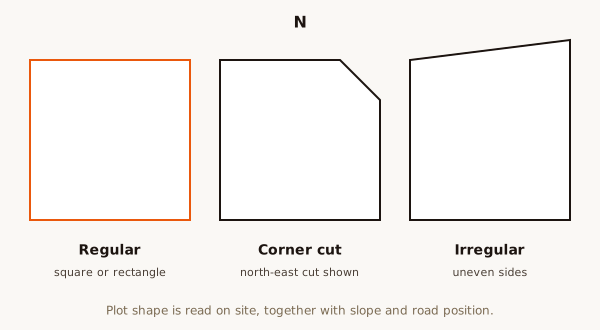
- Overall shape of the tower and the plot: regular rectangles and squares are traditionally preferred over heavily cut shapes
- Position of the main gate of the project and the approach road
- Any lake, drain or large water body nearby, and on which side
- Slope of the land: a site that falls towards the north or east is traditionally preferred
- What sits right next to the tower: a substation, a tall wall, a busy junction
These are building-level points. They affect every resident and you cannot change them, so they are worth weighing before you choose a project at all.
Get a reliable floor plan with true north
Ask the builder or seller for a floor plan with north clearly marked. Brochure plans are often rotated or mirrored for printing, and the north arrow is sometimes decorative. Assuming north without checking is one of the most common errors we see in self-assessments.
On site, a phone compass inside a concrete and steel structure can drift. Take readings at a few points away from columns and switchboards. We also correct magnetic north to true north using the local declination, which you can look up on the NOAA magnetic declination calculator. The difference is small in Bangalore but it matters when a door sits near a zone boundary.
On the floor plan: the main door of the unit
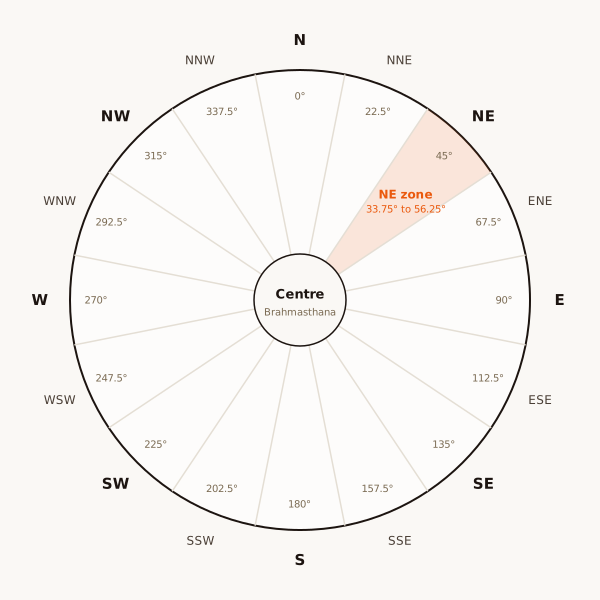
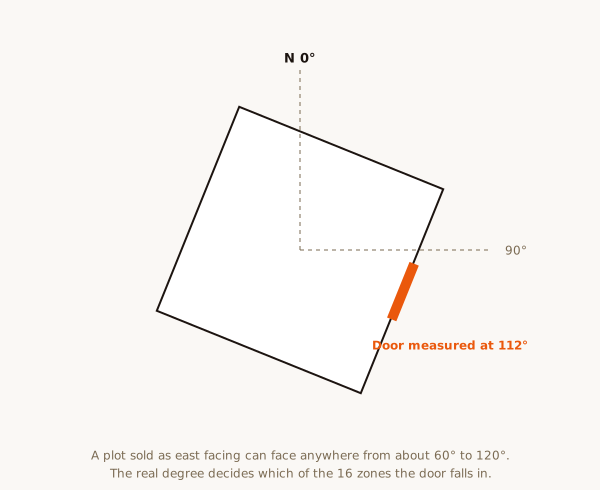
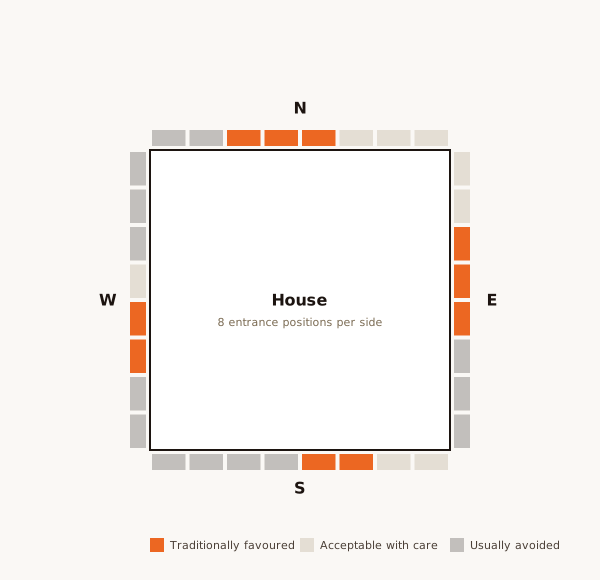
Find the centre of the flat and note which of the 16 zones, each about 22.5 degrees, the entrance opens into. Do not rely on the facing label alone. A south-facing or west-facing flat is not bad by itself; the exact position of the door along that wall decides the reading.
Also note what the door faces in the corridor: a lift, a staircase, a refuse chute or another flat door directly opposite. Our main door guide explains how entrance positions are read zone by zone.
On the floor plan: kitchen and stove
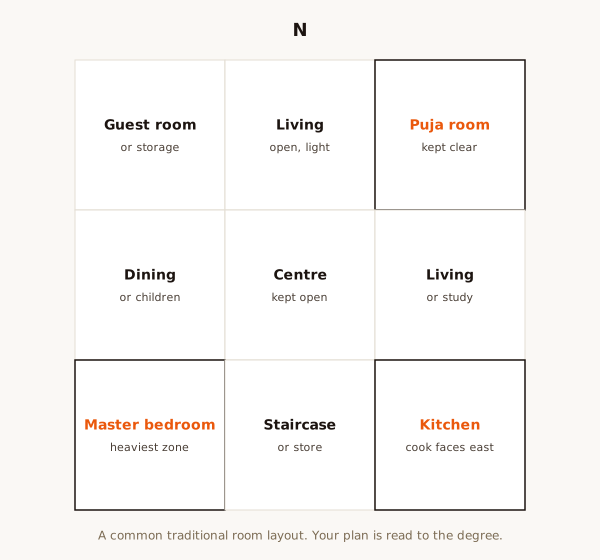
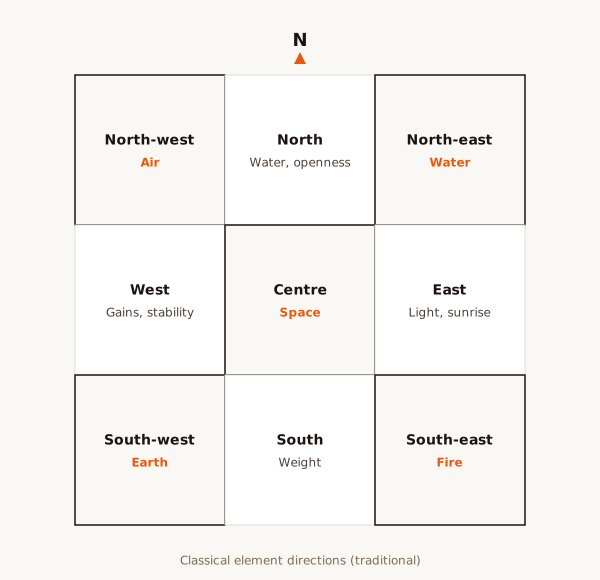
Check where the kitchen sits relative to the south-east, which is traditionally the zone for fire. The north-west is a common secondary placement in apartments. Then look at where the hob is drawn, which way the cook will face, and how close the sink is to the stove.
A kitchen outside the south-east is not a dealbreaker. Stove position, colour and lighting carry much of the correction. Our kitchen guide has the detail.
On the floor plan: master bedroom and the south-west
The south-west is associated with stability and is preferred for the master bedroom. Check which bedroom falls there and whether a bed can sit against a solid wall with the head to the south or east. A large window or a balcony door right where the bed must go is worth noting. The bedroom guide covers sleeping direction.
On the floor plan: toilets and the north-east
Traditional guidance keeps the north-east light and open. Check whether a toilet, a utility area or the service shaft sits there. In apartments this is very common because plumbing stacks run in fixed positions through the whole tower.
A north-east toilet is manageable through use, ventilation and colour, but if two otherwise equal units differ only in this point, it is a reasonable tie-breaker.
On the floor plan: the centre of the flat
The centre, called the Brahmasthana, is traditionally kept open and light. Check whether a column, a duct, a toilet wall or a kitchen platform falls on it. An open living or dining area at the centre is the easiest arrangement to live with.
At the site visit
- Confirm the entrance direction in person; printed plans can be mirrored
- Check what is directly opposite the main door, inside and outside
- Look for cuts and extensions in the outline that the plan does not show clearly
- Note where sunlight enters in the morning and how the balconies open
- Stand at the centre of the flat and check for columns or ducts
- Ask whether the layout can change before handover in an under-construction tower
Take photographs of each wall with the compass visible. They are useful if you later ask for an online Vastu consultation. An online assessment uses traditional Vastu only, the 16-zone map and the 3×3 grid drawn on your plan; geopathic stress readings need a site visit.
Ready-to-move versus under-construction
A ready-to-move flat can be assessed against its actual, built layout. An under-construction purchase relies on the floor plan, so the reading is a projection rather than a confirmed result. It is worth re-confirming once the unit is complete if anything changed during construction, such as a shifted kitchen platform or a door moved by a few feet.
How to weigh what you find
Failing several checks is common in existing building stock and is not automatically a reason to rule a property out. We sort findings into three groups:
- Building-level points you cannot change: weigh these most when choosing between projects
- Unit-level points that need daily-use corrections: usually manageable
- Points that would need construction to fix: rare, and worth knowing before you pay
Our zero demolition Vastu corrections page shows what a typical correction looks like.
Questions to ask the builder or seller
A few direct questions save a lot of guesswork. Ask them in writing where you can:
- Can you share the approved floor plan with true north marked, not only the brochure plan?
- Which units in this tower are mirror images of the one I am looking at?
- Will the kitchen platform, sink and gas point be built exactly where the plan shows?
- Is any change to door positions or balcony enclosures planned before handover?
- Where will the service shafts, overhead tank and transformer sit on the site?
A builder who answers these clearly makes any Vastu review more reliable, because the reading is only as good as the plan it is based on.
Traps we see when people check Vastu themselves
Most self-checks go wrong in predictable ways. The flat is read from the living room instead of its true centre. The facing of the building is confused with the facing of the unit door. Mirror-image units on the same floor are assumed to read the same, when in fact a mirrored plan can move the kitchen and master bedroom into quite different zones.
Another common trap is giving every point equal weight. A slightly small south-west bedroom is not the same as a door in a weak zone opening straight onto a lift shaft. A good Vastu reading ranks findings, so you know which ones affect your decision and which ones simply guide how you furnish the flat.
Finally, people sometimes pick the most expensive corner unit because it looks best on paper. Compare two or three units in the same project with the checklist above before you decide.
Getting a proper pre-purchase reading
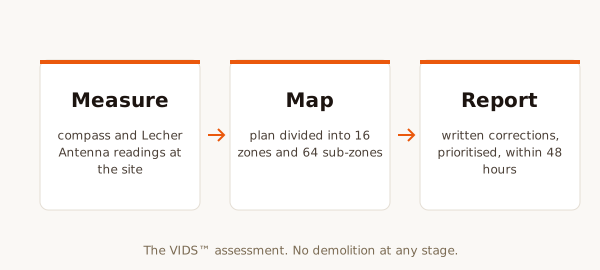
A self-check with this apartment buying vastu checklist gives you a preliminary view. A full reading gives a written, zone-by-zone assessment within 48 hours. An online review of floor plans is ₹5,000 and a Bangalore apartment site visit is ₹15,000; see the fees page for the rest. We take no commission from builders, so our view on a unit has no stake in the sale. For the bigger picture, read Vastu for apartments: the complete guide, see our apartment Vastu service, or book a consultation before you sign.