The most useful Vastu tips for new home buyers are the ones you can act on before money changes hands or walls go up. Once a kitchen is plumbed or a door is cast in concrete, changing it is expensive, and in an apartment it may not be possible at all. This checklist follows the order in which decisions are actually made: before you buy, while the plan is still open, during interiors, on moving day and in the first month.
Throughout, we separate what can be measured (the facing in degrees, the zone each room falls in, light and ventilation) from traditional guidance drawn from classical texts. We also want to be clear about what a layout can and cannot do. Good Vastu planning can give you a home that is well lit, well ventilated and arranged for the way you live. It cannot promise wealth, marriage, health or success, and nobody honest will claim it can.
Stage 1: before you buy
This is where a little care saves the most money. On every property you shortlist:
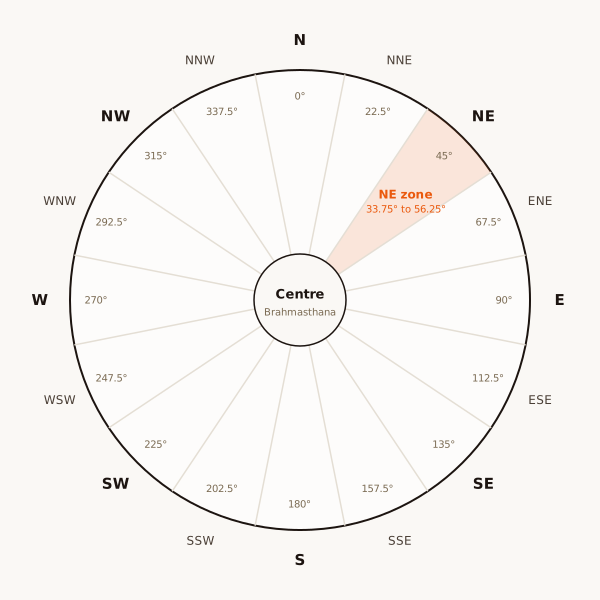
- Measure the facing in degrees, not just as north, east, south or west. Our guide on how to check direction with a compass explains the method, including the correction from magnetic to true north using the NOAA magnetic declination calculator.
- Find the four big rooms on the plan: the main entrance, the kitchen, the toilets and the master bedroom. Note which zone each falls in.
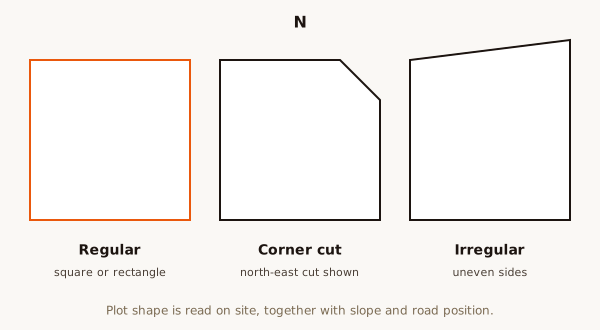
- Check the shape. Square and rectangular plots and homes are the simplest. Cut or extended corners, especially in the North-East or South-West, deserve a closer look.
- Walk the site at two times of day and see where the morning and afternoon light falls.
- Look at the surroundings: a tall building, a large tank or a busy junction close by can change light, noise and privacy.
For plots, our plot buying checklist goes further, and a pre-purchase plot report costs ₹5,000. For flats, use the apartment buying Vastu checklist. Legal title, approvals and structure are matters for your lawyer and engineer.
The entrance, kitchen and toilets
These three are the hardest to change later, so they carry the most weight in any Vastu review of a new home.
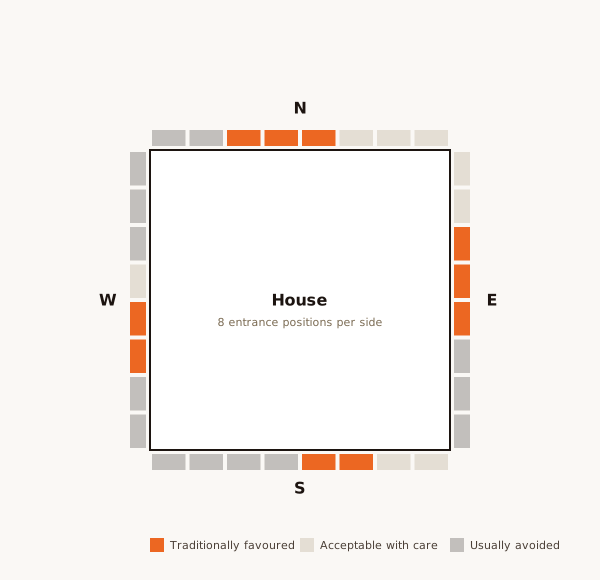
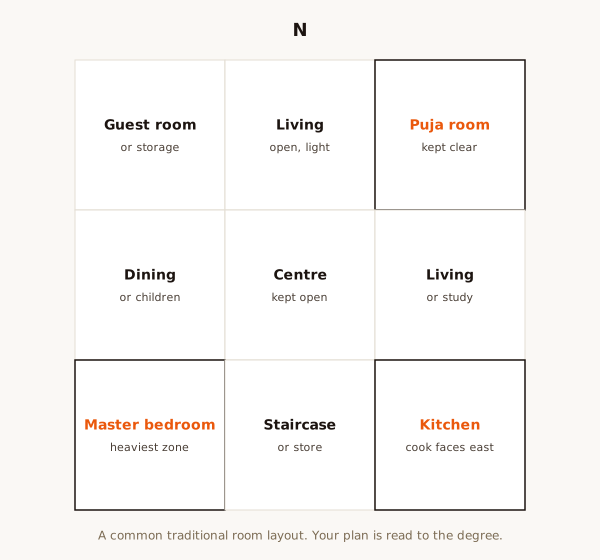
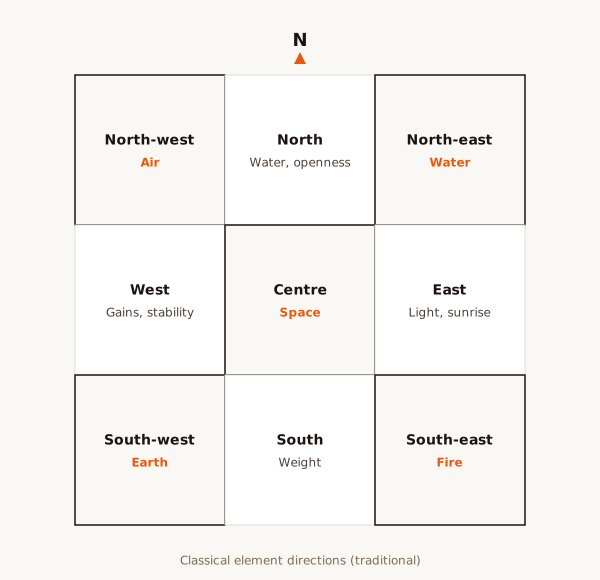
Traditional guidance: the main door is placed in one of the favourable entrance positions along its wall, which differ for each facing. The kitchen belongs in the South-East, with the North-West as the usual alternative. Toilets are kept out of the North-East and the centre of the home.
What we measure: the exact zone of the door’s centre point, the position of the stove and sink, and each toilet’s zone. A difference of a few degrees can move a door from one zone to the next, which is why we measure rather than estimate.
Our guides to the main door and the kitchen explain the detail.
Stage 2: plan review while you can still change it
If you are building, or buying early in an under-construction project, the plan is still open. This is the cheapest moment to apply Vastu tips for new home planning:
- Keep the North-East light and open: a living area, prayer space or study rather than a toilet, store or staircase.
- Place the master bedroom in the South-West where the plan allows.
- Keep the centre of the home open and uncluttered, free of toilets and heavy columns where the structure permits.
- Put staircases, overhead tanks and heavy storage towards the South, West or South-West.
- Plan cross-ventilation: openings on opposite or adjacent walls of each main room.
- Mark the electrical points too. Our guide to electrical layout and Vastu covers meters, inverters and the DB.
On a Vastu for new construction review we mark the measured zones on the architect’s drawing before plumbing and structure are fixed.
Light, heat and ventilation
Bangalore’s climate is mild, but orientation still makes a large difference to comfort. East openings receive gentle morning light, while west walls take the hot afternoon sun. North windows give steady, even light. Bedrooms on the west side benefit from shading such as a verandah, louvres or trees, and a balcony on the west works best as a buffer rather than a sitting area. Our article on the sun path in Bangalore explains why the traditional preference for open north and east sides fits the local climate so well.
Stage 3: interiors and furniture
Interiors are where most corrections happen without any construction at all.
- Bed: traditional guidance places the head towards the South or East. See Vastu for bedroom.
- Heavy furniture: wardrobes, almirahs and bookshelves along the South and West walls.
- Desk and study: facing North or East, which usually gives good daylight too.
- Colours: lighter, softer tones in the North-East and warmer tones in the South-East and South-West are common in tradition. Treat colour as a comfort choice, not a rule.
- Mirrors: many practitioners prefer them on North or East walls and not facing the bed.
- Storage: plan enough of it, so that the North-East and the centre stay clear.
Our interior Vastu service applies these points room by room.
Stage 4: moving-in day practicalities
Many families mark moving in with a ceremony, and the timing of that is a personal or family decision. We do not give muhurtham or astrological timing advice. What we can offer is a practical list for the day itself:
- Have the home deep-cleaned before any furniture arrives.
- Check water supply, drainage, every tap and every switch while the rooms are still empty.
- Confirm the meter, main switch and inverter work, and that you know where each is.
- Ask the movers to place heavy items along the South and West walls first, following your furniture plan.
- Set up the kitchen early, with the stove in its planned position and gas connections checked by the supplier.
- Unpack bedding and the essentials for the first night before anything decorative.
- Keep the entrance clear of boxes, so the main door opens fully.
Stage 5: the first month
The first few weeks tell you how the home really works. Use them to observe and adjust:
- Notice where light falls at different times of day and where rooms feel too warm or too dark.
- Notice which seat everyone gravitates to, and which corner nobody uses.
- Try the bed in its planned position for a few weeks before moving it.
- Clear the boxes that tend to collect in the North-East corner and the centre.
- Adjust curtains, lighting and rugs before buying more furniture.
- Keep a short list of anything that feels wrong, so a consultant can look at it properly.
These small adjustments are the heart of zero-demolition Vastu corrections.
Vastu tips for new home types: flats, villas and houses
The same principles apply everywhere, but the priorities shift with the type of home.
- Apartments: you cannot move the entrance, kitchen or toilets, so choose the flat carefully. Compare units on different sides of the same tower, because two flats on the same floor can sit in quite different zones. Our Vastu for apartment service compares shortlisted units.
- Villas in gated communities: the plot shape and road position are fixed, but interiors and the use of each room are often flexible. See Vastu for villa.
- Independent houses: you control the most, from plot selection to the position of the overhead tank and borewell. See independent house Vastu.
- Resale homes: the layout is fixed and may already have been altered. Check the current plan against the building itself, since extensions and enclosed balconies change the shape that is measured.
In every case, the entrance, kitchen, toilets and master bedroom remain the first four things a Vastu reading looks at.
A printable Vastu checklist for your new home
Here are the Vastu tips for new home buyers and builders in one list, to print or keep on your phone:
- Facing measured in degrees and corrected to true north.
- Entrance in a favourable position along its wall.
- Kitchen in the South-East, or the North-West as the alternative.
- No toilet in the North-East or the centre.
- Master bedroom in the South-West where possible.
- North-East kept light, open and uncluttered.
- Heavy storage, stairs and tanks towards the South or West.
- Cross-ventilation in every main room.
- West walls and windows shaded.
- Meter, distribution board and inverter safe, dry and easy to reach.
- A furniture plan ready before moving day.
- A first-month list of anything to adjust.
Tick what you can and note what you cannot. A home that meets most points is usually a sound choice, and a single unmet point is rarely a reason to walk away from an otherwise good home. Where a point cannot be met, the next step is to weigh it with someone who can measure the property properly.
Common mistakes with a new home
- Relying on the brochure’s facing instead of a measured reading.
- Buying first and asking about Vastu later, once nothing can change.
- Buying products or objects to fix a layout. We sell none, and objects do not change a plan.
- Treating every minor point as a reason to reject a good home. Priorities matter.
- Letting tradition override safety, light or ventilation. It should not.
When to get a consultation
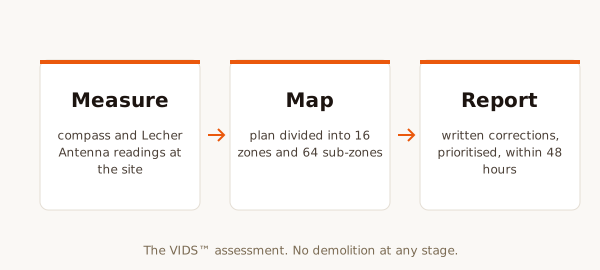
A short consultation is most useful at three points: when you have a shortlist, when the plan is still open, and soon after you move in. We read the home in 16 zones measured from true north, separate measured findings from traditional guidance, and send a written report within 48 hours. The Vastu for home page describes the visit, the sample report shows the format, and fees are listed on the consultation fees page. When you are ready, you can book a consultation.