This guide to Vastu for CEO manager cabin placement covers one of the most specific questions in any office assessment: where the person who takes the final decisions should sit, and which way they should face through the working day. Leadership seating is traditionally linked with authority, clear decisions and the stability of the business, which is why owners ask about it so often.
The principles are simple, and almost all of them can be applied without construction. What follows is what tradition says, what we actually measure in Bangalore offices, and how we handle the very common case where the only private cabin is in the wrong place.
What this Vastu for CEO manager cabin guide covers
- Why the south-west is preferred for the most senior seat
- Facing direction while working
- What should and should not be behind the chair
- Desk, visitor chairs and the cabin door
- Where managers and department heads sit
- What to do when the cabin is in an unfavourable zone
- Leadership seating in open-plan offices
For the whole workplace, read our office Vastu complete guide first.
Why the south-west for the most senior seat
Traditional guidance: the south-west zone is favoured for the most senior position in a business, on the same stability and authority reasoning that places the master bedroom there in a home. The classical texts, including the Aparajitaprccha, treat this corner as the heaviest and most settled part of a building.
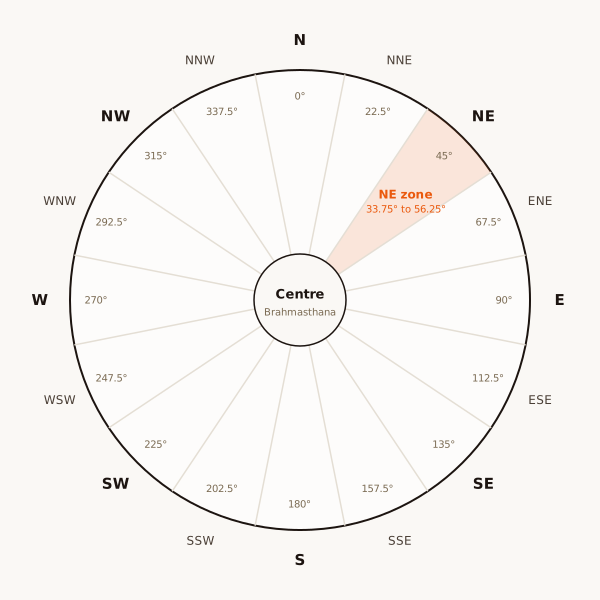
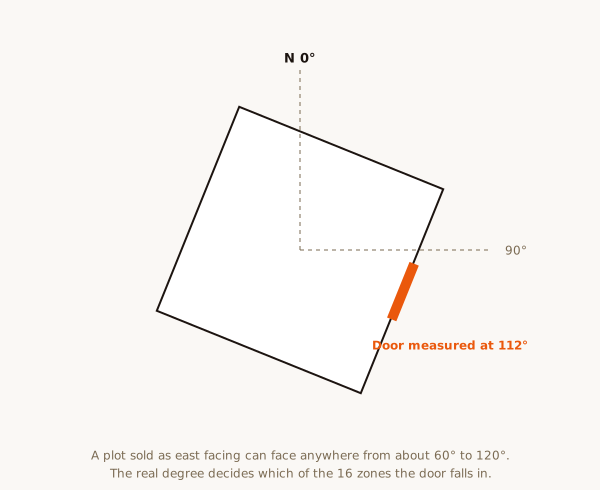
What we measure: we find the centre of the office floor and map 16 zones of about 22.5 degrees each, corrected from magnetic to true north using the local declination (you can check it on the NOAA magnetic declination calculator). Then we check whether the cabin genuinely sits in the south-west zones or only appears to on a rotated plan. The cabin zone is weighted more heavily than the facing direction for the most senior seat.
Facing direction while working
East or north facing is generally recommended for the primary decision-maker. East is linked with clarity and new beginnings, north with growth and opportunity. Facing south or west is not forbidden, but where the room allows a choice, we turn the desk.
In practice, the facing direction is often limited by the window and the door. We would rather keep a solid wall behind the chair and face slightly off north than face perfectly north with a window at your back.
What is behind the chair
Sitting with solid support behind you is a recurring principle across Vastu, not one unique to leadership seating. An open or unsupported back is read as vulnerable; a wall or heavy furniture is read as stable.
- Best: a solid wall, or a tall closed cabinet if the wall is glass
- Acceptable with care: a window with heavy blinds kept closed during work
- Avoid: a door directly behind the chair, a walkway, or an open glass partition onto the team
Desk, visitor chairs and the cabin layout
The desk works best placed towards the south-west of the cabin itself, so the leader occupies the stable part of the room. Visitors sit across the desk, facing south or west, which naturally puts the leader in the position of authority during a conversation.
Keep the desk solid and rectangular rather than curved or glass-topped where possible, and keep the north-east of the cabin light and uncluttered. Files and heavy storage belong in the south and west of the room, not stacked in the north-east corner.
Where the cabin door sits
The cabin door should not open directly behind the leader, and ideally should be visible from the seat without turning. A door in the north or east part of the cabin is the easiest arrangement. If the door sits in the south-west wall, we shift the desk so that it does not stand in the line of the doorway, and use a solid backing behind the chair.
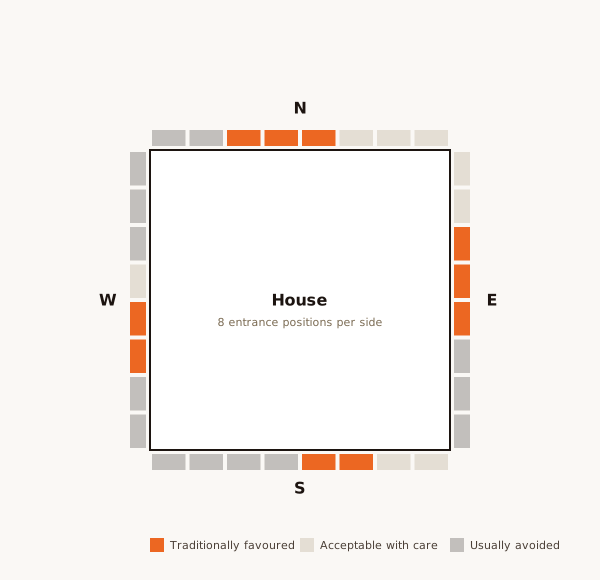
Manager and department-head seating
Managers reporting to senior leadership are typically seated in the west or north-west zones. This keeps some separation from the south-west leadership zone while still giving them steady, supportive positions for decisions within their team.
Sales heads often do well in the north-west and north, close to movement and client contact. Finance heads are best placed near the accounts team in a stable zone; our accounts and finance department guide covers this. The general rule of facing north or east and keeping a wall behind applies to every manager.
When the only cabin is in an unfavourable zone
A very common situation is a founder cabin fixed in the north-east, traditionally the most sensitive zone and the least suited to a heavy, high-authority seat, simply because that is where the building placed the only enclosed room.
We do not assume relocation is needed. An assessment weighs how severe the placement is and recommends a proportionate correction: moving the desk to the south-west corner of that cabin, adding solid backing, using heavier and darker furniture there, keeping the rest of the room light, and sometimes using the cabin for meetings while the leader sits at a well-placed desk on the floor. Our zero demolition corrections page shows more examples.
Open-plan leadership seating
Not every business has a separate cabin. In open-plan offices the same zone and facing-direction principles apply to wherever the desk is positioned. Place the senior desk in the south-west part of the floor, back to a wall or tall storage, facing north or east across the team. Avoid the busiest walkway, the pantry edge and the area right beside the entrance.
Two senior seats: partners and co-founders
Where two or more partners share leadership, we place the person with final financial responsibility closest to the south-west and the others in the south and west. If both must be in the same cabin, both desks face north or east and neither sits with a door behind them.
Common mistakes in leadership seating
- Placing the owner near the entrance to watch everyone come in
- A glass wall or open walkway behind the chair
- A cabin desk in the exact centre of the room
- Heavy files stacked in the north-east of the cabin
- A dark, cramped cabin with no daylight
Colour, light and the desk itself
Cabin Vastu is not only about the corner. Colour and light decide how the room feels at four in the afternoon. We suggest steady, earthy or deeper tones on the wall behind the chair, lighter tones on the north and east walls, and good daylight from the north or east where the windows allow it.
On the desk, keep the north-east corner clear, place the phone and active files to the right, and keep closed files and heavy items to the south and west. A cluttered desk works against every other Vastu correction in the room.
Vastu for CEO manager cabin layouts in a new fit-out
If you are fitting out a new office, decide the leadership cabins before the designer finalises the plan. At drawing stage, Vastu for the CEO cabin costs nothing: the south-west corner is simply allocated to the founder, managers are placed in the west and north-west, and doors are drawn where they will not sit behind a chair.
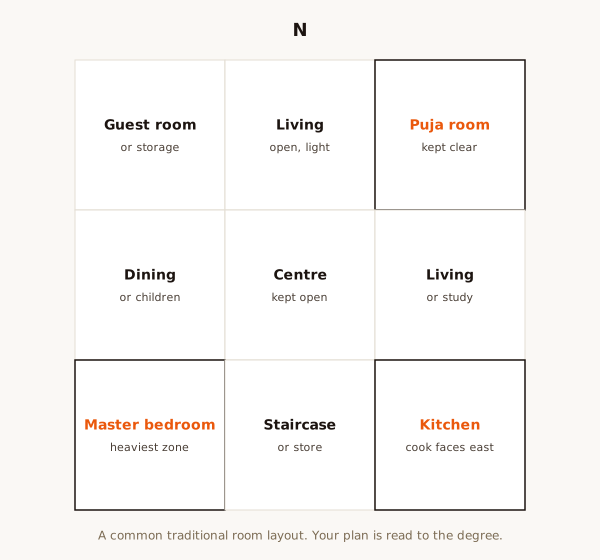
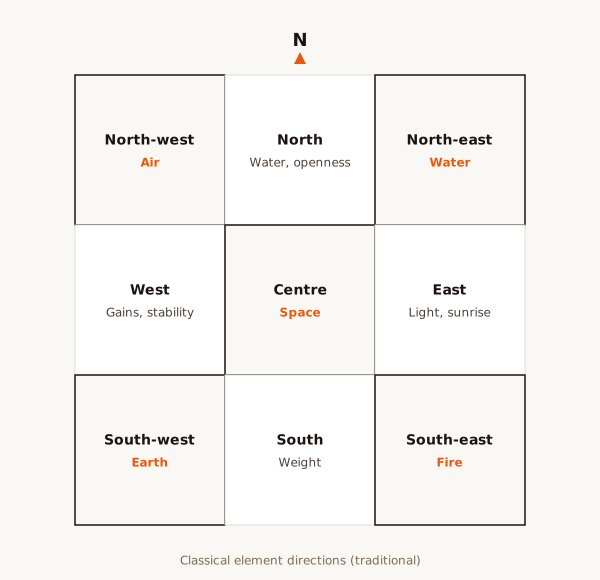
Share the floor plate and the proposed seating with us and we can read it through an online Vastu consultation before work starts. An online assessment uses traditional Vastu only, the 16-zone map and the 3×3 grid drawn on your plan; geopathic stress readings need a site visit.
Home offices for owners and directors
Many owners now spend part of the week working from home. The same Vastu principles apply: a desk in the south-west or west of the study, facing north or east, with a wall behind. Avoid working from the bed or a dining table at the centre of the home. Our home Vastu service covers the study along with the rest of the house.
What leadership Vastu can and cannot do
Good seating supports clear thinking and a sense of authority in the room. It does not replace good management, sound finances or the right people. We do not promise outcomes from a desk position, and any Vastu consultant who does is overstating what the discipline offers. What we can do is remove the layout problems that make a leader feel exposed, distracted or boxed in.
Getting your cabin and office measured
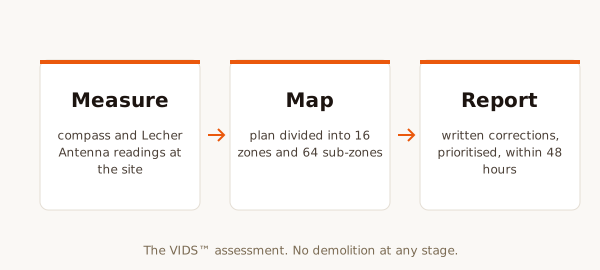
This Vastu for CEO manager cabin guide covers the principles. A measured office assessment confirms the zones on your actual floor, ranks each finding, and comes with a written report within 48 hours. Commercial assessments start from ₹51,000; see the fees page. Our office Vastu service explains what is covered, and you can book a consultation whenever the timing suits your team.