Electrical layout Vastu questions come up on almost every site visit: where the meter should be, whether the inverter is in the right place, and what to do about the Wi-Fi router in the bedroom. Classical texts were written long before electricity, so the guidance practitioners use today is an extension of older ideas about the fire element. This guide sets out that traditional guidance, the practical placement we recommend, and where the limits are.
One rule sits above everything else here. Electrical safety is a matter for a licensed electrician, the National Electrical Code of India and the rules of your electricity supply company. Vastu suggestions come second, and we never recommend an electrical change that a qualified electrician has not approved.
Safety first, then Vastu
Before any placement question, make sure the basics are in order:
- A qualified, licensed electrician designs and checks the wiring, earthing and protection devices.
- The meter and main switch stay accessible, dry and clearly labelled.
- Residual current protection (an RCCB or similar device) is fitted as your electrician advises.
- Heavy appliances have their own correctly rated sockets, not extension boards.
- Batteries and inverters are installed to the manufacturer’s clearance and ventilation instructions.
If a Vastu suggestion ever conflicts with any of these, safety wins. We say that in every report.
Why tradition links electricity to the South-East
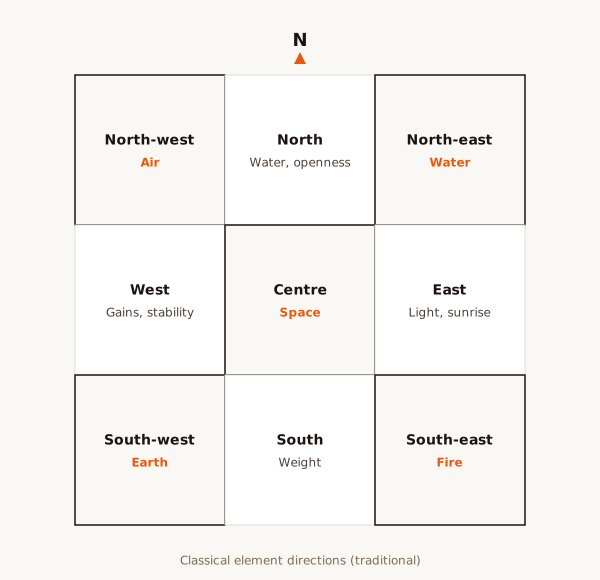
Traditional guidance: the South-East is the zone of Agni, the fire element, which is why classical Vastu places the kitchen hearth there. The Aparajitaprccha and other texts of the Vishvakarma tradition describe fire, not electricity.
Interpretive: modern practitioners extend the fire association to electrical equipment such as meters, transformers, distribution boards and inverters. That is a reasonable analogy, but it is an analogy. Many practitioners also accept the North-West, the zone of air and movement, as a second choice, and most advise keeping heavy electrical equipment out of the North-East and the centre of the home.
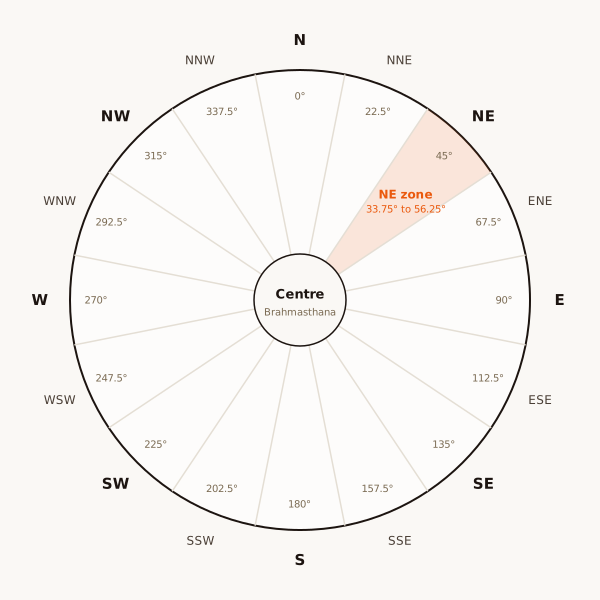
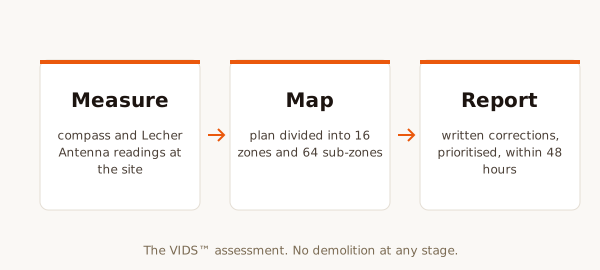
What we measure: the true-north bearing of the building and the boundaries of each zone, so that the position of every panel and appliance can be stated precisely rather than guessed.
Meter board and distribution board
In Bangalore the position of the meter is usually fixed by the supply company and the builder, typically near the entrance or at ground level where it can be read. The main distribution board (DB) normally sits inside, close to the entrance.
Where you have a choice, at drawing stage, the South-East or the South of the house or plot is the traditional preference. Wherever it ends up, the practical points matter more:
- Keep it away from water: never above a sink, inside a bathroom or under a leaking pipe.
- Keep the area clear, so the main switch can be reached quickly in an emergency.
- Keep the cover closed and every circuit labelled.
If your meter or DB is already in the North-East, there is no need to move it for Vastu reasons. Keeping it tidy, closed and uncluttered is the correction we suggest.
Inverters, UPS units and batteries
Inverters and their batteries are the equipment we are asked about most. Traditional guidance places them in the South-East, with the North-West as an alternative. Practically:
- Lead-acid batteries can release hydrogen while charging, so they need ventilation. Follow the manufacturer’s instructions on clearances.
- Keep them out of bedrooms and away from gas cylinders, water and heat sources.
- A space under the stairs is common and acceptable if it is ventilated and easy to reach.
- Lithium units are more compact, but still need the clearances the maker specifies.
Solar, generators and EV charging
On independent houses and villas, newer equipment adds more choices:
- Solar inverters usually sit close to the DB or the panels for short cable runs. The South-East or South side of a utility area suits tradition and practice alike.
- Generators belong outdoors, in the South-East or North-West where possible, with exhaust directed away from windows and neighbours.
- EV chargers go where the car parks. Many schools place parking in the North-West or South-East, and the charger needs a dedicated circuit fitted by an authorised installer.
Kitchen appliances
The kitchen is where electrical layout Vastu and the classical fire rule overlap most closely.
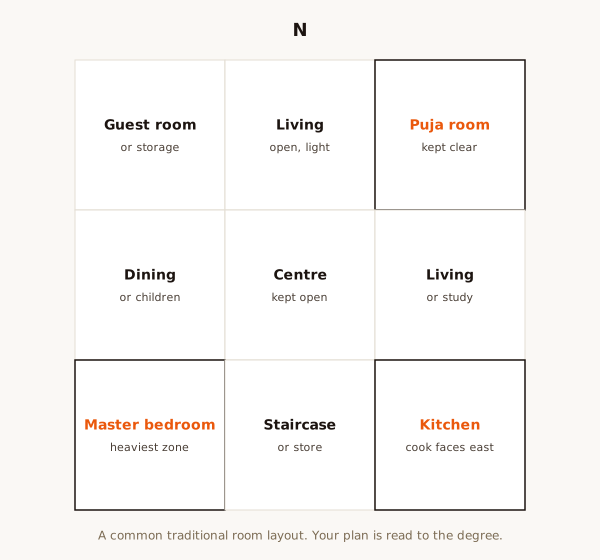
- Stove, induction hob, oven and microwave: together in the South-East part of the kitchen, with the cook facing East where possible.
- Refrigerator: schools differ, and it is often placed towards the South, West or North-West of the kitchen. It needs space behind it for ventilation.
- Water purifier: near the sink, ideally towards the North-East part of the kitchen, keeping water and fire apart.
- Sockets: a dedicated, correctly rated socket for each heavy appliance, positioned away from the sink.
Our full guide to Vastu for kitchen covers the room itself.
Bedrooms: a calmer electrical setup
We make no health claims about Wi-Fi, mobile phones or chargers. Public health bodies have not established that normal household equipment of this kind harms health, and we do not suggest otherwise. What we do suggest is practical comfort, aimed at sleep habits, light and noise:
- Charge phones across the room rather than on the bedside table. It removes notification lights and the temptation to scroll.
- Keep the Wi-Fi router outside the bedroom, which usually gives better coverage anyway.
- A television in the bedroom is a personal choice. If you have one, switch it off at the wall at night.
- Cover or turn away small glowing indicator lights.
- Fit a two-way switch so the main light can be turned off from the bed, and a reading light on each side.
- Avoid a tangle of cables and extension boards under the bed, where dust gathers.
Traditional guidance on the bedroom itself is in our Vastu for bedroom guide.
Wi-Fi router placement
For coverage, a router works best near the centre of the home, raised off the floor and out of metal cupboards. Some practitioners prefer the North-West for communication equipment and others the South-East for anything electrical. We treat both as interpretive and put coverage first: a router that leaves half the house without signal helps nobody.
Home office and study
A few practical points make a study or work-from-home corner much easier to use:
- Place the screen at right angles to the main window to cut glare.
- Put a task light on the side opposite your writing hand, so your hand does not cast a shadow.
- Keep the UPS and power strips under the desk, tidy and ventilated.
Traditional guidance favours facing North or East while working, which also tends to give even daylight. For larger workspaces see our Vastu for office service and the office Vastu complete guide.
Offices, shops and server rooms
In commercial buildings the same logic applies at a larger scale. Server and UPS rooms traditionally go in the South-East or North-West. Practically, they need cooling, fire detection and restricted access, and the main electrical panel room is placed where the code and the fire officer require. We review these positions on commercial Vastu projects and leave the engineering to the electrical consultant.
Planning at drawing stage
The easiest time to get electrical layout Vastu right is before the walls go up. On a new build we mark the measured zones on the electrical drawing, so the meter, DB, inverter, AC outdoor units and EV point can be placed with tradition and practice in mind. The zones are drawn from true north, corrected for the local magnetic declination from the NOAA magnetic declination calculator. Our guide on how to check directions with a compass explains the method.
Earthing pits, cable routes and load calculations are for the electrician to decide. Some practitioners place earthing pits in particular zones, but soil conditions and the code come first.
When equipment is already in another zone
In an existing home, moving a DB or meter for Vastu reasons alone is rarely justified. It costs money, disturbs wiring and can introduce new faults. Our corrections are about how equipment is kept and used: tidy, closed, dry, labelled and uncluttered. If an inverter has to move for another reason, such as poor ventilation, that is a good moment to consider the South-East. Our approach is explained in zero-demolition Vastu corrections and on the home renovation page.
12 tips at a glance
- Let a licensed electrician decide everything to do with safety.
- Prefer the South-East for the meter and DB when you have a choice.
- Accept the North-West as the usual second choice.
- Keep heavy electrical equipment out of the North-East and the centre.
- Keep panels dry, closed, labelled and easy to reach.
- Ventilate inverter batteries as the maker specifies.
- Keep inverters and batteries out of bedrooms.
- Group cooking appliances in the South-East of the kitchen.
- Give heavy appliances their own sockets.
- Charge phones away from the bed.
- Place the router centrally for coverage.
- Do not rewire for Vastu alone.
Electrical layout Vastu questions we hear often
A few questions come up so often on site visits that they are worth answering here.
- Can an object correct a meter in the wrong zone? We do not use objects as corrections, and we sell none. Keeping the panel tidy, dry and closed is enough.
- Should overhead power lines near a plot worry me? Safe clearance from lines is set by electricity safety rules, so ask the supply company or your electrician. It is not a Vastu question.
- Does the AC outdoor unit need a particular Vastu zone? Place it where it gets free airflow and does not blow hot air into a balcony or a neighbour’s window. The South or West side often works well in practice.
- What about CCTV cameras and smart home hubs? Place them for coverage and security. Tradition says little about them, and we do not invent rules.
- Is a staircase a good place for the DB? Often yes, if it is dry, ventilated and reachable without moving stored items.
Getting your electrical layout reviewed
If you are building, the Vastu for new construction service reviews your electrical drawing alongside the architectural plan. For an existing property, the home assessment covers panels, inverters and appliances room by room, and our sample report shows how those notes are set out. Fees are on the consultation fees page, and you can book a consultation whenever it suits you.