Basement Vastu covers any floor built wholly or partly below ground level: a parking basement under a villa, a home theatre or gym below an independent house, or a commercial basement used for parking, storage, a server room or even a shop. A basement changes the levels of a building, and level is one of the oldest concerns in classical Vastu.
This Vastu guide explains where tradition prefers a basement, how it should be used, how light, ventilation and damp affect the reading, and what can be done in a basement that already exists. We separate traditional guidance from what we measure on site, and none of our corrections involve demolition.
Why level matters in Vastu
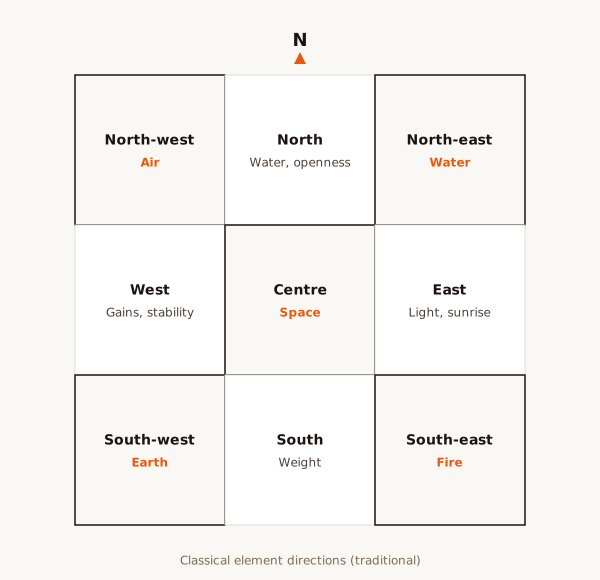
Classical Vastu prefers a site that is lower and lighter towards the North and East, and higher and heavier towards the South and West. Water flows towards the North-East, and weight rests in the South-West. A basement is, in effect, a deliberate low area inside the plot, so where it sits decides whether it works with this pattern or against it.
The practical logic is close. Bangalore has rocky ground in some layouts and a high water table in others, so a basement brings real questions of waterproofing, drainage and air. A sensible basement Vastu plan usually lines up with a sensible structural and drainage plan.
Where tradition prefers a basement
Traditional Vastu guidance: the common classical preferences are as follows.
- Under the whole building: a basement that runs evenly under the full footprint keeps the levels balanced and is generally considered acceptable.
- Under the North, East or North-East portion: preferred when only part of the plot has a basement, because the low area then sits where tradition wants the site lower.
- Under the South-West only: traditionally avoided. A basement limited to the South-West lowers the corner tradition wants highest and heaviest.
- Under the South-East or North-West only: generally read as less suitable than the North or East, though less serious than the South-West.
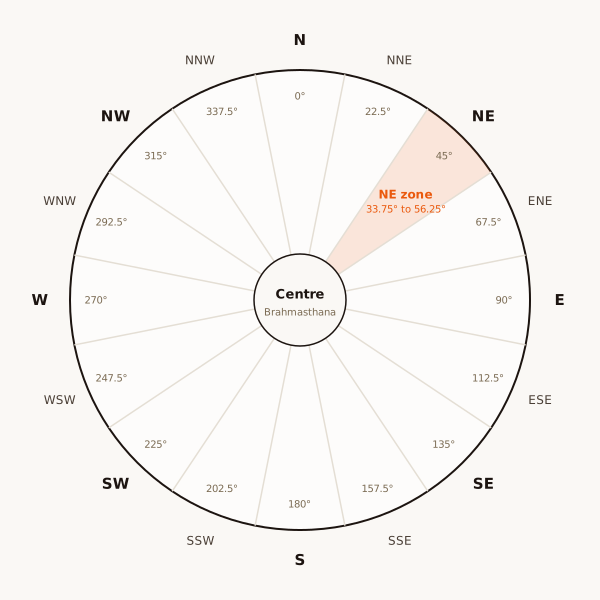
What we measure: the actual footprint of the basement against the 16 zones of the plot, measured from true north. A basement drawn as North-East on a plan may stretch well into the East or the centre once we draw it to scale.
Light, ventilation and ramps
Traditional Vastu guidance favours openings on the North and East of a basement, so that light and air enter from the side tradition links with openness. In practice this means lightwells, high windows or ventilation shafts along the North and East walls where the site allows.
For parking basements, the ramp is the biggest opening. A ramp descending from the North or East side is generally preferred. A ramp entering from the South-West is traditionally avoided. Ramp position is decided early in design and is hard to change later, so it belongs in the first Vastu discussion with the architect.
How to use a basement
The use of the space matters as much as its position. Traditional guidance and plain good sense point in the same direction:
- Suitable: parking, storage, a utility area, a home gym, a home theatre, a workshop, a server or electrical room, and archives.
- Use with care: a home office or study, provided there is good daylight or ventilation and the desk faces North or East.
- Traditionally avoided: a master bedroom, a puja room or a kitchen as the main cooking area in a basement.
A basement bedroom is the most common question we receive. Beyond tradition, the practical issues are damp, poor air and lack of daylight, which affect sleep whatever one’s view of Vastu.
Basement Vastu inside the space
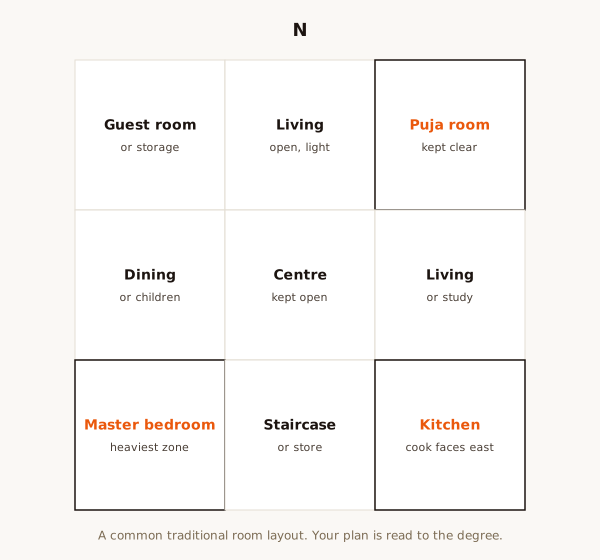
We read a basement like any floor: we lay the 16 zones over it and plan each zone by its quality.
- North-East: keep it open, clean and as bright as possible. This is the right place for a lightwell or the area nearest a ventilation opening.
- South-West: heavy storage, archives, a strongroom or the plant room belong here.
- South-East: electrical panels, generators, inverters and UPS rooms fit the fire quality tradition gives this zone.
- North-West: parking bays, movement areas and goods that come and go.
- Centre: keep it free of heavy columns where the structure allows, and free of clutter in all cases.
Sumps, water and damp
Many basements share space with a sump, a borewell pump or a rainwater recharge pit. Traditional guidance places underground water in the North-East, which suits a basement that is also in the North or East. Our water tank and sump Vastu guide covers this in detail.
Damp is the practical enemy of every basement. Seepage, stale air and mould make a basement unpleasant and can damage stored goods. We always note damp in a Vastu reading, but the fix is a waterproofing and drainage question for your structural engineer or contractor, not a Vastu remedy.
Commercial basements
In offices, shops and showrooms, the basement often holds parking, storage, the electrical room and sometimes a retail floor or food court. The same zone logic applies: electrical and generator rooms in the South-East, heavy storage and records in the South-West, the North-East kept clear and well lit.
A basement shop is a harder case, because it lacks direct frontage and daylight. We focus on the entry stair or ramp, clear signage, the cash counter position and lighting. Our commercial Vastu service covers the full building, and the office Vastu complete guide explains how working floors are read.
Basements in apartments
In an apartment building, the basement is common parking and service space fixed by the builder. You cannot change it, and its effect on an individual flat is small compared to the flat’s own layout. We note it in an apartment reading and move on to what you can change. Our car parking Vastu guide covers how allotted slots are read.
Correcting an existing basement without demolition
If the basement is already built, filling or relocating it is major construction, and we do not recommend that. Basement Vastu corrections without demolition include:
- Change the use: move a bedroom or puja space out of the basement and use it for storage, a gym or a theatre instead.
- Rearrange by zone: heavy storage to the South-West, electrical equipment to the South-East, the North-East kept clear.
- Improve light and air: brighter lighting in the North-East, exhaust fans or ducted ventilation, and a dehumidifier where damp persists.
- Declutter: a basement filled with unused items is the most common issue we see, and the easiest to fix.
- Balance the ground floor above: where a basement sits only under the South-West, keep the ground floor South-West rooms heavy and closed.
These changes improve how the basement is used. They do not change its position, and we make no promises about wealth, health or any other life outcome. More examples are in our guide to zero demolition Vastu corrections.
What a basement can and cannot fix
A well planned basement does not correct problems elsewhere in the building, and a poorly placed one does not doom a house. It is one factor among many in a Vastu reading, alongside the entrance, the shape of the plot, the kitchen and the bedrooms. We weigh it honestly and tell you how much it matters in your particular building.
Planning a basement in a new building
The best basement Vastu decisions are made before excavation: the footprint, the ramp, the lightwells, the staircase and the plant rooms. Once the retaining walls are cast, none of these move easily. Our Vastu for new construction service works with your architect and structural engineer at the drawing stage so that the basement suits the plot from the start.
Common basement issues we see
In Bangalore homes and offices the same basement problems appear often, and most are about use and upkeep rather than position.
- A basement used as a dumping ground, with the North-East corner hidden behind old furniture and boxes.
- A generator or inverter placed in the North-East simply because the cable run was shorter.
- No lightwell or ventilation at all, so the space stays dark and smells of damp.
- A guest bedroom or home office carved out of a parking basement with no window.
- A staircase landing in the centre of the basement, splitting the space awkwardly.
Most of these can be improved with planning and modest work: shift the equipment, add ventilation, clear the North-East and give each zone a clear purpose.
Questions to ask your architect
If a basement is on your drawings, these questions help you get the Vastu points settled at the right stage:
- Does the basement run under the full footprint, or only part of it, and which part?
- Where does the ramp or staircase enter, and can it come from the North or East?
- Where will the lightwells and ventilation shafts be?
- Where are the sump, pumps, electrical room and generator planned?
- How will waterproofing and drainage be handled on this soil?
Bring the answers to your consultation and we can read them against the zones of your plot.
Getting your building assessed
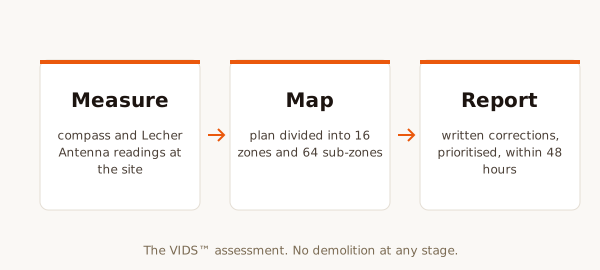
We read the basement as part of every independent house, villa and commercial consultation. We take true north on site and correct it for declination using the NOAA magnetic declination calculator, then map every floor to scale. Fees are on our consultation fees page, you receive a written report within 48 hours, and you can book a Vastu consultation whenever you are ready.