This guide to Vastu for accounts finance department placement explains where money should be counted, stored and recorded in an office, and what to do when the layout you have is not the one tradition prefers. It is one of the most specific requests we receive, because cash-flow concerns are a common reason business owners book a commercial consultation in the first place.
The short version: the north is traditionally favoured for accounts, safes are best placed so that the door opens towards the north or east, the finance team should sit in a stable and quiet spot out of the main walkway, and almost everything can be corrected without moving walls.
What this Vastu for accounts finance department guide covers
- Why the north is traditionally linked with finance
- How we measure before recommending anything
- Where the department, the finance head and the accountants sit
- Safes, cash lockers and cash counters
- Records, files and servers
- What to do when finance sits somewhere else
For the wider office layout, see our office Vastu complete guide.
Why the north is traditionally favoured
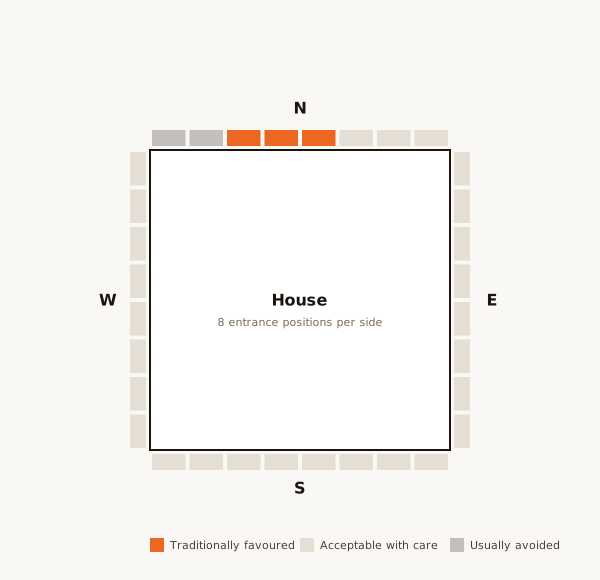
Traditional guidance: in the classical tradition the north is associated with Kubera, the keeper of wealth, and with the flow of resources. Cash counters, accounts departments and safes are conventionally placed in the north zone. Some schools of Vastu also accept the north-west as a secondary, supportive zone for accounts, because it is linked with movement and transactions.
What we measure: whether your finance area actually sits in the north zones of your office once the floor is measured from its centre, and how far it departs if it does not. A label on a plan is not enough.
Measure first, then decide
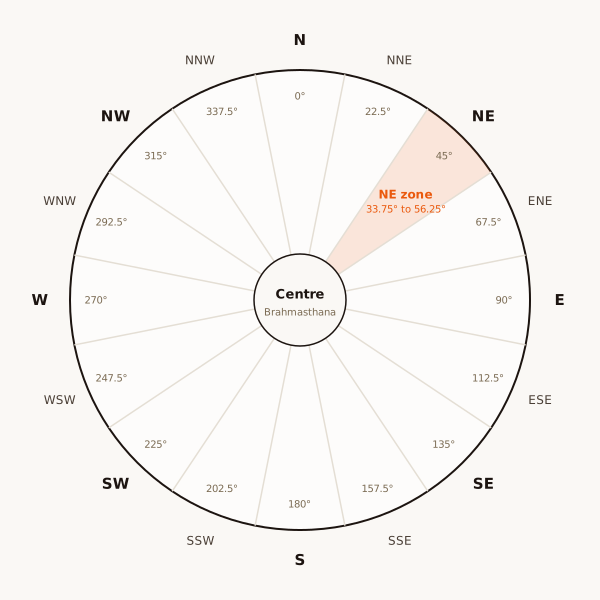
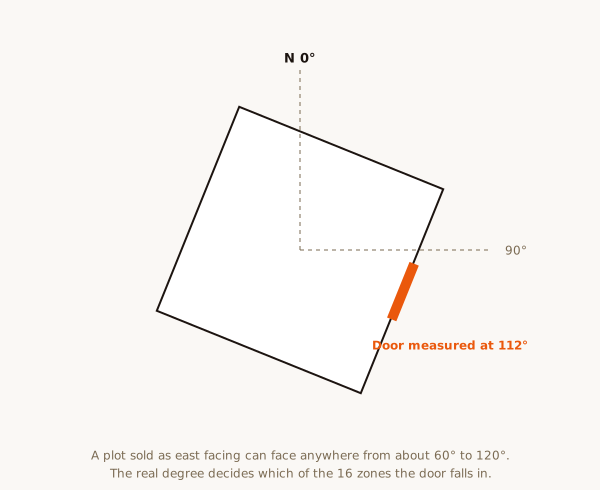
We divide the office into 16 zones of about 22.5 degrees each from the centre of your tenancy. Commercial floors have steel, lift cores and heavy wiring that pull a compass, so readings are taken at several points and corrected from magnetic north to true north using the local declination, which you can check on the NOAA magnetic declination calculator.
This step matters more for finance than for most functions, because the north zones are narrow. A cabin that looks north on a rotated plan may in fact sit in the north-east or north-west once corrected.
Where the department sits on the floor
Ideally the accounts team sits in the north or north-west part of the office, in an area that is calm rather than busy. Avoid placing the finance desks along the main walkway, beside the pantry or next to the reception queue. Money work needs concentration and a sense of security.
The finance head or CFO can sit close to the team but in a steadier position, towards the west or south-west of the finance area, with a wall behind the chair. Our CEO and manager cabin guide explains leadership seating in more detail.
Facing direction for accountants
People who handle accounts are best seated facing north or east while they work. Where a row of desks cannot all face north, we prioritise whoever handles payments, reconciliations and cash, and turn the rest as the room allows.
Avoid seating anyone who handles money with their back to an open door or a glass wall onto the corridor. A solid wall or a tall closed cabinet behind the chair is the simple fix.
Safes and cash lockers
The safe is traditionally placed in a stable zone, heavy and well grounded, positioned so that its door opens towards the north or east. A safe opening towards the south is traditionally advised against.
- Place the safe against a solid wall, not in a corner where it is hard to open fully
- Keep it off the exact centre of the room or the office
- Keep the area around it clean, dry and well lit
- Do not store cash in a drawer near the entrance or in the north-east corner of the floor
Records, files and digital storage
Physical files are heavy and belong in the south or west of the finance area, in closed cabinets. Archive rooms work well in the south-west. Servers and UPS units holding financial data are warm and heavy too, and suit the south or south-east better than the north-east.
Clear old files out regularly. Finance rooms that become storage rooms over the years are one of the most common patterns we see.
Cash counters in shops and showrooms
In retail the cash counter faces customers all day. The owner or cashier sits in the south or west part of the shop facing north or east, with the cash drawer opening towards the north. Our pages on Vastu for shops and Vastu for showrooms cover retail layouts in full.
Clutter and stagnation
A detailed Vastu assessment looks beyond the zone. A finance area that is cluttered, dim or stagnant is traditionally read as restricting flow regardless of its direction. Piles of unsorted paper, broken equipment, dead plants and old calendars all work against the space.
This is also the easiest correction to make. A clear desk, closed storage and good lighting change how the area feels within a day.
If your accounts function is already elsewhere
Most existing offices were not laid out with this in mind. A finance team outside the north is not automatically a problem. A written assessment looks at how significant the departure is for your layout and recommends targeted, non-structural corrections: desk direction, safe position, colour, lighting and object placement, guided where useful by a Lecher Antenna reading on site.
Moving the department is rarely needed. Our zero demolition Vastu corrections page shows how proportionate fixes work.
Common issues we see in finance areas
- The accounts team in the busiest walkway near reception
- A safe opening towards the south, or wedged into a corner
- Finance staff with their back to the door
- Old files stacked in the north or north-east
- The finance head in a glass cabin with no solid backing
- A dark, windowless accounts room used as storage
Colour and lighting for finance areas
Lighter, cooler tones on the north and east walls suit a finance area, with steadier, earthier tones behind the senior seat. Good, even lighting reduces errors and fatigue in work that depends on detail, and it is one of the simplest Vastu improvements any office can make.
What finance Vastu can and cannot do
A well-placed finance area supports focus, security and a sense of order. It does not replace sound accounting, credit control or good decisions, and we do not promise financial results from any placement. What Vastu offers is a layout that stops working against the people handling your money.
Finance in small offices and home businesses
Many small businesses do not have a finance department at all. The owner or one bookkeeper handles everything from a single desk. The same Vastu principles still apply at that scale: the desk in the north or north-west part of the room, the person facing north or east, a wall behind the chair, and the cash box or small safe opening towards the north.
If the books are kept at home, the study is read the same way. Keep the accounts desk away from the bedroom and the centre of the house, and keep the files closed and tidy. Our home Vastu service covers studies and home offices.
Before you set up or move a finance team
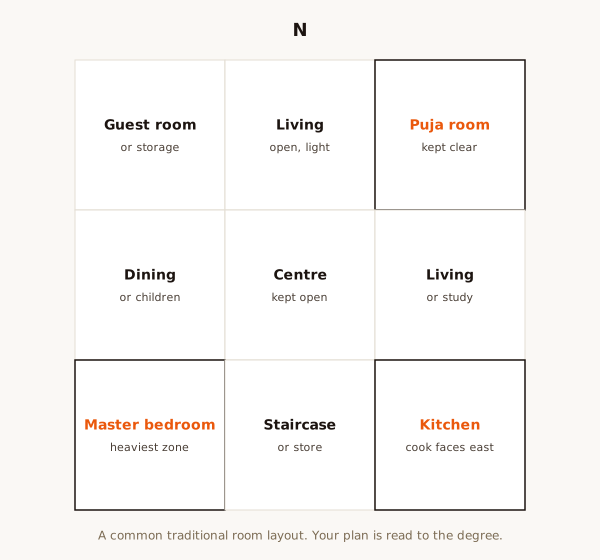
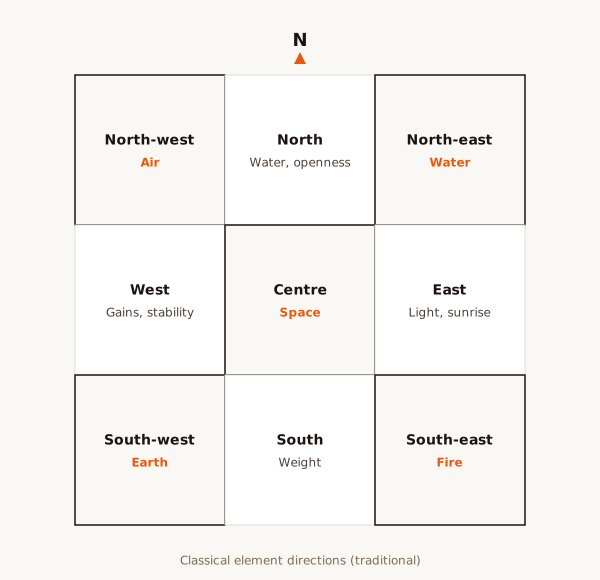
The easiest moment to get this right is before a fit-out or an office move. At drawing stage, allocating the north zones to finance and planning the safe position costs nothing. Share the floor plan and proposed seating, and we can review it through an online Vastu consultation before the interior work begins. An online assessment uses traditional Vastu only, the 16-zone map and the 3×3 grid drawn on your plan; geopathic stress readings need a site visit.
If you are choosing between two or three office floors, compare where the north zones fall on each, whether they are usable or taken by toilets and lift cores, and where a heavy safe could sit against a solid wall.
Getting a measured assessment
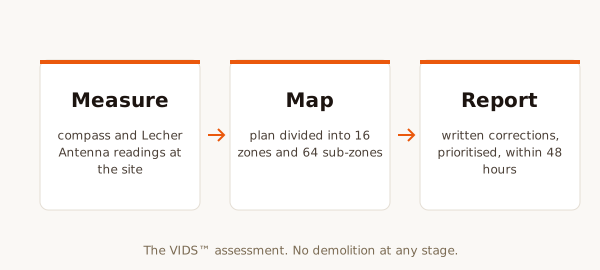
This Vastu for accounts finance department guide gives you the principles. A measured commercial assessment confirms your zones, ranks each finding and arrives as a written report within 48 hours. Commercial work starts from ₹51,000; details are on the fees page. See our office Vastu service or commercial Vastu page for scope, and book a consultation when it suits you.