This vastu for apartments complete guide explains how we read a flat as a living space in its own right. Most people in Bangalore now live in apartments, and most classical rules were written for independent houses on their own plots. The good news is that the principles still work. They simply need to be applied to the unit you actually control, from its own centre, measured to the degree.
We are Vardhini Vastu, and our consultant Raghavendra Hebbur has spent more than 10 years assessing homes and offices across Bangalore using a 16-zone method called VIDS. What follows is what tradition says, what we actually measure inside flats, and what you can do about it without breaking a single wall.
What this vastu for apartments complete guide covers
Apartment Vastu is not a list of yes or no rules. It is a reading of how each part of your flat is used against the direction that part sits in. In this guide we cover:
- Why the flat, not the whole tower, is the unit we read
- How to find the true centre and true north of a flat
- The main door, kitchen, bedrooms and the north-east in detail
- Toilets, balconies and fixed plumbing
- Common issues we see in Bangalore flats and how we correct them
- When a professional reading is worth it
If you are still choosing a flat, read our apartment buying Vastu checklist alongside this guide.
Why we read the flat, not the tower
Traditional guidance: classical texts in the Vishvakarma tradition, including the Aparajitaprccha, describe buildings standing on their own land with their own gate, compound and open spaces. A flat on the eleventh floor has none of these.
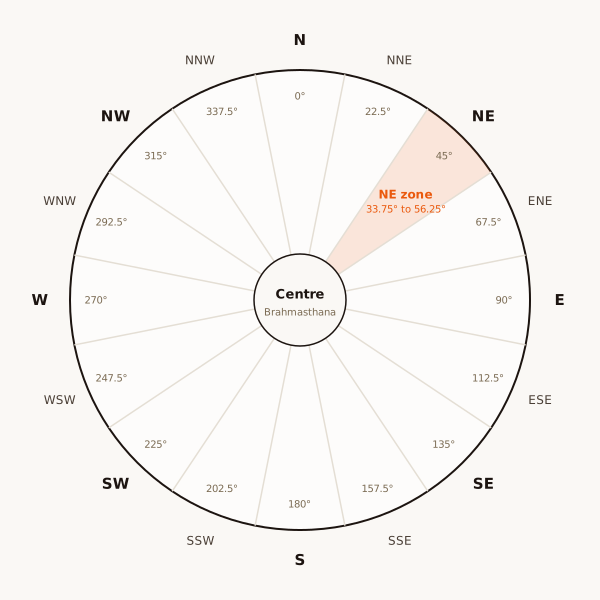
What we measure: the part of the structure you live in and control is the unit. So we take the centre of the flat, called the Brahmasthana, and divide the floor area around it into 16 directional zones of about 22.5 degrees each. That is where daily life happens and where corrections are possible.
The tower still counts for something. Its overall shape, its main gate and the position of lifts and staircases affect every resident, and we note them in a report. But the decisions that change how a home feels are almost always inside the flat.
Finding the true centre and true north of a flat
Two errors cause most wrong self-assessments. The first is guessing the centre. In an L-shaped or irregular flat the centre is not simply the middle of the living room. We work it out from the full outline of the unit, including balconies that are part of the enclosed plan.
The second is trusting the north arrow on a brochure. Builder plans are often rotated for printing, and a phone compass inside a concrete building can be pulled off by steel and wiring. On site we take readings at several points and correct magnetic north to true north using the local declination, which you can check on the NOAA magnetic declination calculator. The correction is small in Bangalore, but at zone boundaries a few degrees decides which zone a door falls in.
The main door: the degree, not the label
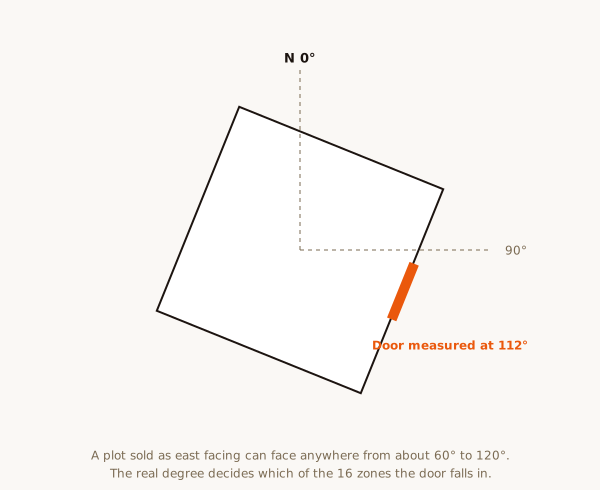
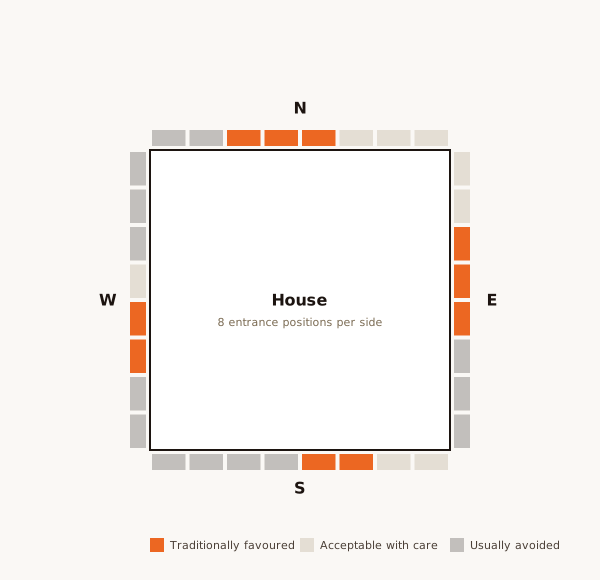
People often ask whether a south-facing flat is bad. Not by itself. A flat entrance is fixed by the builder, so the useful question is which of the 16 zones the door opens into, and exactly where along that wall it sits. Two south-facing doors a metre apart can fall in different zones with different readings.
Traditional guidance favours entrances in certain zones on every side, not only the east and north. What we measure is the exact span of the door. Where a door falls in a less supportive zone, we correct with threshold treatment, colour on the frame and inner wall, lighting and what is placed immediately inside. We never ask you to move a flat door. Our guide to the main door covers this in more depth.
Kitchen, stove and water
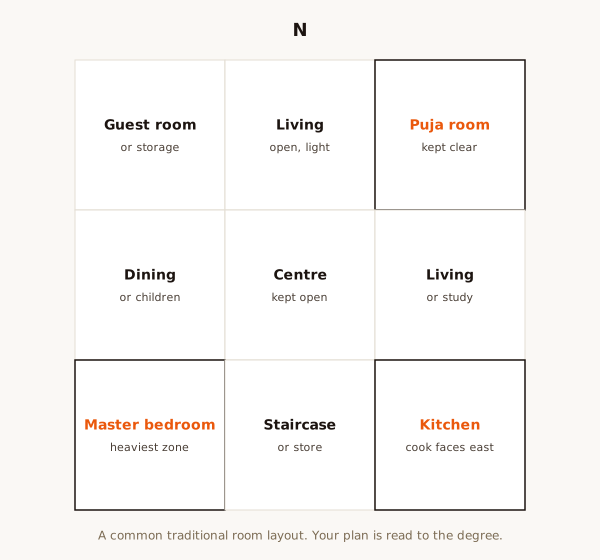
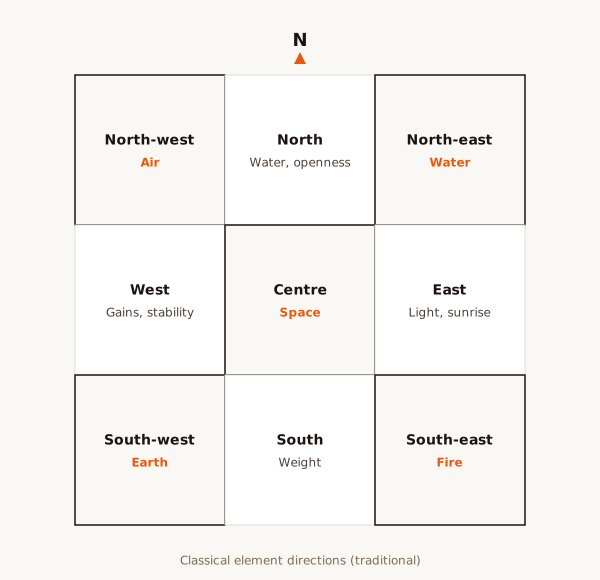
Fire is traditionally placed in the south-east. Many flats put the kitchen somewhere else, often in the north-west or even the north-east, because that is where the shaft runs. What matters most is the exact position of the stove, the direction the cook faces, and keeping fire and water apart.
- Keep the sink and water purifier from sitting directly beside or opposite the hob where you can
- Where the kitchen is in a weaker zone, shift the stove within the counter if the gas line allows it
- Use the colour and lighting of the zone to support the kitchen rather than fight it
More detail is in our kitchen guide.
Bedrooms and the south-west
The south-west is associated with stability and is preferred for the master bedroom. In many 2 and 3 BHK layouts the master bedroom sits elsewhere. Then bed position and sleeping direction carry most of the correction: a solid wall behind the headboard, the head towards the south or east where possible, and the bed kept off the exact centre of the room.
Children and guests do well in the west and north-west. Our bedroom guide explains sleeping direction and furniture placement step by step.
The north-east, toilets and fixed plumbing
Traditional guidance keeps the north-east light, clean and open. In flats it often holds a toilet, utility area or a heavy wardrobe. Toilets are the most common worry we hear, and in a flat plumbing cannot be moved.
What we recommend is about use and upkeep: keep the toilet door closed, the space dry and ventilated, light in colour, and free of storage. Then strengthen the opposite and adjacent zones so the overall balance of the flat improves. This is a correction, not a cure for every concern, and we say so in the report.
Balconies, utility areas and the building around you
A balcony opens a zone to the outside. Large openings in the north and east are generally welcomed. A very large opening in the south-west is balanced with heavier furniture, planters and screening rather than closing it in.
Utility balconies with washing machines and water heaters are best managed as the working edge of the flat: tidy, dry and well lit. Outside the flat, we note what the entrance faces, such as a lift shaft, staircase or another door directly opposite, because these affect how the entry feels every day.
Common issues we see in Bangalore flats
Across the apartments we assess, a few patterns repeat. None of them is a reason to panic:
- A toilet or puja room squeezed into the same north-east corner
- The kitchen in the north-west because of the service shaft
- A column or duct in the centre of the flat
- The master bedroom in the north-east with the bed against a window
- Heavy wardrobes in the north and east, light furniture in the south-west
Each of these has a placement, colour or room-use correction. Our page on zero demolition Vastu corrections explains the approach.
Corrections without demolition
Every correction we suggest in a flat uses tools you already have: which room is used for what, where the bed, desk and storage sit, colour, lighting and decluttering. We sell no products and take no commission from builders, so nothing in a report depends on a purchase.
If something would genuinely need construction, for example a kitchen platform rebuilt during an interior fit-out you were already planning, we say so plainly and leave the choice with you.
Renting, buying or already living there
Tenants can apply almost all of this guide without landlord approval. Buyers get the most value from a reading before they sign, because the choice of unit is still open. If you already own and live in the flat, the focus is on daily use and furniture. For a measured reading of your unit, see our apartment Vastu service or an online consultation from a floor plan. An online assessment uses traditional Vastu only, the 16-zone map and the 3×3 grid drawn on your plan; geopathic stress readings need a site visit.
Apartment Vastu myths we hear often
A few beliefs about flat Vastu come up in almost every conversation. Here is how we see them:
- Myth: only east and north facing flats are good Vastu. Each side has supportive and weaker zones; the exact door position matters more.
- Myth: higher floors cancel Vastu. The floor number does not change the directions inside your unit.
- Myth: Vastu needs mirrors, pyramids or remedies bought from a shop. Scientific Vastu works through layout, colour, light and use.
- Myth: a toilet in the north-east means the flat must be avoided. It is a common pattern and is managed through use and balance.
Seeing Vastu this way keeps decisions calm and practical, which is the point of a good reading.
Getting a measured reading of your flat
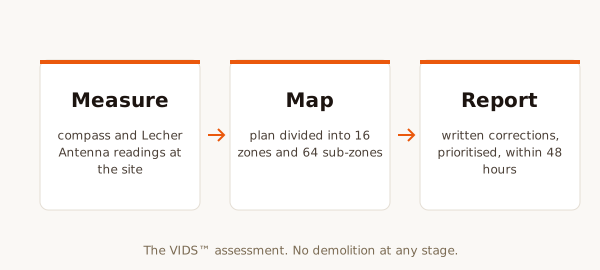
A self-check with this vastu for apartments complete guide gives you a good first view. A site visit adds measured directions, a Lecher Antenna reading for geopathic stress and a written report within 48 hours. Current fees are on our consultation fees page; a Bangalore apartment visit is ₹15,000. You can read how we work on the methodology page, and when you are ready, book a consultation at a time that suits you.