Wall clock vastu, photo frames and paintings come up in almost every consultation, usually after someone has read a long list of rules online. The good news is that wall decor is the easiest thing in a home to change: a nail, a hook and five minutes.
This guide gives the common traditional guidance for clocks, family photos, photos of ancestors and paintings, explains what is measured and what is tradition, and points out where popular advice goes further than the classical texts. Nothing here needs demolition. We do not sell greed and fear.
Why wall decor matters in Vastu
In Vastu tradition, what you see every day is read as shaping how a room feels. A clock is linked with time and movement, photos with the people they show, and paintings with the scene they carry. The practical reading is simpler: decor sets the mood of a room, and some placements simply work better for light, sight lines and daily use.
Wall clock vastu: which walls
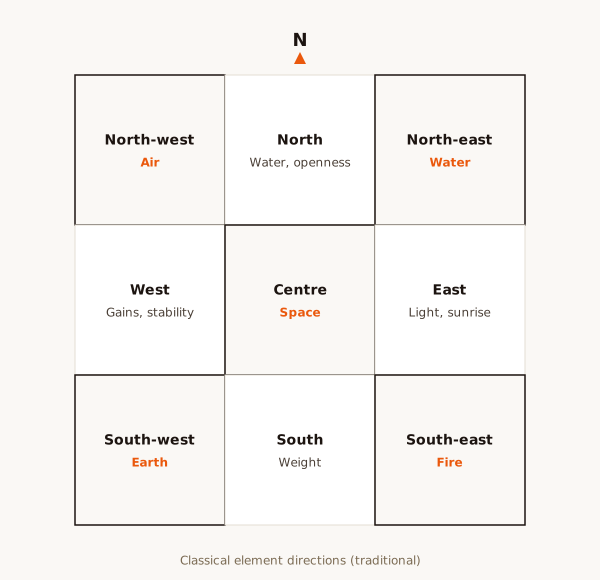
Traditional guidance: the North, East and West walls are the ones most often recommended for a wall clock. North and East are linked with growth and morning light, and the West is commonly accepted. The South wall is usually not preferred for a clock in most traditional readings.
- North wall: commonly recommended.
- East wall: commonly recommended, especially in living rooms.
- West wall: generally acceptable.
- South wall: usually not preferred.
- Above a door: tradition generally avoids a clock directly over a doorway.
Keep clocks working and set to the correct time; a stopped clock is the one point every school agrees on.
Clocks in bedrooms, kitchens and offices
In bedrooms a quiet clock on the North or East wall is the usual choice; a loud tick near the bed is a practical problem more than a Vastu one. In kitchens and offices, place the clock where it is easy to read without turning away from the work. In an office, a clock on the North or East wall facing the desk works well; see our home office Vastu guide.
Family photos
Traditional guidance places family photos, especially of the couple and the family together, on the South-West wall of the living room or master bedroom, the zone linked with stability and relationships. Happy, recent photos are preferred over old, faded or damaged ones.
Photos of ancestors are traditionally placed on the South or South-West wall, often in the living or dining area rather than the bedroom or the pooja room, which is kept for deities in most households.
Paintings and artwork
Tradition prefers calm, positive scenes: landscapes, flowing water in the North or East, sunrise scenes in the East, mountains in the South or South-West. Images of war, sorrow, wild animals attacking or sinking ships are traditionally avoided in living spaces.
The running horses painting is very popular. Many households hang it on the South wall of the living room or office, and it is often recommended with the horses running into the room rather than out of it. We describe this as popular tradition; the classical texts are about layout and direction, not specific paintings.
Pooja room and deity images
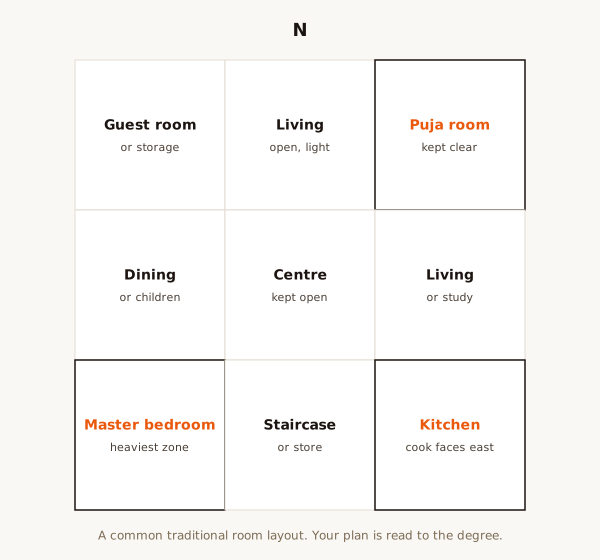
Deity images and photos belong in the pooja area, usually on the East or West wall so that the person praying faces East or West, with the North-East as the preferred zone for the pooja room itself. Read more in our guide to Vastu for the pooja room.
What tradition avoids
- Stopped, broken or wrong clocks.
- Clocks or heavy frames directly above the bed headboard.
- Damaged, faded or broken photo frames.
- Violent or sorrowful images in living spaces and bedrooms.
- Photos of ancestors in the pooja room or bedroom, in most traditional readings.
None of these needs anything more than moving or replacing a frame.
What we check on site
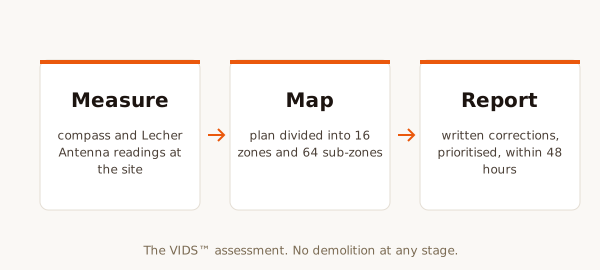
We measure the true-north direction of each wall with a compass and correct it for declination, which you can look up for any location on the NOAA magnetic declination calculator. A wall that looks like “the North wall” is often turned by 10 or 20 degrees, which changes the zone it belongs to. We then note clocks, frames and artwork as part of the room reading.
Decor notes are listed last in the report, after the entrance, kitchen, toilets and bedrooms, because they matter least and cost least to change. Our Vastu methodology page explains the full process.
What decor can and cannot do
A well placed clock or a calm painting makes a room easier to live in. Decor does not change the measured layout of a home, and it is not a remedy for health, money or relationship problems, whatever some sellers say. Several of these claims are covered in our guide to Vastu myths.
Wall clock vastu in apartments
In Bangalore flats the living room usually has one long wall facing the sofa and a TV wall opposite. Measure which way each wall actually faces before hanging the clock: in many flats the “North wall” turns out to be in the North-North-West or North-East zone. A clock on the North or East wall that is visible from the sofa and the dining table is the common choice. Avoid hanging it directly above the main door or the bedroom door.
Wall decor in offices
In an office, a clock on the North or East wall facing the desk keeps time visible without turning away from the work. Certificates, awards and the company logo are traditionally placed on the South wall of the owner’s cabin or the reception, the zone linked with recognition. Calm landscapes suit meeting rooms; images of conflict do not. See our CEO and manager cabin guide.
How wall decor fits the 16 zones
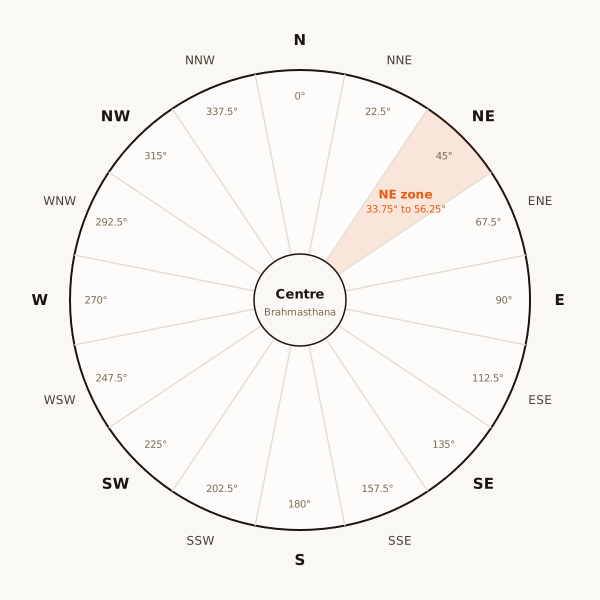
Each wall belongs to one or more of the 16 zones, depending on how the building is turned from true north. A long wall can span two zones, which is why we read the position of the frame on the wall, not just the wall as a whole. Our guide to the 16 Vastu zones shows how each sector is drawn, and the free 16 Zone Vastu Chakra Tool lets you see the zones on your own plan.
For decor, the zone is a guide rather than a strict rule. A calm painting in a slightly different zone is far better than a cluttered wall in the “right” one.
Common decor mistakes we see
- A heavy clock or shelf directly above the headboard.
- A stopped clock kept for years in the living room.
- Ancestor photos in the pooja room alongside deities.
- A dark, stormy painting as the first thing seen from the main door.
- Dozens of frames crowded on one wall, which tradition reads as clutter.
Each takes minutes to change.
Colours, frames and lighting
Frames and wall colours work together. Light, warm frames suit the North and East walls; heavier wooden frames suit the South and West. Picture lights should not create glare on the glass of a frame or a clock face. For wall colours by direction, see our Vastu colours for home guide.
Photos in bedrooms and children’s rooms
In the master bedroom, a photo of the couple on the South-West wall is the common traditional choice; photos of other family members, and especially of ancestors, are usually kept in the living areas instead. In children’s rooms, cheerful pictures, maps and their own artwork suit the East or North walls near the study table. Keep frames secure and away from the head of the bed, and avoid glass frames within reach of very young children for safety.
Clocks and photos in the dining and pooja areas
In the dining area, a clock on the North, East or West wall and a calm painting of food, fruit or nature are the usual choices. In the pooja area, tradition keeps the walls for deity images and keeps clocks and family photos out. If the pooja corner is part of the living room, place family photos on a different wall so the two are clearly separate. For the pooja space itself, see our pooja room guide.
Rules people often confuse
Two rules are often mixed up. The first is “no clock on the South wall”, which many people read as “no clock anywhere in the South of the home”. Traditional wall clock vastu guidance is about the wall the clock hangs on in its room, so a clock on the North wall of a South-facing room still follows the custom. The second is the idea that photos of ancestors must be removed from the home. Tradition does not ask for that; it asks that they be placed on the South or South-West wall of a living area, kept clean and respected, rather than in the pooja room or the bedroom.
A quick wall decor checklist
- Clock on the North, East or West wall; keep it working and correct.
- Family photos on the South-West wall of the living room or master bedroom.
- Ancestor photos on the South or South-West wall, outside the pooja room and bedroom.
- Calm, positive artwork; avoid violent or sorrowful scenes.
- Nothing heavy above the headboard.
Getting your home assessed
Wall decor is checked as part of a full reading. See our Vastu for home service, the sample Vastu report you receive within 48 hours, and fees on the consultation fees page, or try your plan in the free 16 Zone Vastu Chakra Tool.