Vastu for toilet and bathroom placement causes more worry than almost any other part of a home, mostly because people read that a toilet in the wrong zone is a serious defect and then discover one in their own flat. The reality is calmer. Toilets and bathrooms are where water and waste leave the house, and Vastu simply asks that they sit in suitable zones, stay dry and well ventilated, and do not intrude on the rooms that need the most care.
This guide separates traditional Vastu guidance from what we actually measure in Bangalore homes, explains how we handle a North-East toilet without demolition, and covers commode direction, attached bathrooms, ventilation and fittings. Where something genuinely needs construction, we say so.
Why toilets get so much attention in Vastu
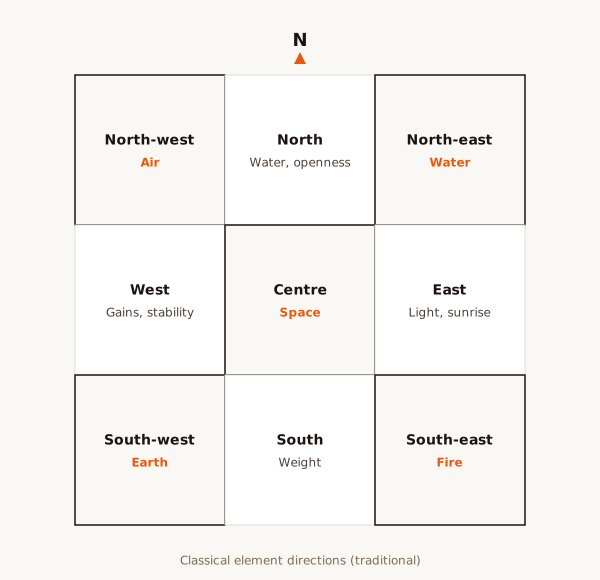
In classical Vastu the home is read as a set of zones, each with an element and a purpose. The North-East is kept light and open, the South-West heavy and stable, the centre clear. A toilet is the one room whose job is disposal, so where it sits matters more than where, say, a guest room sits.
There is also plain common sense behind the Vastu view. Toilets bring moisture, odour and drainage into a house. A poorly placed or poorly ventilated bathroom can make a neighbouring bedroom damp or a kitchen wall stained, whatever the compass says.
Traditional zones for toilets and bathrooms
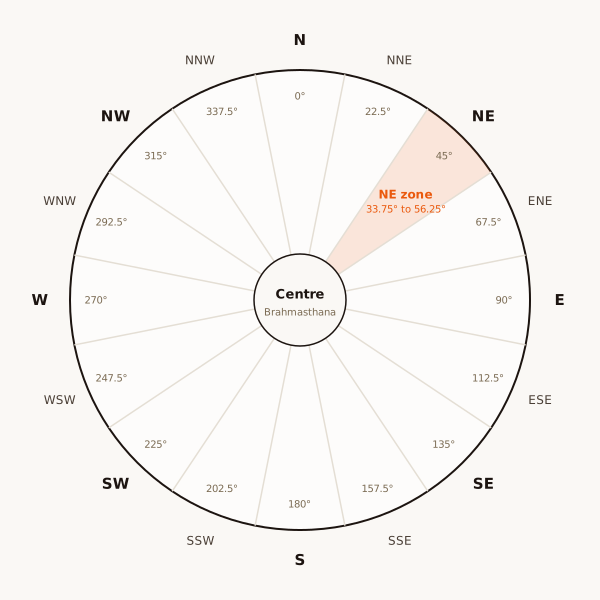
Traditional guidance: most texts and practising schools prefer the West, the North-West and the South side of the house for toilets, away from the corners. In the 16-zone Vastu framework, the zones most often suggested for toilets are West-North-West, South-South-West and East-South-East.
What we measure: every home is divided into 16 zones of about 22.5 degrees each, measured from true north on site. Builder plans often show north a few degrees off, which can move a bathroom from one zone into the next. Our 16 zones explained guide shows how this works on a real plan.
Zones traditionally avoided
Traditional guidance: toilets are discouraged in the following places:
- North-East: the zone Vastu keeps cleanest and most open.
- Centre of the house: the Brahmasthana, which Vastu keeps free of heavy or wet use.
- South-West corner: the zone of stability, usually given to the master bedroom.
- Directly above or beside the kitchen stove or the puja space: a matter of hygiene as much as Vastu.
Finding one of these in your home is common. In compact Bangalore apartments, a toilet in the North-East or near the centre is something we see often, and it is manageable.
Handling a North-East toilet without demolition
This is the Vastu question we answer most. Moving a toilet means new plumbing, waterproofing and often structural work, so it is only sensible during a planned renovation. For everyone else, we use proportionate, everyday corrections:
- Keep the toilet door closed at all times and fit a door closer if needed.
- Run a good exhaust fan and keep any window open for cross-ventilation.
- Keep the floor dry. Fix leaking taps, cisterns and drains promptly.
- Use light colours, good lighting and a clean, uncluttered layout.
- Keep the commode lid closed when not in use.
- Where the home has more than one bathroom, make the North-East toilet the less used one.
- Keep the rest of the North-East zone outside the toilet light, open and free of heavy storage.
We do not prescribe pyramids, strips, yantras or other products for toilets, and we sell none. Our wider zero-demolition corrections guide explains the thinking.
Commode direction: traditional guidance
Traditional guidance: the person using the commode should face North or South, so the commode sits along a North-South axis. Facing East or West is traditionally discouraged. Some families also follow the custom that the commode is not placed directly in line with the bathroom door.
In existing flats the commode position is fixed by the soil pipe and shaft. Changing its direction means new plumbing and floor work. We mention commode direction in the report so you know the traditional Vastu view, but we only recommend changing it if you are already redoing the bathroom.
Ventilation, light and dampness
Good ventilation is where Vastu and building science agree most closely. Bangalore monsoons bring months of humidity, and bathrooms without an outside window quickly develop mould, peeling paint and damp walls that spread into bedrooms.
- Every toilet should have either an outside window or a ducted exhaust fan that is actually used.
- Keep wet and dry areas separate with a glass partition or curtain.
- Check walls shared with bedrooms and wardrobes for damp patches.
- Let natural light in where possible: a frosted window beats a sealed box.
In Vastu terms, the air element supports clearing and movement, which is why the North-West is considered a suitable zone for bathrooms.
Attached bathrooms in bedrooms
Most bedrooms in modern Bangalore homes have an attached bathroom, and Vastu has a few practical points about them:
- The bathroom door should not face the bed directly. If it does, keep it closed and consider a curtain or screen.
- Avoid placing the head of the bed against a wall shared with the toilet.
- Keep the bathroom floor at or slightly below bedroom floor level so water does not seep out.
- Fit a sliding or self-closing door where space allows.
Our Vastu for bedroom guide explains how bed position and sleeping direction fit with an attached bath.
Vastu for toilet and bathroom in apartments
In an apartment the bathrooms are stacked on shared shafts, so their zones are decided by the building, not by you. Vastu advice for flats is therefore about usage and upkeep rather than relocation.
- Choose which bathroom serves as the main family bath based on its zone.
- Use the bathroom in a less favourable zone for guests or occasional use.
- When buying, check the zone of each toilet before you sign. Our Vastu for apartment service reads this from the floor plan.
Placing fittings within the bathroom
Traditional guidance: inside the bathroom itself, the fittings follow the same zone logic as the house.
- Shower area and wash basin towards the North or East part of the bathroom.
- Commode towards the West or South part of the bathroom.
- Geyser and electrical points towards the South-East, the zone of fire.
- Mirrors on the North or East wall.
- Floor slope and drainage traditionally towards the North or East.
When we can, we suggest these during renovation. In a finished bathroom, mirrors, storage and lighting are easy to adjust; tiled fittings are not.
Colours, materials and doors
Light, clean colours suit bathrooms in Vastu: white, cream, light grey, pale blue. Dark, heavy tiles make small bathrooms feel closed and show water marks. Keep the door in good condition and make sure it shuts fully. A bathroom door that swings open by itself is a simple fix that comes up again and again on site visits.
Common toilet issues we see in Bangalore homes
- A North-East toilet with a broken exhaust fan and a window kept shut.
- An attached bathroom whose door faces the bed, left open through the night.
- Damp patches on a bedroom wall shared with a shower.
- A storeroom of cleaning chemicals and old buckets in the North-East toilet.
- A toilet built under the internal staircase of a duplex.
Each of these Vastu issues is handled with usage, maintenance and small changes, not demolition.
How we assess toilets and bathrooms
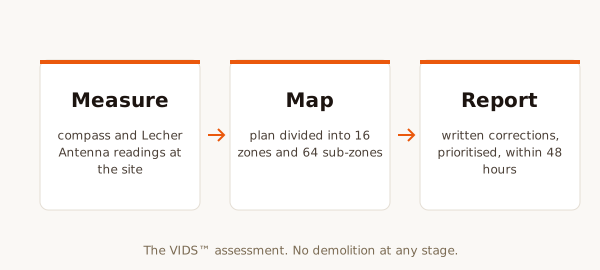
On a site visit we take compass readings at several points, away from steel and electrical panels, and correct them for magnetic declination using a reference such as the NOAA magnetic declination calculator. The 16 zones are then laid over a measured plan, and each toilet and bathroom is marked with its zone, its shared walls and its ventilation.
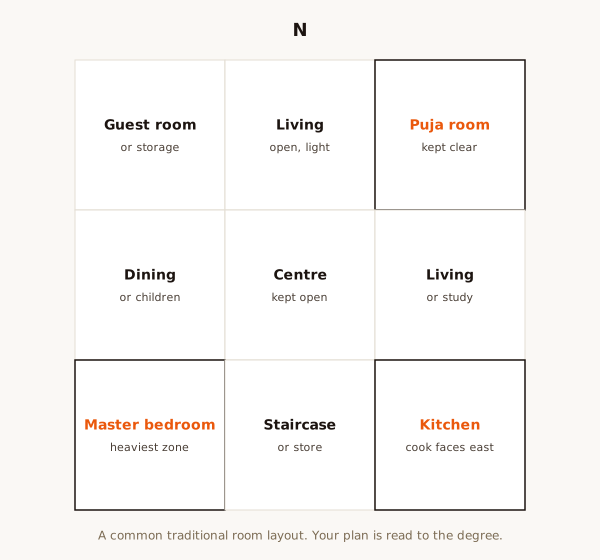
For online consultations we work from your floor plan, photos and guided phone compass readings. The full method is on our Vastu methodology page. You receive a written report within 48 hours. An online assessment uses traditional Vastu only, the 16-zone map and the 3×3 grid drawn on your plan; geopathic stress readings need a site visit.
Planning bathrooms in a new house or renovation
If you are building or renovating, this is the right time to place bathrooms in suitable Vastu zones, set the commode on a North-South axis and plan windows on outside walls. Our Vastu for new construction and Vastu for home renovation services work with your architect and plumber at drawing stage, before any pipe is laid.
Vastu for toilet and bathroom checks before you buy
A pre-purchase check is the simplest form of Vastu for toilet and bathroom planning, because it costs nothing to walk away from a flat at viewing stage. When you visit a resale home or a new launch, spend a few minutes with the floor plan and a phone compass, and ask these questions before you commit:
- Which zone does each toilet fall in once north is corrected for declination?
- Does any toilet sit directly above or beside the kitchen, or share a wall with the puja space?
- Does every bathroom have an outside window or a working exhaust duct?
- Are there damp marks, swollen door frames or a musty smell on walls next to the bathrooms?
- Could the less favourably placed bathroom serve as the guest bath?
Our apartment buying checklist covers the rest of the plan. One unfavourable toilet is rarely a reason to drop a home you otherwise like; several problems together, plus poor ventilation, usually are.
Getting your home assessed
Toilets and bathrooms are read in every home Vastu consultation, together with the entrance, kitchen and bedrooms. Our Vastu for home page explains the service, fees are published on the consultation fees page, and you can book a Vastu consultation when it suits you.