Car parking Vastu looks at where a vehicle is kept on a residential plot: an open parking bay, a covered car porch, a closed garage or a stilt floor under the house. A car is heavy, it moves in and out every day, and it brings fuel, batteries and now charging cables onto the property. Classical Vastu has clear preferences for where that kind of movement and weight belongs.
This Vastu guide covers the traditionally preferred zones, garages and car porches, stilt parking, gates and driveways, EV charging, and what to do when the parking is already in a less suitable place. As in all our guides, we keep traditional guidance separate from what we measure on site, and every correction avoids demolition.
Why parking placement matters in Vastu
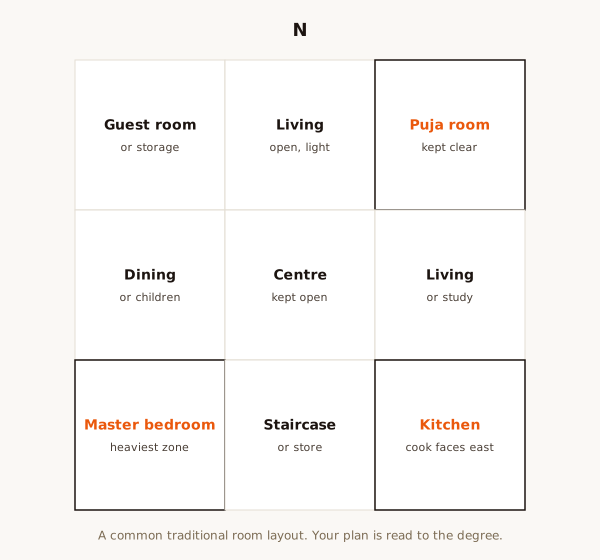
Vastu reads each zone of a plot by its quality. The North-West is linked with air and movement, the South-East with fire, the North-East with openness and water, and the South-West with weight and stability. A parked car carries several of these qualities at once: it is heavy, it moves daily, and it holds fuel or a battery.
The practical side matters as much. Parking decides where the gate goes, how the driveway runs, how much of the front setback stays open, and whether exhaust and noise reach the bedrooms. A good car parking Vastu plan usually turns out to be a good practical plan as well.
The traditionally preferred zones
Traditional Vastu guidance: the common classical preferences for parking on a residential plot are as follows.
- North-West: the most commonly recommended zone for vehicles, because of its link with movement. A car that comes and goes daily fits the quality tradition gives this corner.
- South-East: also widely accepted, especially for a covered porch or garage, given its link with fire and energy.
- North or East: open parking without a heavy roof is generally considered acceptable, as long as the North-East corner itself stays open and light.
- North-East: a heavy, covered garage here is traditionally avoided, because it blocks the zone tradition wants most open.
- South-West: traditionally avoided for parking. Tradition wants this corner closed and solid, and a car that leaves every morning leaves it empty.
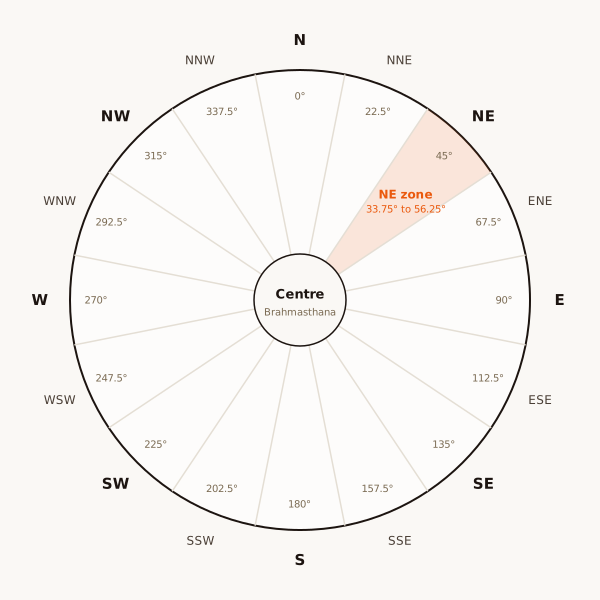
What we measure: the exact zone of the parking area after taking true north on site, because a front porch that looks North-West on a plan may sit in the North or West zone once the plot tilt is measured.
Open parking, car porch or closed garage
The type of structure changes the reading. An open parking bay with no roof adds little weight and blocks little light, so tradition is more relaxed about it, even along the North or East. A car porch with a concrete slab adds a roof and a heavy element at the front of the house. A closed garage adds walls and a door, which makes it behave almost like a room.
For a covered porch or a closed garage we prefer the North-West or South-East, and we avoid the North-East corner. For open parking on an East or North facing plot, we usually accept the front setback as long as it is kept clear and the car is not parked hard against the North-East corner.
Car parking Vastu for different facing plots
The facing of the plot decides which zones are available near the gate.
- East facing plot: parking in the South-East part of the front is common and fits tradition. Keep the North-East part of the front open, perhaps as lawn. Our east facing house Vastu page covers the rest of the layout.
- North facing plot: the North-West part of the front suits parking well, with the North-East part kept open.
- West facing plot: the North-West part of the front is the natural parking area.
- South facing plot: the South-East part of the front is the usual choice, keeping the South-West closed.
Stilt parking under the house
Many Bangalore independent houses now use a stilt floor for parking, with the living floors above. In Vastu terms the whole ground floor becomes a parking zone, which raises two questions: how the house above is planned, and how the stilt floor itself is organised.
We look at the stilt floor as its own plan. Keep the North-East bay open and well lit, with no lift machine room, store or heavy tank there. Put the lift, staircase and storage towards the South or West. Park towards the North-West or South-East bays where you can, and keep the South-West corner closed with a store, utility room or solid wall rather than an empty bay.
Gates, driveways and slopes
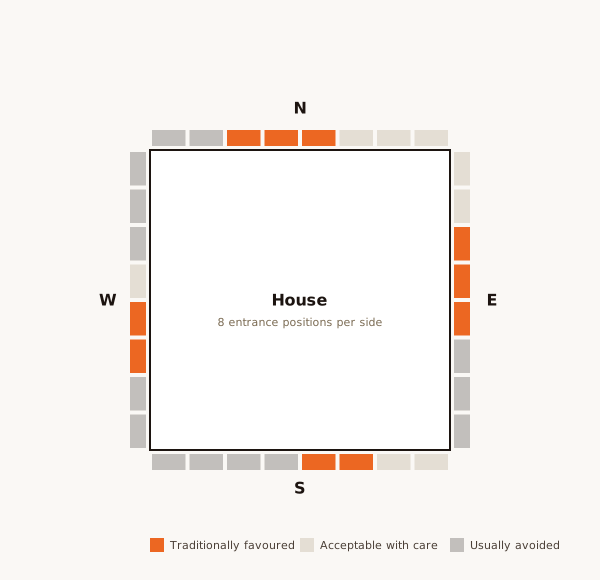
The gate and the driveway matter as much as the parking spot. Traditional Vastu prefers the gate in a favourable pada of the facing side, and the driveway should slope gently towards the North or East so that water drains away from the South-West. Our guide to the main door and entrance explains how entrance zones are read.
Practically, a straight run from the gate into the garage and then straight to the main door is convenient but can feel exposed. A small turn or a planted edge between car and door gives privacy without losing access.
Which way should the car face
Traditional Vastu guidance often suggests parking so that the car faces North or East when it is standing. We treat this as a minor point. It costs nothing to follow when the plot allows it, but it should never come before safe access, a clear turning space or a sensible gate position.
EV charging, fuel and storage
An electric vehicle charger is an electrical installation, and tradition places fire and electrical equipment in the South-East. Where the parking is in the North-West, we usually place the charger on the wall nearest the South or East of that bay rather than running a cable across the North-East.
Keep spare fuel, oil, tyres and tools in a closed store in the South or West rather than stacked in the North-East of the garage. A cluttered garage is the most common parking problem we see, and it is the easiest to fix.
When parking is already in the wrong zone
In existing houses the parking is fixed by the structure, and we do not ask anyone to break a porch slab or a garage wall. Car parking Vastu corrections without demolition include:
- Keep a North-East parking area open: remove sheds, stored items and heavy pots, and keep it bright and clean.
- Shift the bay within the zone: mark the parking position a little towards the North-West or South-East side of the available area.
- Close a South-West bay when the car is out: a gate or a solid side wall keeps the corner closed, and a heavy planter can anchor it.
- Move storage out of the parking area into a closed South or West store.
- Use lighting and colour: a bright, light-toned North-East and a darker, solid South-West.
These changes improve how the parking area is used. They do not change the structure, and we make no promises about wealth, health or any other life outcome. Further examples are in our guide to zero demolition Vastu corrections.
Parking in apartments
In an apartment, your parking slot is allotted by the builder or the association, often in a basement, and you rarely have a choice of zone. We note it in an apartment reading, but it carries far less weight than the layout inside your flat. If you do get a choice of slots, a North-West or South-East slot is the traditional preference, and our basement Vastu guide explains how basement levels are read.
Planning parking in a new house
When you build, decide the parking zone together with the gate, the main door and the staircase, before the structural drawings are frozen. Moving a porch slab later is real construction. Our independent house Vastu service covers the full plan for houses on their own plot, and we work with your architect through the Vastu for new construction service.
Common car parking mistakes we see
The same few issues come up again and again in Bangalore houses, and most of them are about use rather than structure.
- A covered porch slab built right across the North-East corner of an East or North facing house.
- A garage that has slowly become a store for old furniture, paint tins and boxes, with the car parked outside.
- A stilt floor where the lift, sump lid and storeroom all sit in the North-East bay.
- A driveway that slopes towards the house, so rainwater collects at the main door.
- Charging cables run across the floor of the North-East because the only socket happened to be there.
Each of these can be improved without breaking anything: clear the store, move the socket, regrade a small patch of the driveway, or open up the North-East bay. That is usually where a parking correction starts.
Getting your home assessed
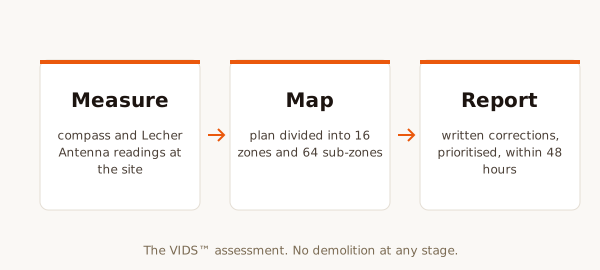
Parking is read in every independent house and villa consultation, along with the gate, the entrance, the kitchen and the bedrooms. We measure true north on site and correct it for declination using the NOAA magnetic declination calculator. Fees are listed on our consultation fees page, you receive a written report within 48 hours, and you can book a Vastu consultation when it suits you.