Water tank and sump Vastu deals with three things every Bangalore house depends on: the underground sump that receives municipal or tanker water, the overhead tank that feeds the taps, and very often a borewell. Each is heavy, each is hard to move once built, and classical Vastu has clear guidance on where each belongs.
This guide separates traditional guidance from what we measure on site, explains the difference between independent houses and apartments, and is honest about what can and cannot be changed later. A sump is concrete in the ground. A plastic overhead tank on a stand is not. That difference shapes every recommendation we make.
Why water storage matters in Vastu
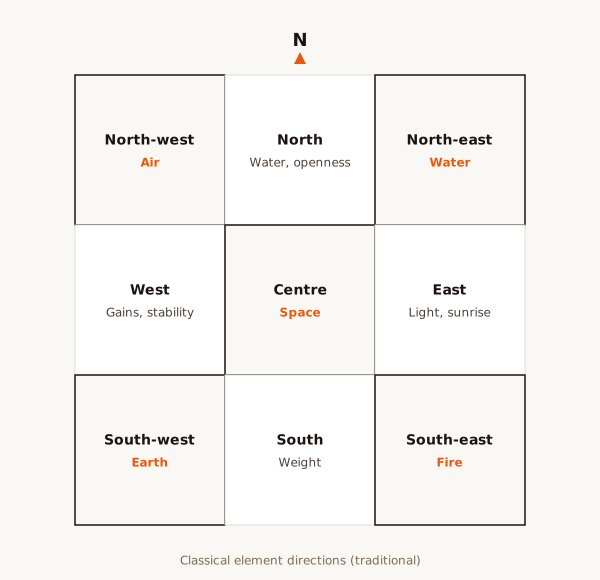
Vastu associates the North-East with water and openness and the South-West with weight and stability. Water storage brings both qualities together: water below ground is low and open, while a filled overhead tank is one of the heaviest loads on a roof. Placing each in the right zone keeps the house in balance according to the classical logic.
There is plenty of practical sense too. A sump placed low on the plot collects water easily, an overhead tank placed high on the strongest part of the structure carries its load safely, and a borewell placed away from the septic tank stays cleaner.
The underground sump
Traditional Vastu guidance: an underground sump, being water below ground level, belongs in the North-East, North or East of the plot. The South-West, South-East and the centre, or Brahmasthana, are traditionally avoided.
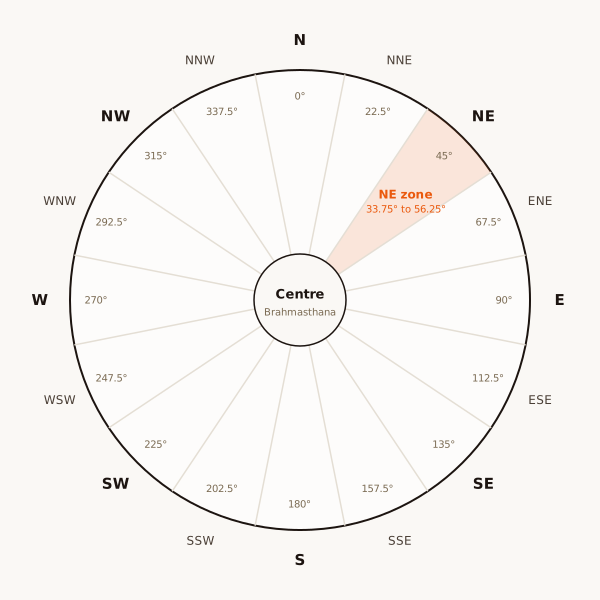
What we measure: we divide the plot into 16 zones of about 22.5 degrees each from true north. The North-East zone is narrower than most people assume, so a sump that looks like it is in the corner may sit in North-North-East or East-North-East. Both are generally acceptable. Our 16 zones explained guide shows how the zones are laid out.
The overhead tank
Traditional Vastu guidance: the overhead tank is heavy and raised, so it belongs in the South-West or West part of the roof, on a sturdy platform. The North-East is traditionally avoided, because it places a heavy load over the lightest zone. Many schools also avoid the South-East and the centre of the roof.
Practically, the South-West corner of a house is often where the structure is strongest, so this guidance usually suits the engineer as well. Always check the platform design with a structural engineer: a full tank is a serious load.
Borewells and open wells
Traditional Vastu guidance: borewells and wells follow the same rule as the sump: North-East first, then North or East. In the 16-zone reading we look for a position inside these zones and well away from the septic tank and soak pit.
In Bangalore the position of a borewell is often decided by the drilling contractor after a ground survey. If the best yield point falls outside the preferred zones, water supply comes first; we then balance the rest of the plot around it.
Keeping sump and tank apart
Traditional Vastu guidance: the sump and the overhead tank are kept in different zones: the sump low in the North-East, the tank high in the South-West. Putting both in the same corner, or placing the overhead tank directly above the sump, is discouraged.
This arrangement also tends to make plumbing sensible, with the pump near the sump and a single rising main running to the tank.
Independent houses and villas
An independent house gives you control over all three elements, so water tank and sump Vastu is easiest to get right here, especially before construction. On an existing house we check:
- The zone of the sump, borewell and any recharge pit.
- The zone of the overhead tank and its platform.
- The position of the septic tank or sewer connection.
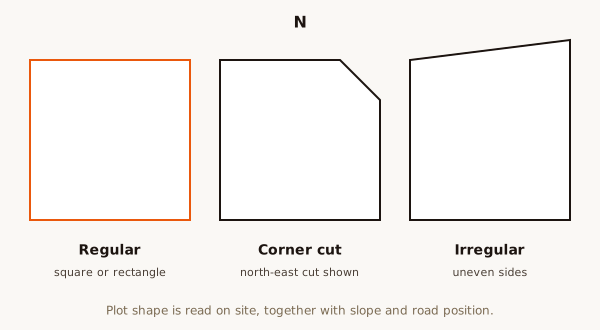
- The slope of the plot and where rainwater runs.
Our independent house Vastu service reads the plot and the building together.
Water tank and sump Vastu in apartments
In an apartment the sump, the overhead tanks and the borewells are common property, fixed by the builder and shared by every resident. We note their zones in the report, but we do not ask residents to worry about something none of them can change.
Inside the flat, attention moves to what you control: drinking water storage and the purifier in the North-East part of the kitchen, any flat-level loft tank kept off the North-East, and leaks in bathrooms and balconies fixed promptly. Our Vastu for apartment service covers all of this.
Rainwater harvesting and recharge pits
Bangalore building rules require rainwater harvesting for many plots, and it is a sensible thing to do anyway. Vastu treats a recharge pit or harvesting sump like any other water body below ground, so the North-East, North or East are preferred. Keep it separate from the drinking water sump and clean it before every monsoon.
Septic tanks and soak pits
Traditional Vastu guidance: a septic tank is not a water store but a waste system, and it follows different rules. The West or North-West of the plot is usually preferred. It should never be placed in the North-East, and it should be kept well away from the sump and the borewell.
For hygiene and safety, follow the separation distances your engineer and local authority specify. Here the building rules and the traditional guidance point the same way.
When the sump or tank is in the wrong zone
This is common in older Bangalore houses. The honest position is that a concrete sump is a construction item. Breaking it and building a new one costs money, disturbs the foundation area and is rarely worth doing unless the sump is leaking or being replaced anyway.
- Keep the sump sealed, clean and covered, with a sound lid.
- Avoid adding new heavy structures or storage over a North-East sump.
- Keep the rest of the North-East open, light and uncluttered.
- If an overhead plastic tank sits in the North-East, moving it to the South-West is plumbing work, not demolition, and is often worth doing.
These follow our zero-demolition corrections approach.
Pumps, pipes and maintenance
Good water storage depends on upkeep as much as position. Clean the sump and the overhead tank at least once a year, check lids for gaps where mosquitoes breed, and watch for damp patches on walls under the tank. A slow leak above the South-West rooms can do real structural harm over time. Keep the pump on a raised base near the sump, with its electrical connection protected from water.
Before you buy a house or plot
Water storage is worth checking at viewing stage, because these are the hardest elements to change later.
- Where is the sump, and how is it accessed for cleaning?
- Where is the borewell, and how far is it from the septic tank?
- Where does the overhead tank sit, and how is the platform built?
- Which way does the plot slope, and where does rainwater collect?
Our plot buying checklist covers the rest, and our Vastu for plot service reviews a plot before you commit.
Common water storage issues we see in Bangalore
- A sump built in the South-West because the tanker lorry parks on that side.
- A plastic overhead tank placed over the North-East corner of the roof.
- A borewell drilled next to the septic tank.
- A sump lid that is cracked, loose or missing.
- Damp ceilings under an overhead tank that overflows every morning.
Most of these Vastu issues are about upkeep or a tank that can be moved. Where construction is unavoidable, the report says so clearly.
How we assess water storage
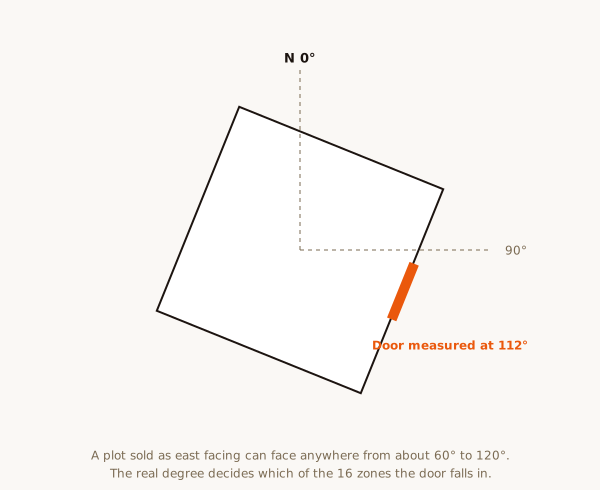
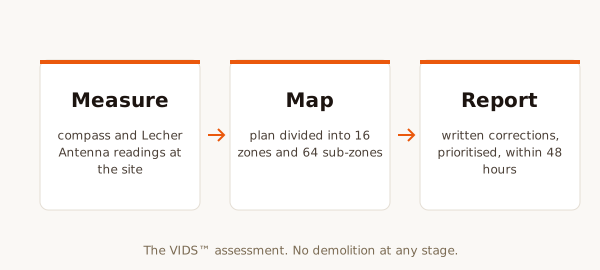
On a site visit we take compass readings at several points on the plot, away from steel and electrical panels, and correct them for declination using a reference such as the NOAA magnetic declination calculator. We then lay the 16 zones over a measured plan of the plot and the roof, and mark the sump, borewell, overhead tank, septic tank and recharge pit.
The full method is on our Vastu methodology page. You receive a written report within 48 hours.
Planning water storage in a new house
If you are building, place the sump and borewell in the North-East, the overhead tank on a strong South-West platform and the septic tank in the West or North-West, all on the drawings before excavation begins. Our Vastu for new construction service works with your architect and plumber at that stage.
Getting your home assessed
Water storage is read in every independent house and villa Vastu consultation, along with the entrance, kitchen and bedrooms. Our Vastu for home page explains the service, fees are on the consultation fees page, and you can book a Vastu consultation whenever it suits you.