Short answer: North-East zone Vastu governs the Ishanya corner, covering exactly 33.75° to 56.25° measured clockwise from true north at the property’s geometric centre (Brahmasthan). Ruled by the Water element (Jal Tatva) and representing the head of the cosmic Vastu Purusha, the North-East is the most sensitive sector in any building. It should be kept open, lightweight, clean, and well-lit. Ideal uses include a puja room, meditation area, open living space, or underground water sump. Toilets, septic tanks, kitchens (fire clashing with water), heavy staircases, and overhead water tanks must be strictly avoided in this zone; existing defects can be balanced without demolition using metallic threshold dividers, neutral colours, and lighting adjustments.
Across thousands of property consultations conducted in Bangalore and throughout India, no sector generates more client concern than the North-East corner. In classical Sanskrit architectural treatises (including the Samaranganasutradhara and Aparajitaprccha), the North-East is revered as the gateway of prana (vital life energy) and the intake portal for early morning solar radiation and geomagnetic flux lines. When the North-East is unencumbered and pure, occupants experience mental clarity, intuitive wisdom, and harmonious family life. Conversely, when it is choked with heavy masonry, sanitary waste, or high-temperature cooking fire, mental stress and chronic indecision frequently follow.
This exhaustive guide outlines the exact degree boundaries of the North-East zone, its elemental and solar physics, what to place and what to avoid, how to assess cut corners, and how existing structural defects are neutralized without breaking walls.
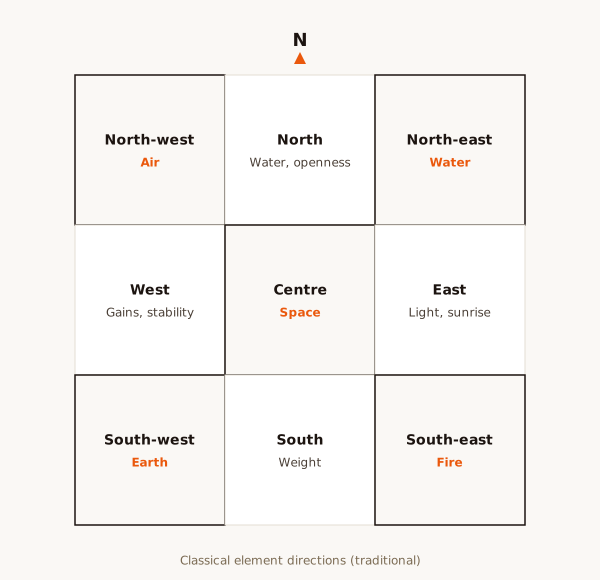
The exact degrees of the North-East zone (33.75° to 56.25°)
In 16-zone Scientific Vastu, every direction covers a precise 22.5-degree radial arc originating from the geometric centroid (Brahmasthan) of the property. The North-East quadrant actually consists of three distinct zones that must not be confused:
- North-North-East (NNE): 11.25° to 33.75°. Associated with health, cellular recuperation, bodily immunity, and vitality.
- North-East (NE / Ishanya): 33.75° to 56.25°. The primary spiritual and intellectual centroid, governing mental clarity, peace, and wisdom.
- East-North-East (ENE): 56.25° to 78.75°. Leaning towards the East, governing recreation, rejuvenation, and family joy.
When measuring your home, you must verify the bearing in degrees from true north, adjusted for local magnetic declination using the NOAA magnetic declination calculator. A room that looks like the “north-east corner” on an unscaled builder brochure may actually sit at 65 degrees (ENE) or 25 degrees (NNE) once rotated to true north. Precision measurement is the only way to avoid false conclusions.
For the complete 16-zone angular framework, explore our master reference: The 16 Vastu Zones Explained with Degrees.
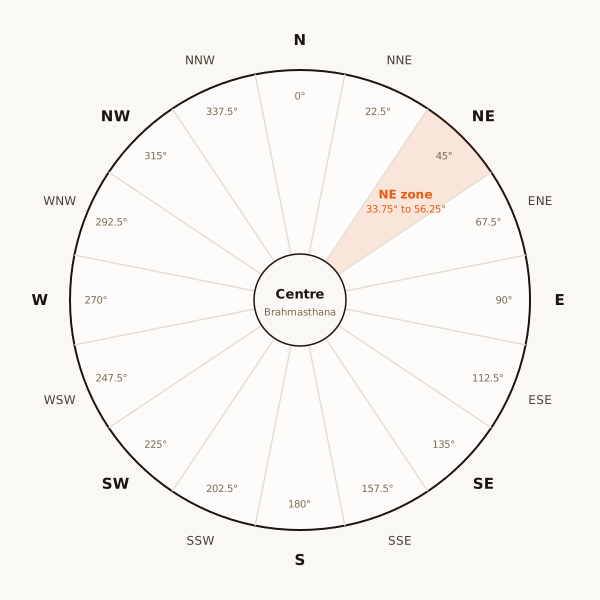
The science of Ishanya: solar and geomagnetic physics
The classical emphasis on the North-East is not arbitrary superstition: it is grounded in basic geophysics and human biology:
- Beneficial early morning solar radiation: As the sun rises in the East, early morning rays strike the North-East quadrant at an oblique, gentle angle. These early rays are rich in beneficial ultraviolet light, which naturally disinfects living spaces, stimulates Vitamin D synthesis, and helps set the human circadian rhythm without the harsh infrared heat of afternoon sun.
- Geomagnetic flux lines: The earth’s magnetic field flows from the South magnetic pole to the North magnetic pole. In the northern hemisphere, living spaces designed with low elevations and large openings in the North and East welcome this gentle electromagnetic flux, fostering calm brainwave patterns.
- Thermal lightness: In tropical climates, buildings must breathe. Keeping the North-East low, open, and lightweight allows cool night and morning air to circulate through the home before daytime heat builds up in the South and West.
Ideal placements for the North-East zone
Because Ishanya carries the Water element (Jal Tatva) and embodies lightness, it naturally suits activities requiring cleanliness, serenity, and reflection:
- Puja Room or Meditation Altar: The sacred focal point of the home. Placing the mandir or prayer area in the North-East allows you to meditate facing East or North in the quietest, brightest morning light.
- Living Room and Entrance Veranda: An open formal living space, entrance foyer, or reading lounge fits gracefully in the North-East, keeping the floor area free from heavy structural clutter.
- Underground Water Sump and Borewell: In independent houses and villas, digging the freshwater underground storage sump or borewell in the North-East sector is highly auspicious and aligns perfectly with the local Water element.
- Open Balcony or Garden Courtyard: Large windows, low floor levels, light balconies, and green planters (avoiding heavy potted trees) maintain the required open energy intake.
- Study Area for Young Children: A lightweight study desk where a student sits facing East or North promotes sustained focus and calm concentration.
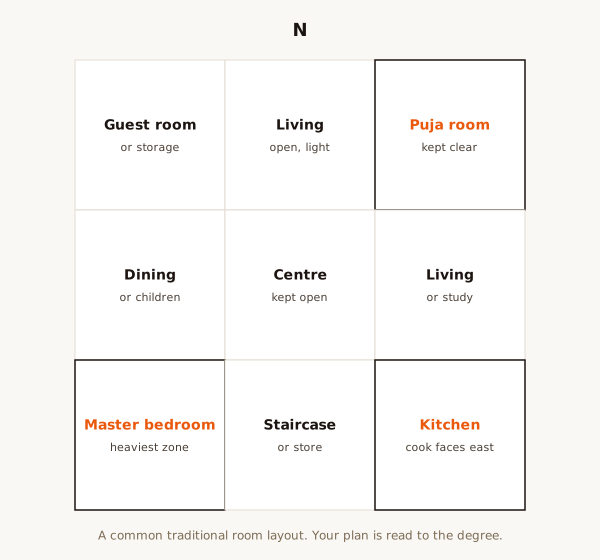
Strict prohibitions: what must never sit in Ishanya
Because the North-East is so sensitive, certain structural functions create severe spatial friction:
- 1. Toilets and commodes: The ultimate negative placement. Flushing human waste down the water quadrant generates heavy bio-energetic contamination, linked in classical texts to clouded thinking and constant mental agitation.
- 2. Kitchen and cooking stove: Fire (Agni) and Water (Jal) are diametrically opposed elements. Placing a gas stove or high-temperature induction cooktop in Ishanya burns the water element, generating domestic irritability and digestive issues.
- 3. Heavy structural staircases: Massive concrete staircases climbing in the North-East place crushing physical weight on the head of the property, blocking morning light and stifling growth.
- 4. Overhead water storage tanks: Installing heavy multi-thousand-litre plastic or concrete overhead tanks on the terrace directly above the North-East loads the lightest quadrant with crushing pressure. (Underground water belongs in NE; overhead water belongs in SW).
- 5. Primary master bedroom: The North-East is active with high-frequency morning solar radiation. Adults sleeping here frequently report light, restless sleep and difficulty settling down; the master bedroom belongs in the grounded earth stability of the South-West.
- 6. Junkyards, heavy storage and inverter batteries: Stacking discarded furniture, heavy iron trunks, or electrical generators in Ishanya chokes spatial intake.
North-East toilet Vastu and non-demolition fixes
In high-rise apartment complexes, attached bathrooms often drop into the North-East corner because of standardized plumbing stacks. Homeowners are often terrified by bad advice claiming they must demolish their bathroom or abandon their home. We do not sell greed and fear.
You do not need to break tiles or reconstruct plumbing. We apply zero-demolition spatial containment:
- Threshold metallic divider: Embed a continuous 2mm to 3mm brass or aluminium strip flush into the flooring directly beneath the bathroom door frame. This energetically isolates the negative drainage field of the toilet from the rest of the living space.
- Door discipline: Keep the toilet door firmly shut at all times. Install a self-closing hydraulic hinge if needed.
- Mechanical exhaust ventilation: Install a high-RPM exhaust fan that runs continuously or on an automated timer to keep air pressure negative and expel dampness outside the building envelope.
- Neutral wall finishes: Avoid dark red, bright blue, or jet black paint/tiles inside a North-East toilet. Paint walls neutral off-white or soft grey.
- Rock salt absorption: Keep an open bowl of natural Himalayan rock salt on a high shelf inside the bathroom and replace it every two weeks to absorb localized moisture and heavy humidity.
For more bathroom guidelines, see: Vastu for Toilet and Bathroom.
North-East kitchen: managing the fire and water clash
If your builder plan has positioned the kitchen in the North-East, cooking heat directly attacks the Water element. When relocating the kitchen to the South-East is impossible, apply these non-structural compensations:
- Green marble / granite hob slab: Place a polished slab of natural green marble or forest green granite directly underneath the gas burner or induction cooktop. In five-element theory, Green represents the Wood/Air element, which acts as a gentle energetic mediator between Water (North-East) and Fire (Stove), preventing direct elemental confrontation.
- Cook facing East: Ensure the cook faces East while preparing meals.
- Avoid red interior decor: Never paint kitchen cabinets red, maroon, or orange in a North-East kitchen. Use soothing off-white, cream, or light green laminates.
- Keep the area immaculately clean: Avoid leaving dirty utensils or standing greasy water overnight.
Explore full kitchen rules in: Kitchen Direction Vastu.
Cut corners and extensions in the North-East
A property where the North-East corner is truncated, chamfered, or entirely missing is termed a North-East cut. Conversely, a plot that juts out further towards the North-East is termed a North-East extension:
The North-East Cut
A cut in Ishanya deprives the home of beneficial morning sun and geomagnetic intake. Occupants often describe feeling intellectually drained, lacking fresh ideas, or struggling with administrative approvals. We balance an existing North-East cut without structural rebuilding:
- Boundary extension wires: Concealing a fine copper or brass wire along the skirting board or floor boundary to virtually complete the missing geometric corner.
- Reflective optical mirrors: Hanging a large, non-distorting square or rectangular mirror along the truncated wall to visually and energetically double the spatial depth.
- High-intensity daylight lighting: Installing a 5000K daylight-white LED wash fixture that illuminates the truncated corner continuously throughout the evening.
The North-East Extension
Unlike cuts in other directions, a gentle, square-cornered extension exclusively towards the North-East (an extended Ishanya) is traditionally considered auspicious in classical Vastu. It increases the intake of positive morning light and water energy. However, if the extension is sharp, acute (less than 90 degrees), or forms an irregular jagged angle, it must be normalized with virtual boundary dividers.
Read our specialized guide: Cut Corner Vastu.
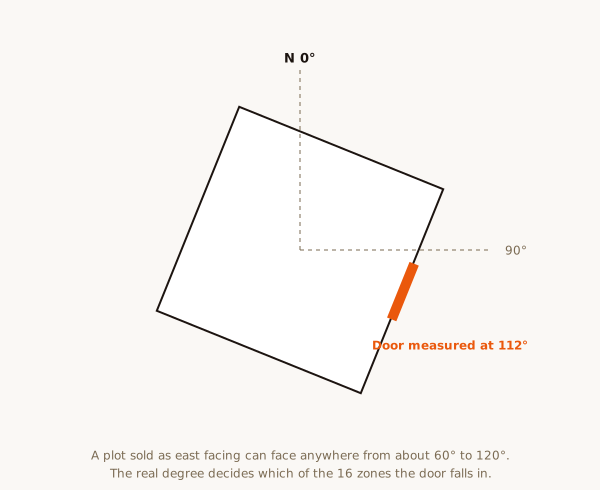
Puja room and meditation corner design in the North-East
The North-East is the traditional first choice for the family altar (Mandir):
- Deity facing: Place the sacred altar so that idols face West or South, meaning that you face East or North while praying or meditating. Facing East aligns you with sunrise; facing North aligns you with the geomagnetic pole.
- Elevation and materials: Use natural wood (teak, sheesham) or white marble for the altar cabinet. The altar should be raised slightly off the floor on a solid plinth.
- Cleanliness and sanctity: The puja room should never share a common dividing wall with a bathroom, toilet, or shoe storage cabinet. It should not be constructed directly underneath an internal staircase.
- Compact apartment puja units: In a 2BHK or 3BHK flat where a separate puja room is unavailable, hang a lightweight wooden wall-mounted mandir in the North-East corner of the living room.
Explore our room-specific guide: Vastu for Pooja Room.
Underground water sump and borewell placement
In independent bungalows, row houses, and plots, water storage placement follows strict rules:
- Underground Freshwater Sump: Best located in the North, North-East, or East setback. An underground water body in Ishanya strengthens the Water element and supports mental vitality.
- Borewell Drilling: Drill the borewell in the North-East sector, between 33.75° and 56.25°. Ensure it is kept clean and clear of surface stormwater runoff.
- Overhead Water Tank Warning: While water beneath the ground belongs in the North-East, water elevated on the roof belongs in the South-West or West. Placing a heavy overhead plastic or concrete tank on the North-East terrace crushes the head of the property and must be relocated to the South-West during terrace construction.
For complete details, read: Water Tank and Sump Vastu.
10-point pre-purchase checklist for the North-East
Before buying any flat, villa, or plot, review this 10-point checklist for the North-East sector:
- 1. No toilets in NE: Confirm there are no commodes, septic tanks, or sewage shafts between 33.75° and 56.25°.
- 2. No kitchen hob in NE: Verify that the cooking platform is not positioned in the North-East.
- 3. Openness and light: Ensure the North-East has large windows, open balconies, or low boundary walls.
- 4. No central staircases: Verify that no heavy concrete internal staircase occupies Ishanya.
- 5. No overhead tank on NE terrace: Check that the rooftop water tank sits on the South-West, not the North-East.
- 6. Clean perimeter boundary: Ensure the North-East corner of the plot or flat is not severely cut or chamfered.
- 7. Sump and borewell location: For independent houses, ensure the underground water source sits in the North-East.
- 8. Main door pada: If the entrance sits on the North wall, check that it falls in favoured padas N3, N4, or N5, not N1 or N2.
- 9. Slope of the land: Verify that the plot naturally slopes down towards the North-East, allowing rainwater to drain naturally in this direction.
- 10. No heavy junk storage: Confirm the North-East is clean and free of heavy machinery, generators, or clutter.
Send your floor plan to us on WhatsApp at +91 97391 05574 for a pre-purchase report within 48 hours.
Zero-demolition remedial science for Ishanya
Our founding promise is clear: “We do not sell greed and fear.” If you live in an existing property where the North-East is compromised, you do not need to demolish walls, spend lakhs on renovation, or buy costly pyramids and yantras. Products are optional, and every correction can be performed without structural demolition:
- Elemental boundary dividers: Embedding thin brass or copper strips flush with the floor across door thresholds isolates negative zones.
- Colour resonance: Painting North-East accent walls in pure off-white, light cream, or very soft sky blue strengthens the Water element without construction.
- High-CRI warm lighting: Illuminating dark or shadowed North-East corners with 3000K warm LED light uplifts spatial vibration.
- Decluttering: Removing heavy iron furniture, filing cabinets, and old boxes from the North-East restores immediate spatial openness at zero cost.
For more detailed non-invasive treatments, explore: Zero-Demolition Vastu Corrections.
Next step
Whether you are designing a new home, buying an apartment, or seeking to balance an existing North-East corner, start with mathematically verified degree readings. Send your floor plan and location pin to Raghavendra Hebbur on WhatsApp at +91 97391 05574. You will receive an objective, scientific 16-zone evaluation and a written report within 48 hours.