Almost every piece of Vastu advice, from where the kitchen should go to where the owner of a business should sit, traces back to the eight Vastu directions: the four cardinal points and the four corners between them. Each carries a traditional character and an element, and together they form the map that every recommendation is built on.
This guide explains all eight in one place, because they make most sense side by side. For each direction we set out the traditional guidance, the rooms and uses it suits, the common problems we see in Bangalore homes and offices, and what can be done about them without demolition.
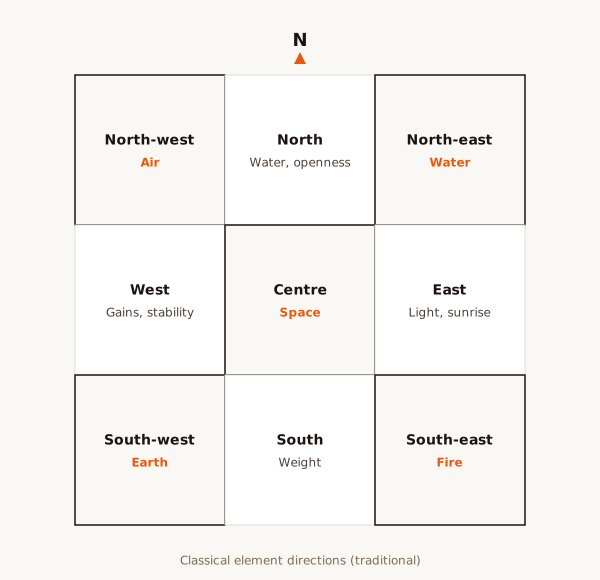
The eight Vastu directions at a glance
| Direction | Element or quality | Traditionally suits |
|---|---|---|
| North | Water, wealth (Kubera) | Entrance, cash, accounts, open space |
| North-East | Water, openness (Ishanya) | Puja, meditation, light, open floor |
| East | Sunrise, new beginnings | Entrance, living room, study |
| South-East | Fire (Agneya) | Kitchen, electrical panel, machinery |
| South | Rest, firmness (Yama) | Bedrooms, heavy storage |
| South-West | Earth, stability (Nairutya) | Master bedroom, leadership seating |
| West | Water, gains (Varuna) | Dining, children, storage |
| North-West | Air, movement (Vayavya) | Guest room, dispatch, finished goods |
These are traditional associations, not guarantees. They tell us where a function is most at home; the actual reading of a building then decides what matters.
North: openness and resources
Traditional guidance: North is associated with Kubera and with wealth and opportunity. It is favoured for main entrances, cash storage, the accounts function and open, uncluttered space.
What we see: in many Bangalore apartments, the north wall carries a wardrobe, a loft or a toilet. A heavy north side is one of the more common findings. Practical responses include moving heavy storage elsewhere, keeping the north lighter in colour and furniture, and making sure the approach to a north door is clean and well lit.
North-East: the most sensitive corner
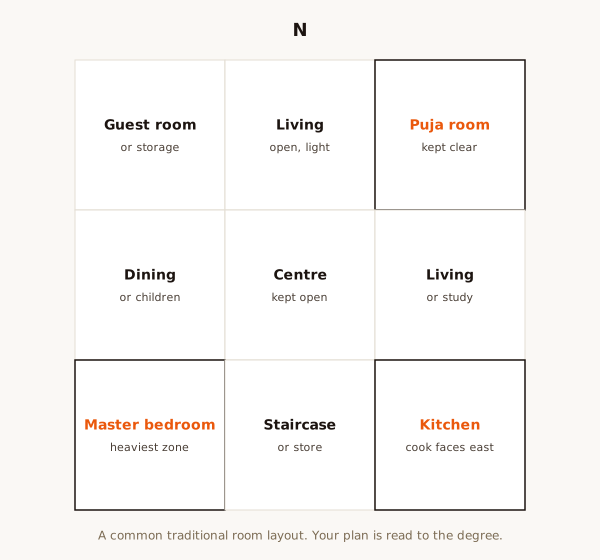
Traditional guidance: the North-East (Ishanya) is the most sensitive of the eight directions, linked with water, light and spiritual activity. It is ideal for a puja space, meditation or simply open floor, and is traditionally kept free of toilets, kitchens and heavy storage.
What we see: toilets in the north-east are common in compact flats, and overhead tanks over the north-east corner of independent houses. Where the toilet cannot move, we focus on keeping it clean, dry, ventilated and closed, and on keeping the rest of that corner light and open. A heavy tank is a structural question; we say so plainly where it applies.
East: light and beginnings
Traditional guidance: East is the direction of the rising sun. It is favoured for entrances, living rooms, study areas and for the direction a person faces while working, praying or cooking.
What we see: tall buildings on the east side often block morning light. When that happens we look at how to bring light inside: lighter curtains, clear windows, mirrors used carefully, and keeping the east side of rooms free of tall furniture. Our guide to east facing house Vastu goes deeper.
South-East: the fire corner
Traditional guidance: South-East (Agneya) is the fire zone. It is the classical place for the kitchen, and in offices and factories for electrical panels, generators, furnaces and heat-producing machinery.
What we see: kitchens often sit in the north-west or north instead, especially in apartments. Without moving a kitchen, the stove can often be shifted within the room, or the cook can face east. We also check that water and fire points are not right next to each other, a common layout issue.
South: firmness and rest
Traditional guidance: South is associated with Yama and is treated with more care than North or East. It is far from unusable. It suits bedrooms, heavy storage and solid walls.
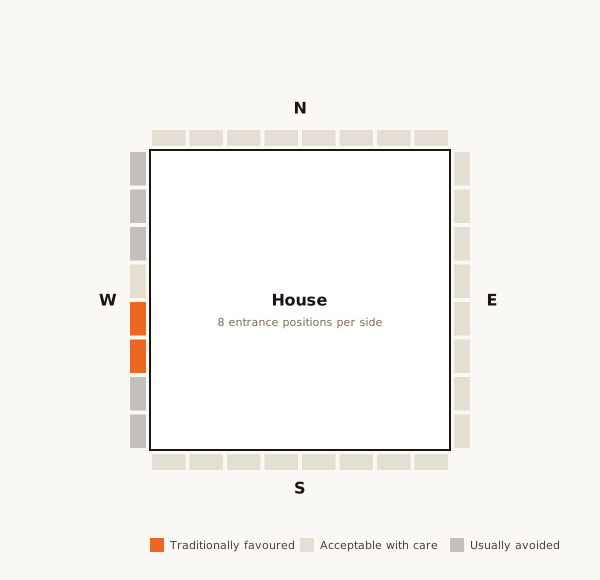
What we see: many families worry about a south-facing home. That worry is usually larger than the problem. South-facing properties are common and workable, and what matters is the exact position of the door within the south side, which a 16-zone reading can locate. See south facing house Vastu for detail.
South-West: stability and weight
Traditional guidance: South-West (Nairutya) is the earth zone, linked with stability and authority. It is favoured for the master bedroom, the head of the family, leadership seating in an office and the heaviest storage.
What we see: a south-west entrance, a south-west toilet or an empty, open south-west corner. Corrections include placing heavy furniture in that corner, keeping it closed and solid, and using the room for the most senior person where possible.
West: steady gains
Traditional guidance: West is associated with Varuna and water. It sits between the favoured north and east and the more carefully treated south. It suits dining, children’s rooms, study and storage.
What we see: west-facing homes catch strong afternoon sun in Bangalore. Heat and glare matter as much as symbolism, so shading and curtains are often part of the advice. See west facing house Vastu.
North-West: movement and support
Traditional guidance: North-West (Vayavya) is linked with air and movement. It suits guest rooms, a utility area, and in business, dispatch, finished goods and anything meant to move out.
What we see: master bedrooms in the north-west are common. Traditionally this can feel less settled for the head of the household. Where switching rooms is not possible, we look at bed position, the solidity of the wall behind the head and what sits around the bed.
The centre: the ninth direction
Every direction is measured from the centre, the Brahmasthan. Traditional guidance asks that it be kept open, light and free of heavy structures, toilets and staircases. In practice, many flats have a wall, a pillar or furniture there. Clearing what can be cleared, and keeping the space light, is usually the most achievable step.
Why we use 16 zones, not just 8
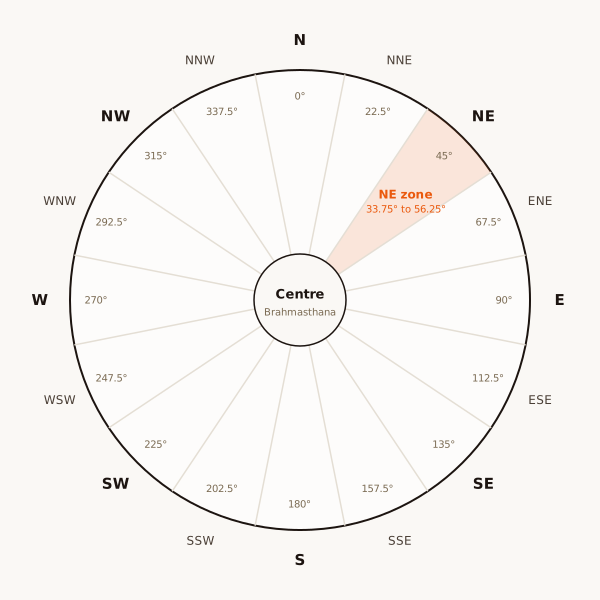
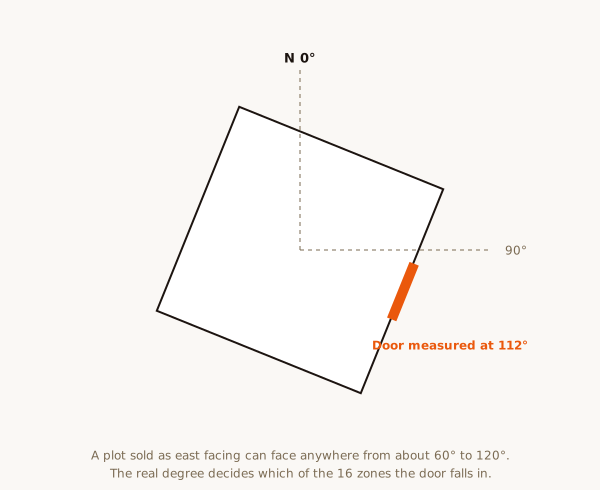
Each of the eight directions covers 45 degrees, which is a wide band. Our VIDS method divides each into two, giving 16 zones of about 22.5 degrees. The elemental associations stay the same; the map simply becomes twice as precise. A door that is “east” in an eight-direction reading might sit in east-north-east or east-south-east, which can change the advice.
The 16 Vastu zones explained article lists the exact degree range of each zone.
How we measure Vastu directions on site
Directions are only useful if they are measured correctly. On site we take several compass readings away from steel and wiring, discard outliers, and correct magnetic north to true north using the local declination, which you can check on the NOAA magnetic declination calculator. We then draw the zones from the true centre of the plan, not from the main door.
A building rarely sits square to north. A tilt of 15 or 20 degrees is normal, and it changes which zone each room falls in.
Facing direction versus room placement
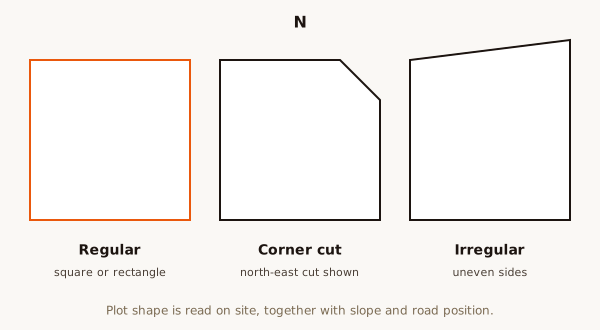
People often ask only “which way does the house face?” The facing direction matters, but it is one input among many. Room placement inside the house, the position of the door within its wall, the centre and the location of water and fire points usually matter more. Direction alone rarely decides whether a property works; a full assessment weighs zone, layout, shape and use together.
Common mistakes people make with directions
A few errors come up again and again when families try to apply Vastu on their own:
- Reading the compass inside, next to a steel door or a refrigerator, and getting a reading that is off by many degrees
- Measuring from the main door instead of from the centre of the home
- Treating the facing of the building as the facing of the flat, when the flat may sit on a different side
- Assuming one “bad” direction makes the whole property unusable
- Following a rule for a new house in a flat that cannot be rebuilt
Each of these can lead to worry about a problem that does not exist, or to missing one that does.
Directions in offices, shops and factories
The same eight directions apply to commercial buildings, but the functions change. In an office, the south-west suits the owner or director, the north suits accounts and cash, the north-east suits a quiet meeting or reception area kept open, and the south-east suits the server room or electrical panel.
In a factory, heat and machinery belong in the south-east, raw material and heavy stock in the south-west, finished goods and dispatch in the north-west, and the north-east is kept as open as operations allow. Our industrial Vastu and commercial Vastu pages show how these directions translate into working layouts.
Next step
Understanding the Vastu directions is the first step; applying them to a real building is the second. You can see how they come together in Vastu for home and Vastu for office, and when you want your own property measured, you can book a consultation.