The Vastu five elements are earth, water, fire, air and space, known in Sanskrit as the pancha mahabhuta. Classical Indian thought describes the physical world as a combination of these five, and Vastu tradition reads a building as a balance between them, with each element given a natural home on the compass. Much of what people know as Vastu advice, such as the kitchen in the south-east or water in the north-east, comes straight from this scheme.
In this guide we take each element in turn: where tradition places it, what it means for rooms and fittings, what we actually observe on site, and what to do when a home does not follow the pattern. We keep the traditional guidance separate from what can be measured, and we make no promises about outcomes.
Where the five elements idea comes from
The pancha mahabhuta appear across Indian philosophy, medicine and architecture. In the building texts, the idea is used as an organising principle: a site is healthy when each element is in its place and none overwhelms the others. The texts link the elements to the directions through the deities who guard them, and to the sun path, the monsoon winds and the slope of the land.
You do not have to accept the philosophy to see the practical logic. Fire in the south-east sits where morning sun dries and warms a kitchen. Water in the north-east sits on the side the land is traditionally sloped towards. Weight in the south-west shields the house from the hottest afternoon sun. In Vastu, the elements are a memorable way of describing a climate-aware plan.
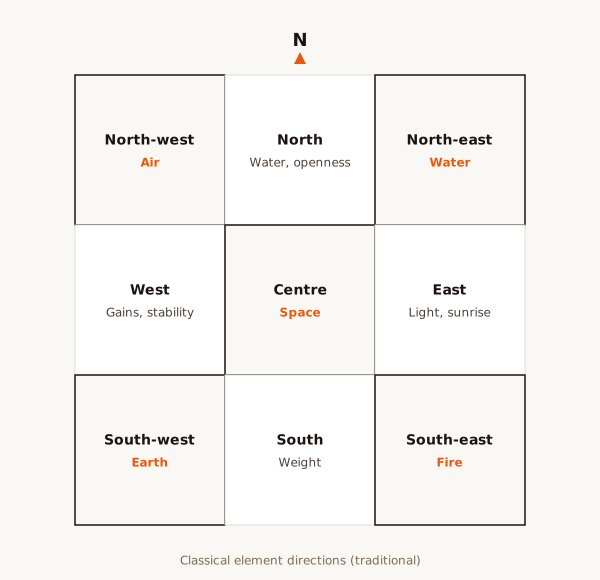
The direction map of the Vastu five elements
The traditional placement can be summarised in one table of directions:
- North-east (Ishanya): water. Light, open, low. Sumps, borewells and underground water storage.
- South-east (Agneya): fire. Kitchen, stove, electrical panels and equipment that runs hot.
- South-west (Nairutya): earth. Heavy, stable, enclosed. Master bedroom, storage and the heaviest structure.
- North-west (Vayavya): air. Movement and change. Guest rooms, stores for goods that move, ventilation.
- Centre (Brahmasthan): space. Open, clear and light. See Brahmasthan Vastu.
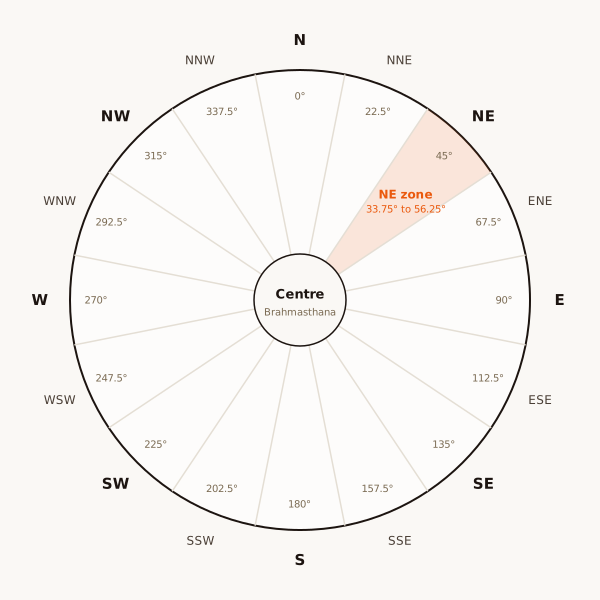
These are corner directions. The 16-zone system refines them into segments of 22.5 degrees, so a room can be placed precisely rather than by eye. Our article on the 16 Vastu zones lists each segment with its degrees.
Water: the north-east
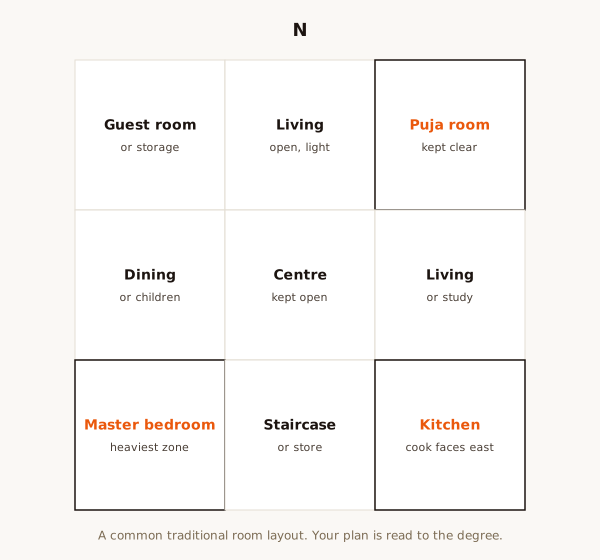
Traditional guidance places water in the north-east and north. Underground sumps, borewells and wells belong here, and the north-east corner should be the lowest and lightest part of the plot. Overhead tanks, which are heavy, go the other way, towards the south-west.
What we measure: the zone of the sump and borewell, the slope of the plot and terrace, and where rainwater drains. A plot that drains towards the north-east is easy to keep dry, which is a practical reason for the rule. Our guide to water tank and sump Vastu covers placement in detail.
Fire: the south-east
Fire belongs in the south-east. The kitchen is the main fire room of a house, and the stove is ideally placed so that the cook faces east. Inverters, electrical panels and other equipment that runs warm also sit well in this zone.
What we measure: the zone of the kitchen and the stove, and how much morning light reaches it. When the kitchen sits elsewhere, the north-west is the accepted alternative. A kitchen in the north-east, the water zone, is the placement tradition most strongly discourages. See Vastu for kitchen and electrical layout and Vastu.
Earth: the south-west
Earth stands for weight and stability. Tradition wants the south-west to be the heaviest, highest and most enclosed part of the house. The master bedroom, wardrobes, heavy storage and the overhead water tank all suit this zone.
What we measure: what sits in the south-west, whether it is open or enclosed, and whether there is a cut corner or a large opening there. An open south-west, such as a large balcony or a main entrance, is one of the more common findings in city flats, and it is usually addressed by how the space is furnished and used. See Vastu for bedroom.
Air: the north-west
Air is movement. Tradition assigns the north-west to things that come and go: guest rooms, rooms for grown children, stores for goods that move, and vehicles. It is also a good place for windows and openings that let the prevailing breeze through.
What we measure: cross ventilation, where air enters and leaves, and what each north-west room is used for. In Bangalore homes, west and north-west windows also bring afternoon heat, so we look at shading and glazing as part of the reading.
Space: the centre
Space, or akasha, belongs at the centre. Tradition asks that the middle of the house stay open, light and free of heavy structure, toilets and clutter. In older homes this was a courtyard. In a modern flat it may simply mean keeping the central passage clear and bright.
We cover the centre in detail in Brahmasthan Vastu and in our guide to the Vastu Purusha Mandala.
When the elements are out of place
Most homes in a city place at least one element away from its traditional home. The most common findings we see are these:
- A kitchen in the north-east or the centre, putting fire where tradition expects water or space.
- A toilet in the north-east, the zone tradition most wants kept clean and light.
- An open or cut south-west, where tradition expects weight.
- An overhead tank in the north-east, adding weight to the lightest zone.
- A cluttered centre used as storage.
None of these needs fear. Each one is read with its exact degree position, because a kitchen at the edge of a zone reads very differently from one in its middle.
Balancing the Vastu five elements without demolition
Balance comes from use and arrangement, not from objects for sale. We sell no products and recommend none. The usual steps are practical:
- Room use: swap the use of two rooms where possible so that each sits closer to its element zone.
- Placement: move the stove, heavy storage or water storage within a room.
- Colour: lighter tones in the north and east, warmer and earthier tones in the south and west. See Vastu colours for home.
- Light and air: brighten dark zones and open paths for cross ventilation.
- Weight: keep heavy furniture towards the south-west and keep the north-east light.
Our guide to zero-demolition corrections explains the full approach.
How we read the elements on your plan
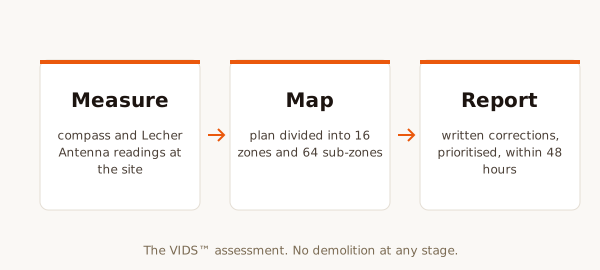
Every reading starts from true north. A phone compass points to magnetic north, so we correct for local declination, which you can check with the NOAA magnetic declination calculator. On site, we take readings at several points. For an online assessment, we guide you through the readings and work on your floor plan with the 16-zone map and a 3×3 grid.
The written report, delivered within 48 hours, lists each room by zone and element, notes where the traditional pattern is followed and where it is not, and gives corrections in order of ease. The steps are on our methodology page.
The five elements in offices, shops and factories
The same five-element map is used for workplaces, with the uses translated. In an office, the pantry and electrical room take the fire zone in the south-east, the owner or director sits in the earth zone of the south-west, the reception and visitor areas suit the north and east, and the centre stays an open shared floor. Accounts and cash are traditionally placed facing north. See Vastu for office for how we assess a workplace.
In a factory the scheme becomes very practical. Boilers, furnaces and transformers suit the south-east. Heavy machinery and raw material stores suit the south-west. Finished goods waiting to leave suit the north-west, the zone of movement. Water storage and effluent treatment need care, since tradition wants clean water in the north-east and waste water kept away from it. Our factory Vastu page explains the industrial assessment.
In a shop or showroom, the cash counter, the display of the most valued stock and the path of customers are read against the same elements. The principle never changes: place each activity where its element sits, keep the north-east light and the south-west strong, and leave the centre open.
Your next step
If you want to know how the five elements sit in your own home, begin with Vastu for home, which explains what an assessment covers. When you are ready, book a consultation online or on site in Bangalore and receive a measured, written report within 48 hours.