Sun path Vastu is the meeting point between classical rules about direction and something anyone can watch from a balcony: where the sun rises, how high it climbs and where it sets. In Bangalore that pattern is a little different from what most people assume, and it explains much of the traditional preference for openings on the north and east. This guide sets out the geometry, the light and heat it produces, and what it means for orientation, shading, balconies and each house facing.
Throughout, we separate three things. What is measured or calculated (the sun’s position for our latitude), what is traditional guidance from classical texts, and what is our interpretation of how the two connect. Keeping them apart is the core of Scientific Vastu.
Where the sun really is over Bangalore
Bangalore sits at about 13 degrees north of the equator. That single number decides the sun path over every home in the city. The figures below are calculated from latitude and the tilt of the earth, so they are geometry, not tradition:
- Around late December: the noon sun is about 54 degrees above the southern horizon. This is the lowest it gets all year.
- Around the March and September equinoxes: the sun rises due east, sets due west, and stands about 77 degrees high in the south at noon.
- Roughly late April to mid-August: the noon sun passes overhead and then sits slightly to the north. In late June it is about 80 degrees high, a little north of straight up.
- Sunrise point: it swings from about 24 degrees north of east in June to about 24 degrees south of east in December.
So for most of the year the noon sun is to the south, but not always. Day length also changes very little here, by a little more than an hour across the year, which is why orientation in Bangalore is more about heat and glare than about catching scarce winter light.
Morning light and afternoon heat
The two sides of the day behave very differently, even though the sun is equally bright.
East light is morning light. It arrives low and from the east, when the air and the walls are still cool from the night. It lights a room well, warms it gently and has usually passed before the hottest part of the day.
West light is the hot afternoon sun. It also arrives low, so it strikes walls and windows almost head-on, but it does so when the air is at its warmest. Masonry walls soak up that heat and keep releasing it into the evening, which is why west-facing bedrooms can feel warm long after sunset.
North light is steady. Because the sun is in the southern sky for most of the year, north windows receive mostly indirect light: bright, even and with little glare. In the months when the sun is slightly north, it reaches north walls early and late in the day at a steep angle, so the effect is small.
South light is high. The south face receives sun for much of the year, but at a high angle around midday. A modest overhang shades it well.
Why sun path Vastu favours north and east openings
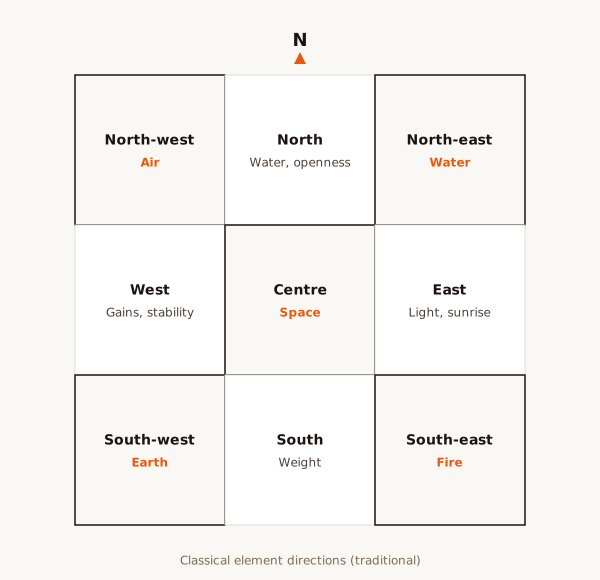
Traditional guidance: classical texts in the Vishvakarma tradition, including the Aparajitaprccha that we study, describe the North-East as the zone to keep open, light and low, and the South-West as the zone to keep closed, heavy and high. Larger openings and lighter structure go to the north and east; thicker walls, storage and height go to the south and west.
What we measure: in Bangalore the north and east sides receive the gentler light, and the south and west sides receive most of the heat.
Our interpretation: the traditional pattern fits a warm climate well. Open north and east sides admit soft light and morning sun; solid south and west sides act as a buffer against the afternoon. We find that a reasonable reading of the sun path Vastu link, but it is our interpretation, not a claim about what the classical authors intended.
Shading the west and south in a Vastu plan
Shading is where good orientation turns into a comfortable home. The rule of thumb is simple: high sun is easy to shade, low sun is not.
- West: horizontal sunshades do little against a low afternoon sun. Vertical fins, louvres, deep verandahs, external blinds, trees and climbers work better. Placing a staircase, store, utility or toilet on the west side also gives the main rooms a buffer.
- South: a horizontal chajja or overhang over each window handles the high midday sun for most of the year.
- East: light shading is usually enough. Many households welcome morning sun in the kitchen and dining area.
- North: rarely needs much shading, which is one reason it suits large windows.
These are building comfort measures. Any change to an external wall, parapet or projection should be checked by your architect or structural engineer.
Orienting rooms with the sun in mind
When we review a plan, the traditional zone for each room and the measured sun path usually point the same way. Where they do not, we tell you.
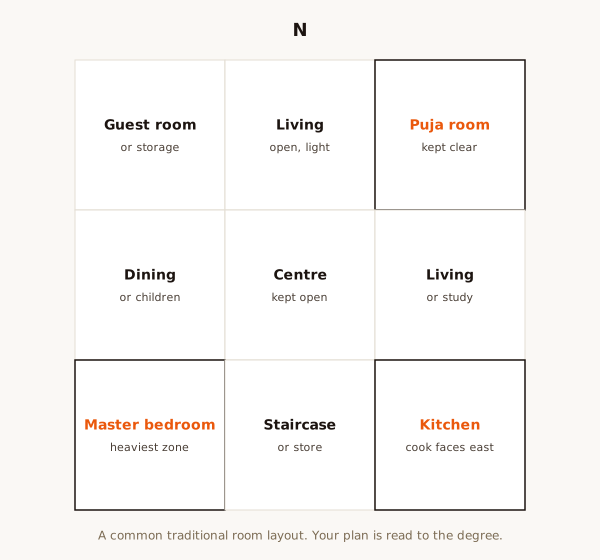
- Kitchen: the traditional fire zone is the South-East. In practice it receives morning light for early cooking and avoids the full afternoon sun. Our guide to Vastu for kitchen goes into detail.
- Master bedroom: traditional guidance places it in the South-West. That is also the corner most exposed to afternoon heat, so thick walls, roof insulation and shaded windows matter here. See Vastu for bedroom.
- Living room and study: north and east sides give even daylight for reading and working.
- Prayer space: the North-East, where tradition and gentle morning light agree.
- Stairs, stores and services: the south and west, where they shade the rest of the house.
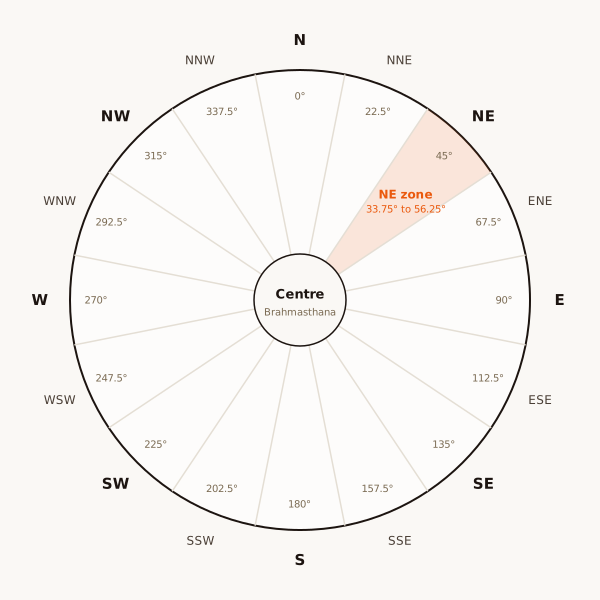
The 16 zones themselves are explained in our guide to the 16 Vastu zones.
Balconies and terraces in Vastu
Balconies are where the sun path is felt most directly.
- East and north balconies are pleasant for most of the day and are the easiest to use as sitting spaces.
- West balconies become hot in the afternoon. Treat them as a buffer: plants, bamboo or fabric screens, and a utility use rather than the main sitting area.
- South balconies work well with a roof or deep overhang above them.
On the terrace, solar panels are normally tilted towards the south in Bangalore, often at an angle close to the latitude. Your installer will confirm the best tilt and position for your roof.
What the sun path means for each facing
The facing of a house is the direction you face as you walk out of the main door. Each one interacts with the sun differently, and each can be made comfortable.
- East-facing: the front receives morning sun, and the rear receives the afternoon sun. Put services and stores at the rear west where possible. See east facing house Vastu.
- North-facing: the front receives steady indirect light, and the rear south side needs overhangs. See north facing house Vastu.
- South-facing: the front is in sun for most of the year. A deep porch or chajja shades the entrance, and the rear north side can stay open. See south facing house Vastu.
- West-facing: the front receives the hot afternoon sun. A verandah, louvres or trees at the front, and bedrooms away from the west wall, make a real difference. See west facing house Vastu.
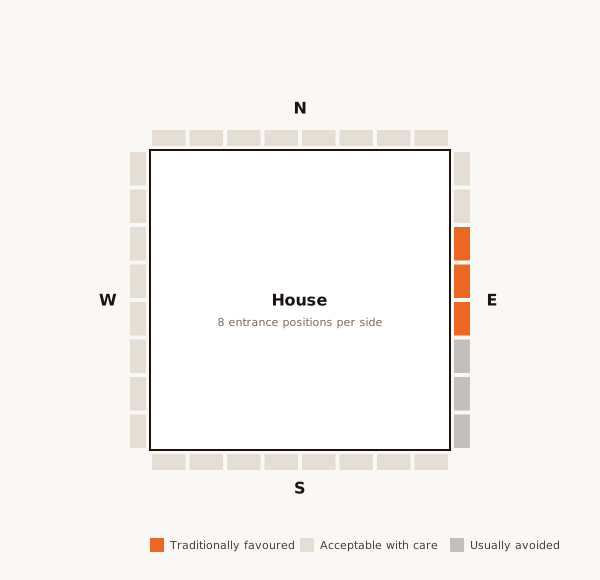
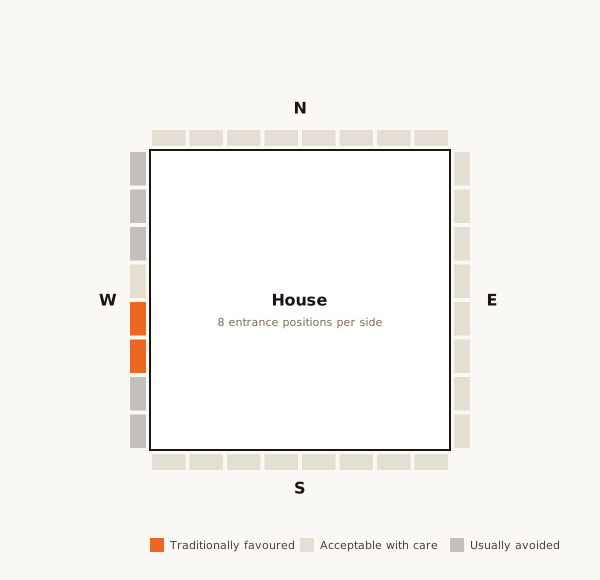
No facing is good or bad on its own. Our article on plot facing direction covers the traditional entrance positions for each.
Apartments: you inherit the orientation
In an apartment the building’s orientation is fixed, but your flat still has its own exposure. Check which walls of your unit have windows, which side the balconies face, and whether a neighbouring tower shades you in the morning or afternoon. Higher floors usually receive more sun and more heat. Curtains, external blinds and plants on a west balcony do much of what a verandah does for a house. Our Vastu for apartment service looks at all of this for a specific flat.
Observing your own site
You do not need instruments to learn a lot. Visit the plot or flat at about 9 in the morning and 4 in the afternoon, note where the sun strikes, and photograph the shadows. A sun-path app on your phone will show the arc for any date.
Take one care: sun paths are drawn from true north, while a phone compass shows magnetic north unless it is set to true north. The difference is the magnetic declination for your location and year, which the NOAA magnetic declination calculator provides. Our guide on how to check directions with a compass walks through the method.
Common Vastu and sun path mistakes
A few misunderstandings come up again and again on site visits in Bangalore:
- Assuming the sun is always in the south. For several months it is slightly north at noon, so a north-facing terrace is not always in shade.
- Treating every Vastu rule as a heat rule. Some traditional guidance has no clear climate explanation, and we do not invent one.
- Reading directions from a brochure. Brochures often round a facing to the nearest of four directions. Measured in degrees, a so-called east-facing flat may sit across two Vastu zones.
- Fixing heat with objects. No object placed in a room cools a west wall. Shading, insulation and room use do.
- Ignoring the neighbours. A new tower across the road can change your light more than any Vastu correction.
When the measured sun path and traditional Vastu guidance disagree, we show both and explain the trade-off rather than choosing silently.
Planning a new build around the sun
The best time to use the sun path is before the walls go up. At drawing stage it costs nothing to move a bedroom away from the west wall, enlarge a north window or add a verandah. On a Vastu for new construction review we mark the measured zones and the sun angles on your architect’s plan, and our sample report shows how those notes are set out. Fees are listed on the consultation fees page, and you can book a consultation whenever you are ready.