Vastu for shops looks at a retail space the way a customer meets it: the shopfront, the door, the first few steps inside, the counter and the shelves behind it. At Vardhini Vastu, Raghavendra Hebbur reads all of this against the 16 VIDS zones, measured on site, and suggests changes that work inside a small footprint without breaking anything.
A shop has very little spare room. A few square feet decide where the till goes, where stock is stacked and where people stand to pay. That makes small, precise corrections more useful here than in almost any other kind of property.
What the shop assessment covers
We assess only the space you control: your own unit, even if it sits inside a mall, a market row or a mixed-use building. The checks are specific to retail.
- Frontage direction and the exact degree position of the shop door
- Shutter, glass front and signage placement
- Counter, till and cash drawer position and the direction the owner faces
- Display racks, wall shelving and window display
- Stock room, loft and heavy storage
- Trial room, washbasin or toilet if the shop has one
- Lighting, meter board and inverter location
Every item is recorded with its zone and degree reading, so the report is clear even to staff who were not present on the day.
Does the shopfront direction matter in Vastu for shops
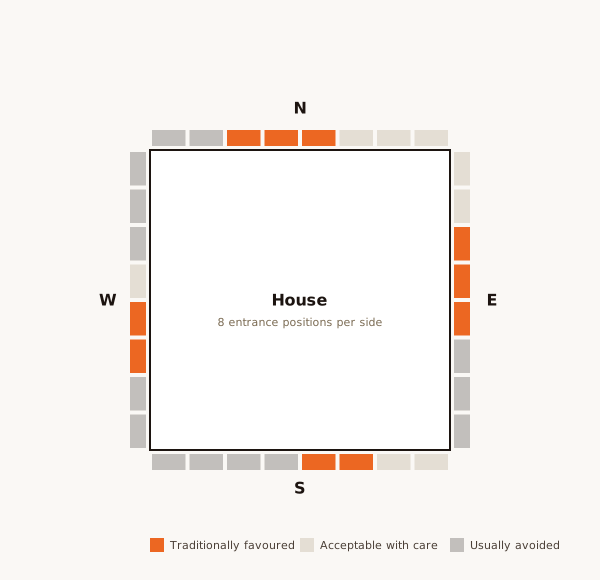
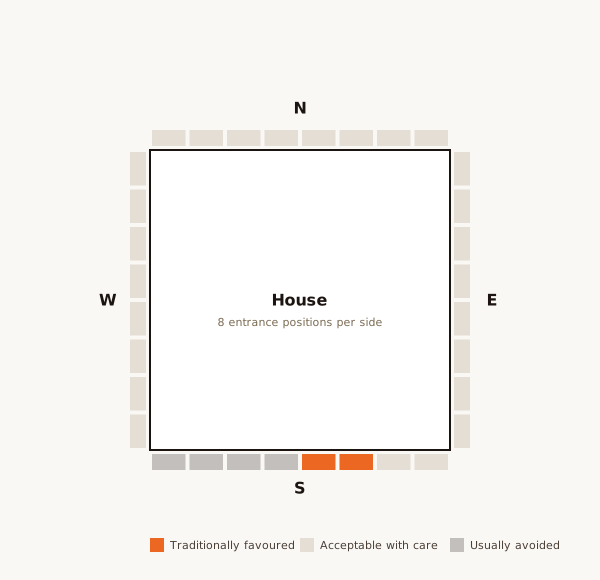
Yes, and it is one of the first things we record. But a south or west facing shop is not a bad shop. What matters more is where the door falls within that side. Each side has eight entrance positions, and some are much better than others.
For a south facing shop, for example, a door towards the south-east end of the frontage reads quite differently from one at the south-west corner. When the door cannot move, we work on the threshold, flooring colour, lighting and what sits immediately inside.
Counter, cash and the owner seat
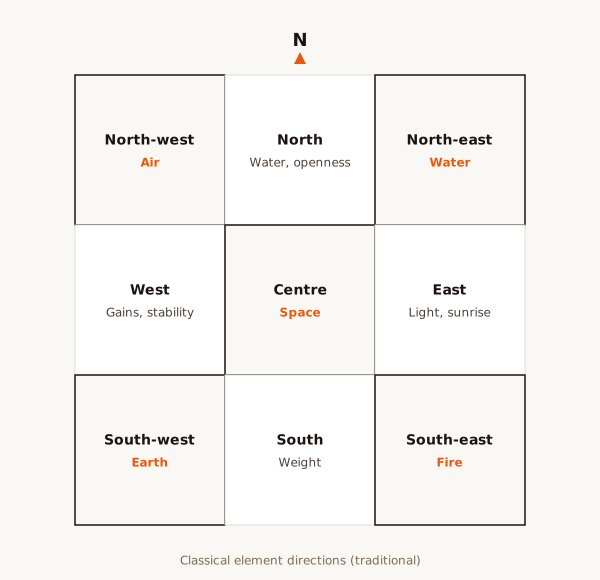
In most shops the counter sits best in the south-west or west part of the space, with the owner seated so they face north or east while serving. The cash drawer or small safe should open towards the north, the zone traditionally tied to money.
A counter placed right in the north-east corner, or one where the owner sits with their back to the open door, is a common pattern. Often it can be turned, shifted a short distance or rebuilt as a smaller unit during routine repairs.
Stock, display and customer movement
Heavy stock and full-height shelving belong in the south and west. The north and east walls work better for light, attractive display that draws people further in. The north-east should be kept clear and bright rather than packed with cartons.
We also walk the path a customer takes. If people stop at the door, cannot see the main display or have to squeeze past boxes, that is noted. Good Vastu and good retail layout usually point in the same direction here.
Common issues we see in retail shops
A typical small shop we visit has inherited its layout from a previous tenant. Patterns that come up again and again:
- The north-east used as a godown corner with sacks and cartons
- The cash counter in the south-east beside the inverter and meter board
- Mirrors on the south or west wall reflecting the entrance
- A toilet or washbasin in the north-east of the unit
- A broken signboard, faulty shutter or a dark frontage
- Old, unsold stock piled up in the south-west for months
These are practical problems with practical fixes, and none of them needs demolition.
How the visit or online review works
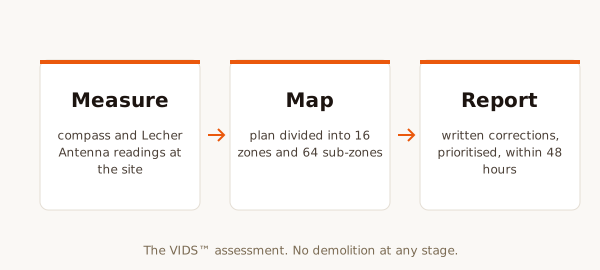
In Bangalore we visit before opening hours or on your weekly holiday so business is not interrupted. Readings are taken at the door, the counter and the centre of the shop, and corrected for local magnetic declination, which you can verify on the NOAA magnetic declination calculator. Where a visit is possible, we also use a Lecher Antenna to check for geopathic stress, especially where the owner sits all day.
Outside Bangalore, a measured sketch with a north arrow and a few photos is enough for an online consultation. The difference between the two options is explained in online vs onsite Vastu consultation. An online assessment uses traditional Vastu only, the 16-zone map and the 3×3 grid drawn on your plan; geopathic stress readings need a site visit.
Corrections that fit inside a working shop
Every correction is non-demolition. In a shop that usually means turning or shifting the counter, re-planning racks, changing the colour of a wall or the floor near the door, adding lighting to a dark zone and clearing specific corners.
Most changes can be done after closing time or over a holiday. If something truly needs construction, such as moving a toilet out of the north-east, we say so plainly and you decide. Our approach is set out in zero-demolition Vastu corrections.
What you receive
Within 48 hours of the visit you get a written report with your shop plan marked into 16 zones, the degree reading of the door, and a short table showing where the counter, cash, stock and display currently sit.
Corrections are listed in order of priority, with a clear note on which ones can be done tonight after closing and which ones should wait for your next refit. You can see how a report is laid out in our sample Vastu report. Questions after the report are answered by phone or WhatsApp.
Fees for Vastu for shops
An on-site assessment for a shop is charged at our commercial rate, which starts from ₹51,000, with travel added at actual cost for shops outside Bangalore. Very small units and kiosks are often better served by the online option.
Our online consultation is ₹5,000 wherever you are, and works well for a single-room shop with a clear measured sketch. All fees are listed on the pricing page. We sell no products, no yantras and no remedies, and we take no commission from landlords or builders.
Shops in malls, market rows and shared buildings
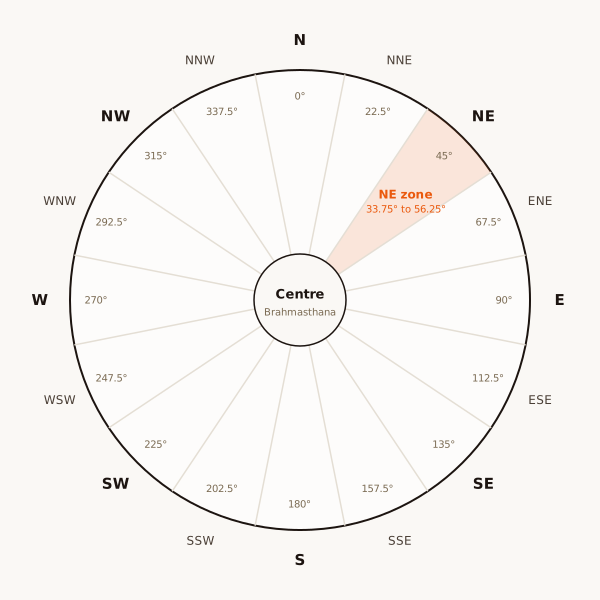
A shop in a mall or a commercial complex does not control the building entrance, the common corridor or the lifts. That is fine. Vastu for shops is scoped to your own unit, so we treat your shop door as the main entrance and map the 16 zones from the centre of your space.
Corridor-facing units, corner units with two open sides and long narrow units each need slightly different handling, and the report explains which side we have treated as the frontage and why.
Before you sign a lease on a new shop
A shop can be assessed before you commit, in the same way a plot is checked before purchase. Send us the plan, or ask us to visit, and we will look at the door position, the shape of the unit, where the toilet or water point is and whether there is a sensible place for the counter.
This will not predict your sales, and we will not pretend it can. It will tell you how much correction a unit is likely to need and which of two or three options is easier to set up well. Our guide to facing direction explains why direction alone should not rule out a good location.
Who should call us
Owners opening a new shop, taking over an existing one, or planning a refit get the most value, because changes are cheapest at those moments. We also help owners who have a good product and a good location but feel the space is not working, and want a calm, measured look at the layout before spending on anything else.
Why Vardhini Vastu
Raghavendra Hebbur has practised Scientific Vastu for more than 10 years from Bangalore. The VIDS method divides the space into 16 zones of about 22.5 degrees each, fixed from true north on site, so every recommendation comes from a measurement. His work also draws on the classical Aparajitaprccha. There is no astrology in the process and no promise of results, just a careful reading and practical advice.
Simple habits that keep a shop in good order
Some advice in the report is not about layout at all. It is about daily care that keeps the zones working as intended.
- Keep the entrance, threshold and signboard clean, lit and in good repair
- Clear the north-east every week so it never turns into a storage corner
- Move dead stock out rather than letting it pile up in the south-west
- Fix flickering lights, jammed shutters and leaking taps quickly
- Keep the counter top clear of clutter, old bills and unused items
These cost almost nothing, and they are the first things we check again on a follow-up review.
Nearby areas we cover.
Frequently asked questions.
Does the direction the shopfront faces matter?
Yes. Frontage direction is one of the first things assessed.
Can this be done for a shop inside a mall or shared complex?
Yes. The assessment is scoped to the shop's own leased space.
Will I need to move my till or counter?
Only if identified as a genuine zone issue; many corrections use colour or placement instead.
Can this be done before signing a lease?
Yes. A shop can be assessed before commitment, the same way a plot can.
Have a property here you want assessed?
Share the property type and a floor plan on WhatsApp for an exact quote and the next available date.