Vastu for schools is a measured look at how a campus is laid out: where the classrooms, principal’s office, library, labs, playground, fees counter and hostels sit in relation to true north. At Vardhini Vastu, Raghavendra Hebbur reads each block across 16 zones and suggests changes that respect fire, structural and education rules first.
We do not promise better results, admissions or rankings. Teachers, management, parents and the children themselves decide those. What a sensible layout can do is make rooms calmer, better lit and easier to use every day, and that is what this review is for.
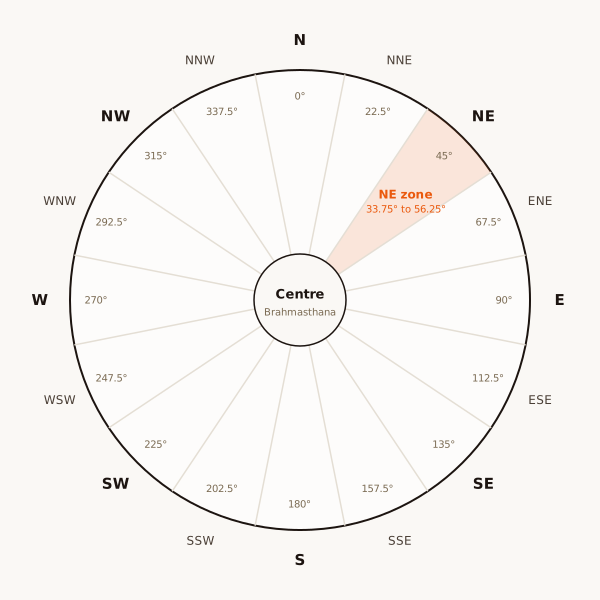
What a Vastu for schools review covers
A school is not one building. It is a set of blocks, open spaces, services and people moving through them at fixed times. Our review looks at the whole campus first and then at each block in turn:
- The site, boundary, main gate and secondary gates
- Classroom blocks, corridors and staircases
- The principal’s office, staff room and admin block
- The admin and fees counter, reception and visitor waiting
- Library, science labs and computer rooms
- Playground, assembly area and open space
- Canteen, kitchens, hostels and wardens’ rooms
- Toilets, water tanks, borewell, sumps, generator and electrical rooms
Each of these is placed on a 16-zone map so you can see, in one sheet, what sits where and what can sensibly change.
Safety and regulations come first
Children’s safety is not something we trade for a direction. Fire exits, evacuation routes, staircase widths, railings, CCTV coverage, the National Building Code, fire department approvals and state education department norms all come before any Vastu suggestion.
If a Vastu preference and a safety rule disagree, the safety rule wins, every time. We will not suggest moving a classroom, locking a door, blocking a corridor or shifting a lab if it weakens evacuation or supervision. Structural questions go to your structural engineer, and anything touching approvals goes to your architect.
We mark each suggestion in the report as low effort, needs management approval, or needs a professional sign-off, so your trustees can decide with full information.
Traditional guidance and what we measure
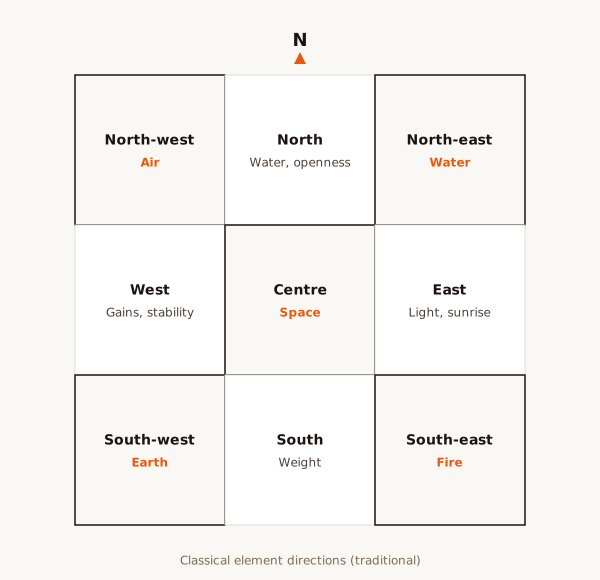
Traditional guidance: classical texts prefer the north and east of a site to be open and lighter, the north-east for learning, prayer and quiet, the south-east for fire and kitchens, the south-west for heavier structures and senior authority, and the north-west for movement and storage.
What we measure: we take readings from true north on site, corrected for local magnetic declination using the NOAA magnetic declination calculator, and divide each block into 16 zones of about 22.5 degrees. Where a site visit is possible, a Lecher Antenna reading checks for geopathic stress in places children sit for long hours. Our VIDS™ method explains this in more detail.
Classrooms and seating direction
In classrooms, the simple aim is for students to face east or north where the room shape allows, with the board on that wall. Daylight from north and east windows is softer and more even through the school day, which helps reading without glare.
Where a room faces the other way, we do not ask you to rebuild it. Often the board can move to another wall, or desks can be turned, without touching exits. If neither works safely, we say so and leave the room as it is. Corridors and stair landings should stay clear, bright and uncluttered, which is good Vastu and good safety at the same time.
Principal’s office, staff room and admin block
The principal’s office is traditionally placed in the south-west or south of a block, with the principal seated facing north or east and a solid wall behind. Staff rooms work well in the west or north-west, close enough to classrooms for supervision.
The admin block sees parents, vendors and inspectors. Keep reception and visitor waiting near the entrance so outsiders do not walk deep into the campus, which is also a sound child safety practice.
Admin and fees counter
For the fees and accounts counter, tradition favours the north zone, with the cashier facing north or east and the cash safe against a south or west wall opening towards the north. Records rooms sit well in the south-west.
These are usually quick changes: turning a desk, moving a cabinet, shifting a counter. None of them needs construction, and none promises more fee collection. They simply put the counter in an orderly, well-lit spot that parents can find easily.
Library, labs and computer rooms
A library needs quiet and steady light. The west, south-west or north-east of a block can all work, depending on what else is nearby. Heavy shelving sits best against south and west walls.
Science labs with gas burners and heat are traditionally linked to the south-east fire zone. Chemical storage, ventilation, eyewash points and fire extinguishers follow lab safety rules first, and we never suggest moving hazardous stores to suit a direction. Computer rooms with heavy electrical loads suit the south-east or north-west.
Playground, assembly area and open space
Classical guidance prefers open ground in the north and east of a site, with taller blocks to the south and west. Many campuses already follow this without planning it. Where the playground is in the south or west, we look at how to keep the north and east of the buildings themselves open and uncluttered.
The morning assembly works well facing east. Sports stores, water tanks and heavy equipment fit better in the south-west than the north-east. Overhead tanks over the north-east are one of the more common issues we flag.
Hostels, dining and kitchens
Boarding schools and residential campuses add hostels, dining halls and kitchens. In dormitories, beds placed with the head to the south or east are the usual guidance. Wardens’ rooms in the south-west of a hostel block give a clear view of entrances.
Kitchens belong in the south-east where possible, with the cook facing east. Food safety, FSSAI requirements and gas safety come first. Study halls in the north or east of a hostel get better daylight in the evening hours.
Common issues we see in school campuses
A typical older campus in Bangalore has grown block by block, so the issues are usually about what was added later:
- Overhead tanks or a generator placed in the north-east
- The north-east corner used as a dump for broken furniture
- The main gate in a weak zone with no second gate option
- The principal seated with their back to a door or window
- Dark corridors and stair landings with poor daylight
- Fees counter tucked into a corridor corner without proper light
Most of these can be improved with placement, cleaning and lighting rather than building work.
Corrections without demolition
We do not ask schools to demolish. Corrections are placement, colour, lighting, room use and decluttering. Swapping the use of two rooms, clearing a corner, adding light to a dark landing or turning a desk often does more than people expect.
Read more about this approach on our Vastu remedies page and in zero demolition Vastu corrections. We sell no products and take no commission. If something genuinely needs construction, we say so plainly and leave the decision to you.
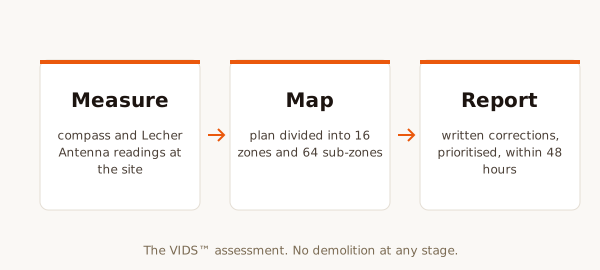
How the visit works
We start with your campus plans, if you have them. The visit is planned for a holiday, weekend or after school hours so classes are not disturbed. The time on site depends on the number of blocks; we agree it beforehand.
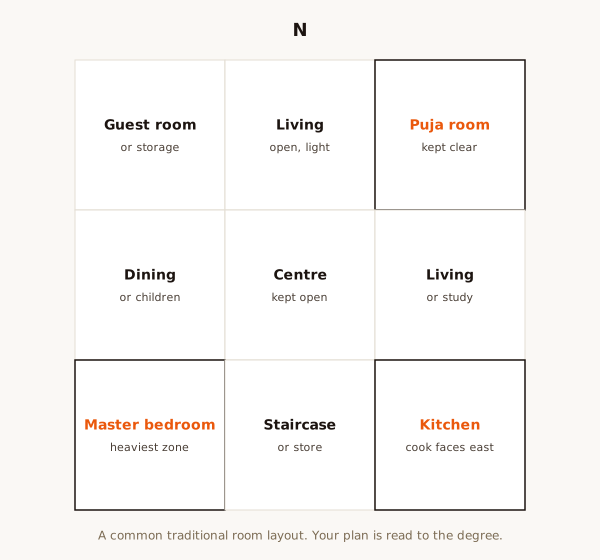
For a campus outside Bangalore, or an early look at plans, an online Vastu consultation works well, followed by a site visit if needed. An online assessment uses traditional Vastu only, the 16-zone map and the 3×3 grid drawn on your plan; geopathic stress readings need a site visit.
What you receive
Within 48 hours of the visit you receive a written report with a 16-zone map for each block, a list of findings, and priorities marked by effort and approval needed. You can see the format in our sample Vastu report.
Fees for schools and institutions
School and institutional work falls under our commercial fees, which start from ₹51,000. The final quote depends on built-up area, the number of blocks and whether hostels are included. Travel outside Bangalore is quoted before booking. See all our Vastu consultation fees.
Before you buy land or build a new school
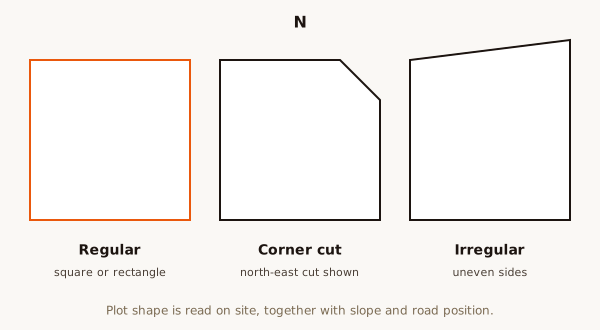
The easiest time for Vastu for schools is before construction. A pre-purchase plot report costs ₹5,000 and covers shape, slope, road and gate options; see Vastu for plot. For a new campus, we work alongside your architect on new construction plans so safety, regulations and Vastu are settled together.
Why schools work with Vardhini Vastu
Raghavendra Hebbur has more than 10 years of practice in Bangalore and studies the Aparajitaprccha, a classical Sanskrit text on architecture. We show readings, not opinions. We separate tradition from measurement, keep corrections free of demolition, publish our fees and use no fear. If you run a school or trust and want a calm second look at your campus, you can book a consultation.
Nearby areas we cover.
Frequently asked questions.
Will Vastu improve exam results or admissions?
No one can promise that. Results depend on teaching, students and management. Vastu looks at layout, light and use of space only.
Will you ask us to move classrooms or labs?
Only where it is safe and practical. Fire exits, supervision, lab safety and education rules always come first. Most suggestions are placement, lighting and room use.
What does a school assessment cost?
Institutional work starts from ₹51,000, quoted on built-up area, blocks and hostels. Travel outside Bangalore is quoted before booking.
Do classes need to stop during the visit?
No. We visit on a holiday, weekend or after hours, and the written report follows within 48 hours.
Have a property here you want assessed?
Share the property type and a floor plan on WhatsApp for an exact quote and the next available date.