Good Vastu for main door placement starts with one accurate measurement: the exact direction your entrance faces. In every Vastu consultation we read the main door first, because it is the point where people, light and air enter the home, and the reference from which the rest of the property is interpreted.
This article explains what the classical Vastu texts say about each entrance direction, what we actually measure at Bangalore homes and apartments, and how to handle a less favoured entrance without moving the door. A South or West facing entrance is common and workable, and we explain why.
Why the entrance is read first
A house can have many doors, but only one main entrance. Traditional Vastu treats it as the mouth of the building, the place through which energy and opportunity arrive. In practical terms it is also where the daily movement of the household begins and ends.
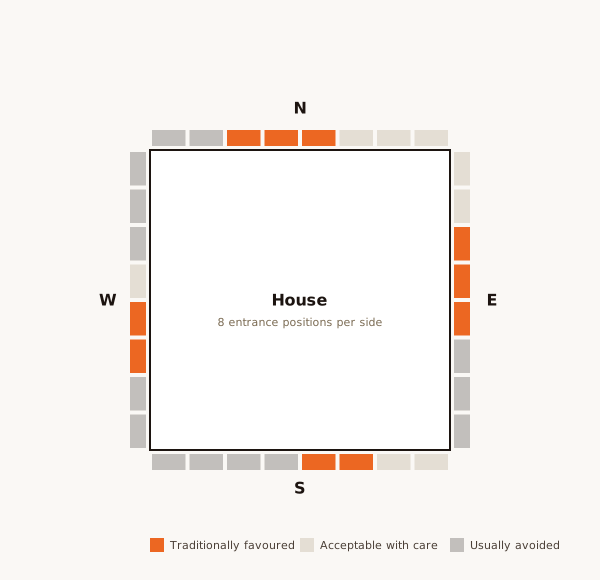
In our Vastu method the entrance is placed on the 16 zone grid before anything else. Its zone, and the pada within that zone, colours how we read the rooms behind it. That is why two homes with the same broad facing can receive different Vastu advice once the exact degree is known.
How we find the true direction of your door
Stand just inside the main door, facing out, and the direction you face is the direction of the entrance. That sounds simple, but phone compasses are easily pulled off by steel door frames, grills, lift shafts and electrical boards. On a site visit we take several readings, away from metal, and confirm them against the building plan.
We then correct for magnetic declination, the gap between magnetic north and true north, using the NOAA magnetic declination calculator. In Bangalore the correction is small, but for homes in other cities or abroad it can move a door from one zone into the next.
North facing main door
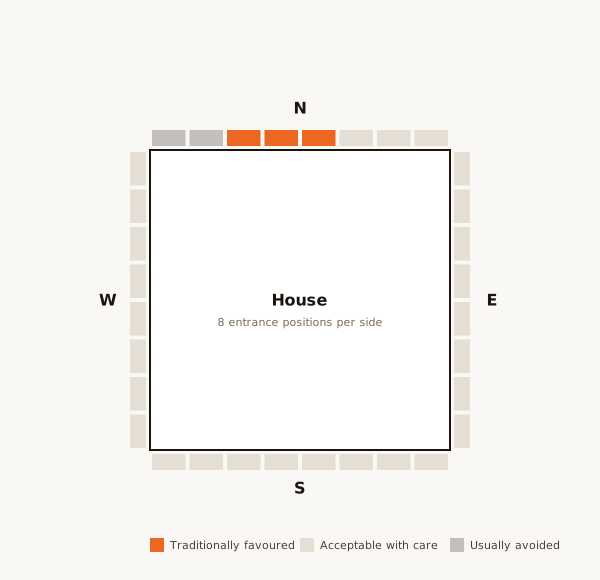
Traditional guidance: the North is linked to water, flow and new opportunities, and a North facing entrance is widely considered favourable. Within the North, the positions towards the North-East are generally read as stronger than those drifting towards the North-West.
What we measure: North facing flats often receive steady, soft light at the door and stay cooler. The usual issues are not the direction itself but what surrounds it: shoe racks piled at the threshold, a dark lobby or a utility area right beside the entrance. See North facing house Vastu for more.
East facing main door
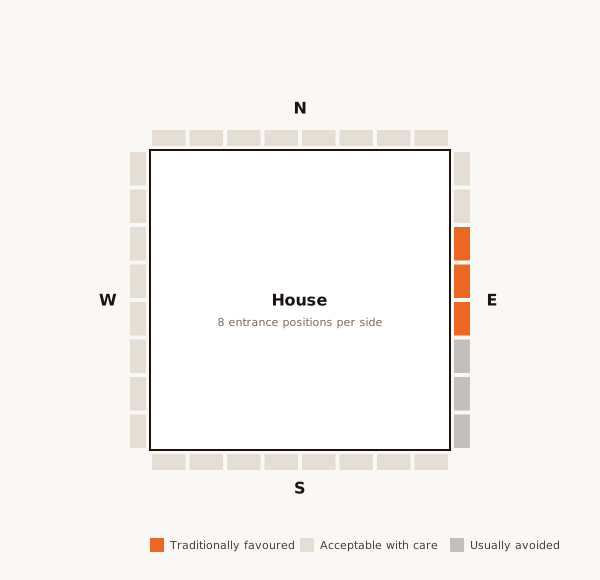
Traditional guidance: the East is associated with the rising sun, health and growth, and an East facing entrance is among the most favoured. As with North, the exact position matters: the central and North-East side of the East wall are preferred over the corner near the South-East.
In Bangalore, an East facing door catches the morning sun, which makes the entrance bright and welcoming. Our page on East facing house Vastu covers room planning behind an East entrance.
South facing main door
A South facing entrance is the one people worry about most, often because of half-remembered advice. It is not automatically bad. Traditional Vastu texts describe some South positions as acceptable and others as less favourable, and the difference is a matter of degrees, which is exactly what an accurate reading resolves.
Many good homes in Bangalore face South. When the entrance falls in a less favoured pada, the response is a set of specific corrections at the threshold, not a decision to avoid the property. See South facing house Vastu.
West facing main door
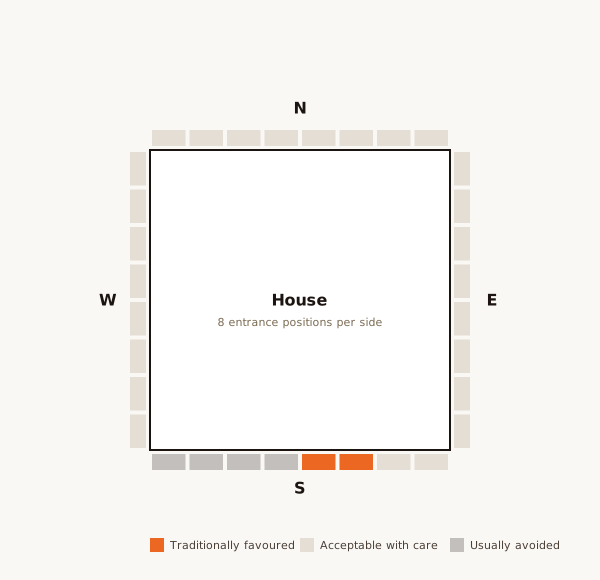
Traditional guidance: the West is associated with gains and the results of effort. A West facing entrance is traditionally less favoured than North or East, but positions towards the centre of the West wall are generally read as workable.
What we measure: West entrances take strong afternoon sun, so heat and glare at the door are common practical complaints. Shade, lighting and colour choices at the threshold help both comfort and balance. More detail is on our West facing house Vastu page.
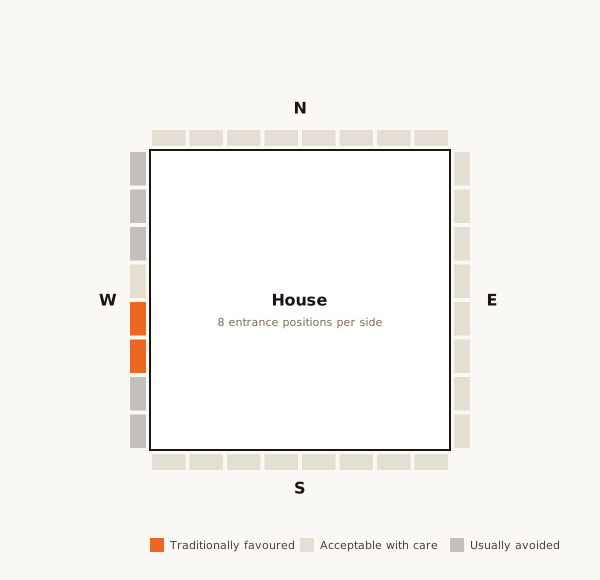
Corner entrances: North-East, South-East, South-West, North-West
In Vastu, doors set at a corner, or on a corner plot, need care because they sit between two directions. A North-East entrance is traditionally the most favoured of all. A South-West entrance is the one classical guidance is most cautious about, since that zone is meant to be heavy, closed and stable. South-East and North-West entrances fall in between and depend heavily on the exact degree.
For corner plots and irregular boundaries, our article on plot facing direction explains how facing is decided when two roads meet.
Size, proportion and the door itself
Traditional guidance favours a main door that is the largest and most prominent entrance to the home, in proportion to the building, rather than a fixed size. A few further Vastu points come up consistently:
- The door should open inwards, smoothly and fully, without scraping or creaking.
- A solid door, traditionally of good wood, is preferred over a flimsy or hollow one.
- A two-shutter door is often favoured for larger homes.
- The main door should be visibly the main door, not a side or service entry used by habit.
If the family usually enters through a side or kitchen door, the reading takes that into account, because the entrance in use matters as much as the one on the drawing.
Threshold, nameplate and lighting
Much of the practical work of Vastu for main door correction happens at the threshold. A clean, well lit entrance with a clear nameplate, a raised or clearly marked threshold and an uncluttered approach is a traditional recommendation and a practical one too.
Lighting deserves special mention. Many apartment entrances open onto dim corridors. A warm light at the door, kept on in the evening, is one of the simplest and most effective improvements we suggest.
What to keep away from the entrance
Traditional Vastu guidance advises keeping certain things away from the main door:
- Piles of shoes, bins and recycling directly at the threshold
- A toilet door facing or immediately beside the entrance
- A staircase that starts directly in line with the door
- A mirror placed so that it faces the main door straight on
- Broken fittings, peeling paint or a door that does not close properly
None of these require construction to resolve. Most need a cupboard moved, a door kept closed, or a fitting repaired.
Apartment entrances
In apartments the main door usually opens onto a shared corridor. Common situations include doors directly facing a neighbour, a lift shaft or a staircase opposite the entrance, and long, dark lobbies. We read the flat as its own boundary, so the door is assessed against the zones of the unit rather than the whole tower.
If you are choosing between flats, our apartment buying checklist shows how to check the entrance before you commit.
Common entrance issues we see in Bangalore
Some Vastu patterns recur across homes in the city. As general observations, not findings for any one property, they include entrances in the South-West corner of corner plots, kitchens or toilets placed immediately next to the door to save space, and service doors that have quietly become the main way in.
Each of these is assessed on its own terms. Some need only a change of habit, others need a set of combined corrections.
Correcting the entrance without moving the door
Usually the door itself is not moved. Our Vastu corrections are zero-demolition and focus on the threshold, colour, lighting and placement near the entrance. Depending on the reading, that may mean a change of door colour, a defined threshold strip, better lighting, relocating shoe storage, or shifting heavy furniture in the zone beside the door.
We sell no products, so there are no charms or devices in our reports. Our guide to zero-demolition corrections explains the wider approach. If a door genuinely needs to change, for example during a planned renovation, we say so clearly.
Vastu for main door planning in new builds and renovations
If you are building a new home or renovating an old one, the entrance is the cheapest thing to get right on paper and the most expensive to change later. At drawing stage we mark the favourable padas on each side of the plan, so the architect can place the main door, the gate and the approach path together.
During a renovation, a new door frame, a widened opening or a relocated gate can sometimes bring the entrance into a stronger position with modest work. We only suggest this where the renovation is already planned. Our pages on Vastu for new construction and Vastu for home renovation explain how we work with architects and contractors at each stage.
Getting your entrance assessed
The entrance is the first item in every home Vastu assessment, so the easiest way to get a full reading of your main door is through our Vastu for home consultation or an online Vastu consultation if you are outside Bangalore. When you are ready, you can book a Vastu consultation and send us a compass reading of your door to start. An online assessment uses traditional Vastu only, the 16-zone map and the 3×3 grid drawn on your plan; geopathic stress readings need a site visit.