Factory vastu is about the production floor itself: where each machine stands, which way raw material comes in, how work moves from one station to the next and where finished goods wait before they leave. A factory runs the same route every shift, so a layout that works against the zones does so every hour of every day. We assess working factories in Bangalore and its industrial belts, and review plans online for units elsewhere in India.
The assessment is planned around production. We look at placement and zones, not the mechanical condition of your machines, and nothing has to be moved before we arrive.
What a factory vastu assessment looks at
On a factory visit we map:
- Raw material receiving and stores
- The order of machines along each line
- Heavy presses, CNC machines, moulding or casting equipment
- Furnaces, ovens, heat treatment and compressors
- Quality control, the tool room and the maintenance store
- Packing, finished goods and dispatch
- Supervisor desks, the shop-floor office and the owner cabin
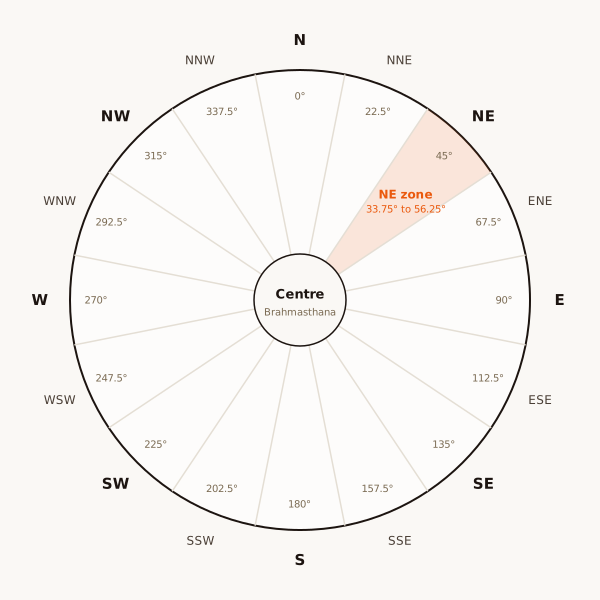
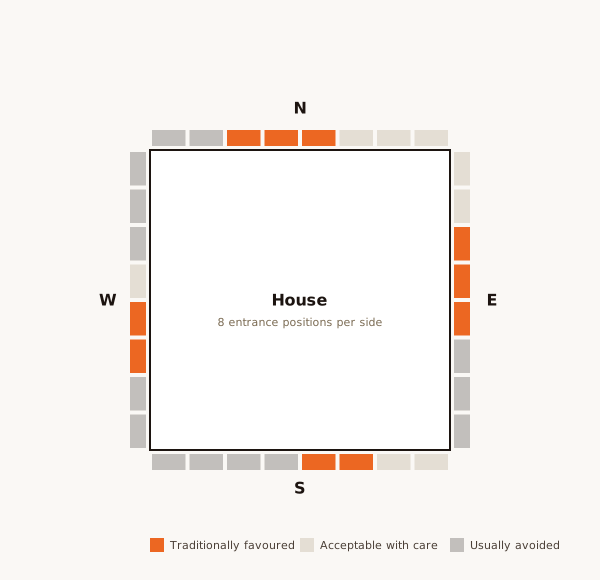
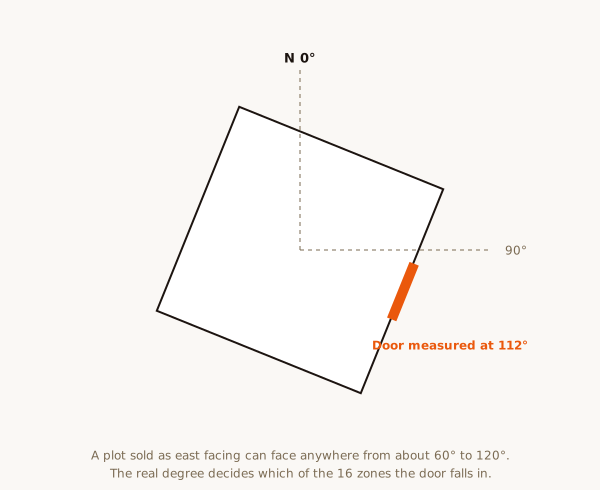
Each one is placed in one of 16 zones of about 22.5 degrees, read from true north. On a long shed this often shows that the two ends of the same line sit in very different zones.
Following the line from raw material to dispatch
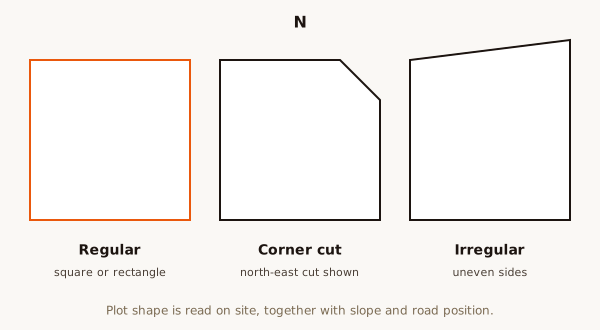
In a good layout, material moves in one clear direction without doubling back. In Vastu terms, heavy inputs settle best in the south and west, and lighter finished goods move out through the north-west or north. A line that starts in the south-west and ends with dispatch near the north-west fits that pattern well.
Real factories are rarely so neat. We map the line as it actually runs, mark the points where material crosses itself or waits in the wrong zone, and suggest changes that suit your process rather than a textbook drawing.
Machines, heat and power by zone
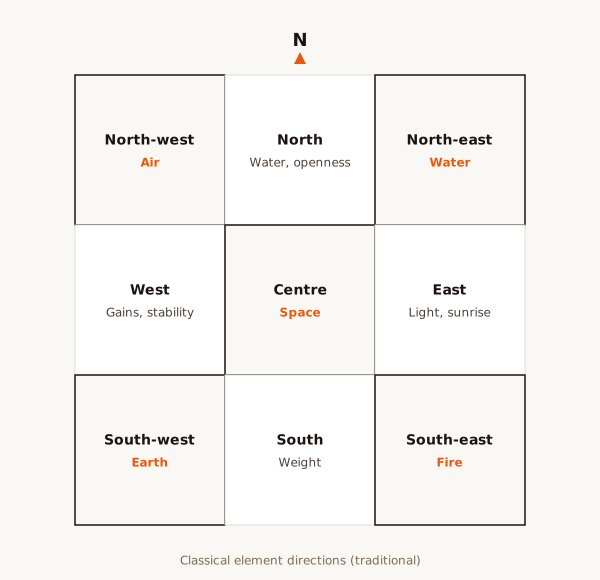
- South-east: furnaces, ovens, heat treatment, the transformer and the generator
- South and south-west: the heaviest presses and machines with deep foundations
- West: medium machinery, the tool room and the maintenance store
- North-west: compressors, packing and goods awaiting dispatch
- North and east: lighter assembly, inspection and quality control
- North-east: kept clear, clean and light, with water or open space
These are tendencies, not commands. A machine bolted into its foundation stays where it is, and we work with that.
Common problems on factory floors
A typical factory we see has added machines one at a time over several years, each one placed wherever there was power and floor space.
- Scrap and rejected stock piled in the north-east corner of the shed
- A furnace or compressor in the north-east because the power line ran there
- Finished goods left in the south-west for months
- A supervisor desk with its back to the open floor
- Raw material unloaded through the north-east and stacked there
- Oil, coolant or chemical drums standing in the centre of the shed
We rank these by weight, so your team knows which two or three matter most and which can wait.
Working around live production
We walk the floor with your supervisor during a normal shift. Compass readings are corrected for magnetic declination, the gap between magnetic and true north, which you can confirm on the NOAA magnetic declination calculator.
Where a visit is possible, Lecher Antenna readings check for geopathic stress at fixed operator positions, where one person may stand for a whole shift. Time on site depends on the size of the floor, and we agree it with you in advance.
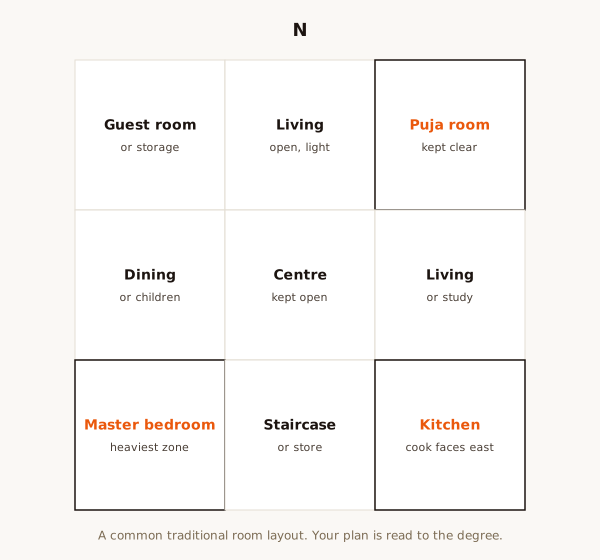
For units outside Bangalore, an online consultation works from the shed drawing, machine layout and compass photographs. An online assessment uses traditional Vastu only, the 16-zone map and the 3×3 grid drawn on your plan; geopathic stress readings need a site visit.
Factory vastu corrections without demolition
- Moving scrap, rejects and empty drums out of the north-east
- Changing where raw material is unloaded and stacked
- Shifting packing and finished goods towards the north-west
- Turning supervisor desks to face the floor with a solid wall behind
- Repainting floor lanes and wall colours to support weak zones
- Better light and cleaner surfaces in the north-east of the shed
Moving a fixed machine is an engineering and production decision, not ours. When a heavy machine sits in a difficult zone, we suggest what can be balanced around it, and raise relocation only if a planned change is already coming. Our page on zero-demolition corrections explains the thinking.
The owner cabin and shop-floor office
Decisions about the floor are made in the office, so its zone matters too. The classical preference is a cabin in the south-west of the building, with the owner facing north or east. A shop-floor office near dispatch suits supervisors who manage movement through the day.
Our guide on the manager cabin covers desk position and seating in more detail.
What you receive
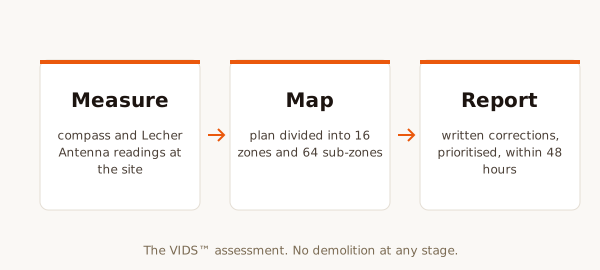
Within 48 hours you receive a written report with the marked floor plan, the 16-zone grid, a sketch of how material currently flows, and corrections ranked by weight with a plain note on effort. The sample Vastu report shows the format.
Your production head can work straight from it, and we answer follow-up questions while changes are made.
Fees
Factory assessments come under commercial and industrial work, which starts from ₹51,000. Size, number of sheds and travel decide the final figure. See the full list on our pricing page. If you have not yet bought land, a pre-purchase plot report costs ₹5,000.
When factory owners call us
- Setting up a new line or a new shed
- Before installing a large new machine
- When the same production or quality issues keep returning after engineering checks
- When taking over a running factory
- Before buying industrial land
Factory vastu does not replace engineering or quality-control review. It looks at zone-based factors that may contribute, alongside that work.
Before you build a new unit
The cheapest time to apply Vastu is on the drawing board. We can review your architect plans and say where the furnace, the transformer, the stores and the dispatch bay should go before any foundation is cast. If you are still choosing land, our plot buying checklist and the industrial plot service help you avoid a difficult plot.
Why Vardhini Vastu
Vardhini Vastu is run by Raghavendra Hebbur, a Scientific Vastu consultant in Bangalore with more than 10 years of practice. His VIDS 16-zone method is drawn from classical texts, including the Aparajitaprccha, which he studies closely.
We do not sell products or take commission from builders. Advice is based on measurement on your floor, not general rules. Read the complete industrial guide or the methodology page for more.
Water, effluent and drainage
Most factories use water in some form, for cooling, washing or the process itself. Borewells and underground sumps sit best in the north or north-east of the plot. Overhead tanks are heavy and suit the south-west or west, raised above the rest of the roof.
Effluent treatment plants and septic tanks are better kept to the west or north-west, away from the north-east and the centre. We also look at which way floor drains and storm water run. Water that leaves the site towards the north or east is the classical preference, and small changes to channel direction are often possible during routine maintenance.
Flammable and hazardous storage
Gas cylinders, solvents, paints and fuel belong with fire, which in Vastu means the south-east. They should never sit in the north-east, where the site is meant to stay light and open.
Fire safety rules and statutory clearances always come first. Where a safety code and a Vastu preference disagree, the code wins, and we say so in the report. In most factories the two point the same way: hazardous stores kept away from the main gate, from water sources and from where people gather.
Light, colour and housekeeping
Many factories already follow good housekeeping systems. Vastu adds a direction to that work. The north-east of the shed should be the cleanest and brightest part of the floor. The south-west can carry darker, earthy floor and wall colours, which suit the heavy end of the line.
Simple steps such as moving a scrap bin, adding a light fitting or repainting a pillar cost little and can be done between shifts.
Vastu for leased factory sheds
Many owners run their factory from a leased shed and cannot alter the structure. That is not a barrier. Almost every correction we suggest is about use, placement, colour and light, none of which needs the landlord to agree. We note any structural issue for your records, so it can be weighed if the lease is renewed or a new shed is considered.
Nearby areas we cover.
Frequently asked questions.
Do you need to inspect the machinery itself?
No. The assessment looks at placement and zones, not the machinery's mechanical condition.
Can this be done on a working factory floor?
Yes. The visit is scheduled to work around ongoing production.
Does this address specific quality or output problems directly?
It identifies zone-based factors that may contribute; it isn't a substitute for engineering or quality-control review.
Is this different from general Industrial Vastu?
Factory Vastu goes deeper into production-line-specific placement than the broader industrial assessment.
Have a property here you want assessed?
Share the property type and a floor plan on WhatsApp for an exact quote and the next available date.