Septic tank vastu matters most for independent houses, villas, farmhouses and factories outside the city sewer network, where a septic tank or soak pit is planned on the plot itself. It is a question worth settling at the drawing stage, because a septic tank is expensive to move once it is built.
This guide gives the traditional zones for a septic tank, the zones tradition avoids, how it relates to the borewell and the sump, and what we measure on site. As always we separate measured facts from traditional guidance, and we never ask for demolition of a working system.
Why the septic tank matters in Vastu
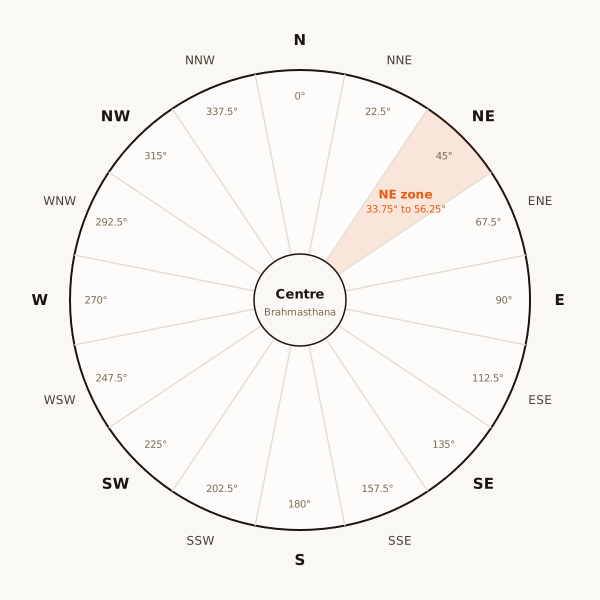
Vastu reads every service on a plot by direction. Clean water belongs where tradition wants the site lowest and lightest, in the North and North-East, and waste belongs in the zones linked with disposal and release. The septic tank is the clearest example of waste on a plot, so tradition is specific about it. There is a practical side too: distance from the borewell and sump, access for cleaning and the slope of the land all matter for health and maintenance.
Traditional guidance: the favoured zones
Traditional guidance: two zones are commonly favoured for a septic tank or soak pit.
- West of North-West (WNW): the detox or release zone in the 16-zone scheme; commonly favoured.
- South of South-West (SSW): the disposal zone; also commonly favoured.
These are the same zones the room rule table in our free 16 Zone Vastu Chakra Tool marks as favoured for septic tanks, so the guidance on this page and the tool agree.
Zones tradition avoids
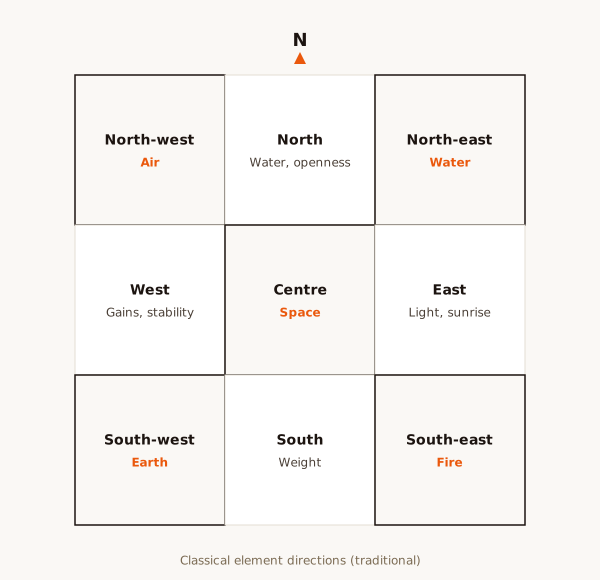
Every other zone is traditionally avoided for a septic tank, and some much more strongly than others.
- North-East, North of North-East and East of North-East: the most strongly avoided, as the water and clarity zones.
- North and East: avoided; these sides are kept for clean water and openness.
- South-West: avoided; the heaviest, most stable zone is not used for a pit.
- South-East and the fire zones: avoided.
- Brahmasthan (the centre): never used for a pit or tank.
Septic tank, borewell and sump together
The borewell and the underground sump are traditionally placed in the North, North-East or East, and the septic tank in the West of North-West or South of South-West. That arrangement also keeps clean water and waste far apart, which is the practical requirement anyway. Local health and building rules set minimum distances between a septic tank and any water source; those rules always come first. Read more in our water tank and sump Vastu guide.
Septic tank vastu for new construction
For a new house the septic tank position should be fixed on the site plan along with the borewell, sump and drainage slope, before excavation starts. Your architect and plumber will also consider the sewer connection, if any, and access for a cleaning truck. Our Vastu for new construction service reviews these together on the plan.
When an existing tank is in the wrong zone
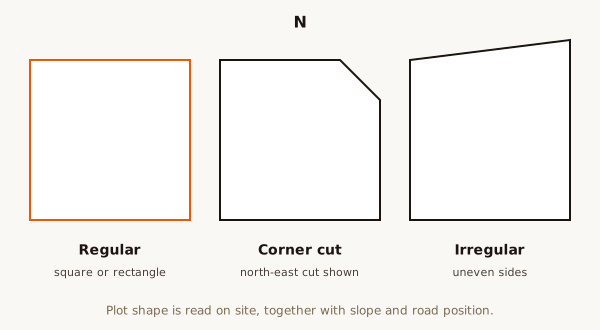
We never ask anyone to break and rebuild a working septic tank on Vastu grounds alone. If an existing tank sits in an avoided zone, we record it plainly in the report and focus on what can be done without construction: keeping the area clean, sealed and well maintained, and keeping the adjoining rooms in suitable use. If a new system is being built anyway, for example when connecting to a sewer, that is the moment to choose a better zone. See zero demolition Vastu corrections.
Apartments and septic tanks
In apartments the septic tank or treatment plant belongs to the building, not to an individual flat, and its position does not change a flat’s own reading. For apartment buyers, the flat’s entrance, kitchen and toilets matter far more; see our apartment buying checklist.
What we measure on site
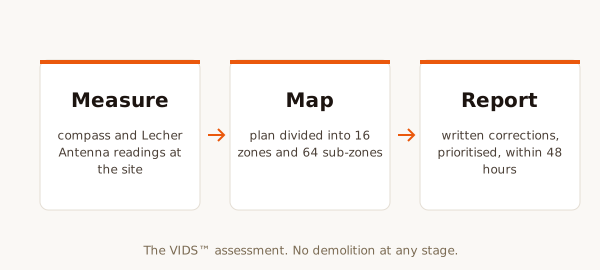
We measure the true-north direction of the plot with a compass and correct it for magnetic declination, which you can look up on the NOAA magnetic declination calculator. A tank that seems to be “in the North-West” may fall in the North or the West of North-West once measured, and the difference matters here. We mark the tank, borewell and sump on the 16-zone map of the plot.
Septic tank vastu for farmhouses and factories
Farmhouses and factories outside the city often have larger septic systems, soak pits or effluent treatment plants. The same traditional zones apply at a larger scale: West of North-West or South of South-West of the plot, away from the borewell, sump and any open well. For factories, the treatment plant also needs truck access and compliance with pollution control rules, which always come first. See our Vastu for farmhouse and factory Vastu pages.
How septic tank vastu fits the 16 zones
The 16 zones are measured from the centre of the plot or building, starting with North at 348.75 to 11.25 degrees. The West of North-West zone runs from 281.25 to 303.75 degrees, and the South of South-West zone from 191.25 to 213.75 degrees. These are narrow sectors, so a measured reading matters: a tank a few metres away can fall in the neighbouring West or South-West zone. Our guide to the 16 Vastu zones explains the sectors.
Slope, drainage and the soak pit
Tradition prefers the land to slope down towards the North and East, while a septic tank sits in the West or South-West side. In practice that means the plumbing has to be planned carefully so waste flows to the tank without fighting the slope. A good plumber can design the pipe levels to suit both. A separate soak pit for rainwater is treated differently from a septic soak pit and is often placed in the North or East as part of rainwater harvesting.
Common septic tank mistakes we see
- A septic tank placed in the North-East because it was nearest the road.
- A tank too close to the borewell or sump.
- A tank under the car parking slab with no access for cleaning.
- A tank under the house itself, near the centre.
- An old unused tank left open or unsealed.
For an existing tank, maintenance, sealing and room use are the first steps. Relocation is only discussed when the system is being rebuilt anyway.
Rooms beside and above the septic tank
Tradition prefers that the septic tank sits outside the building footprint. Where it adjoins the house, the rooms beside it are usually service rooms such as a utility area, a store or a toilet rather than a bedroom, the kitchen or the pooja room. A tank directly under a bedroom or a pooja room is one of the placements tradition avoids most strongly, and it is also a practical concern for smell and access. Our toilet and bathroom guide covers the related wet areas.
Rainwater harvesting and the sump
Rainwater harvesting pits and recharge wells are treated as clean water, not waste, so tradition places them in the North, North-East or East along with the sump and borewell. Keep them clearly separate from the septic system, both in position and in pipework. When the site plan is drawn, mark all four together: borewell, sump, rainwater pit and septic tank. That one drawing settles most of the water-related Vastu questions on a plot.
What to ask your builder or architect
- Where exactly will the septic tank, sump, borewell and rainwater pit go, measured from true north?
- What distance is kept between the septic tank and every water source?
- Is there access for a cleaning vehicle without crossing the lawn or parking?
- Which way does the land slope, and how will the pipes manage it?
- Is a sewer connection planned, and will the tank be sealed when it comes?
Clear answers to these questions at the drawing stage avoid expensive changes later.
Rules people often confuse
Septic tank vastu is often confused with toilet placement. The toilets inside the house have their own preferred zones, the South of South-West and the West of North-West, while the septic tank outside follows the West of North-West or the South of South-West of the plot. The two are related but not identical, and a toilet in a good zone does not make a septic tank in a poor zone acceptable, or the other way round. A second confusion is between the septic tank and the sump: they are opposites in Vastu terms and belong on opposite sides of the plot.
Our view in one paragraph
Septic tank vastu is one of the few areas where tradition and good engineering point the same way: keep waste away from clean water, keep it outside the house, keep it accessible for cleaning and plan it before the foundations go in. If you are building, fix the position on the site plan with your architect and plumber, using a measured true-north reading. If the tank already exists, maintain it well and use the rooms beside it sensibly; we never ask for a working system to be broken.
A quick septic tank vastu checklist
- Favoured: West of North-West or South of South-West.
- Avoid the North-East, North, East, South-West and the centre.
- Keep it far from the borewell and sump; follow local distance rules.
- Fix the position on the site plan before excavation.
- Never break a working tank on Vastu grounds alone.
Getting your plot or plan assessed
Septic tank, borewell and sump positions are checked in every plot and new construction review. See Vastu for plot, the pre-purchase Vastu check, the sample Vastu report and fees on the consultation fees page.