Vardhini Vastu is a Vastu consultant in Malleshwaram for heritage family homes, rebuilt houses, apartments and the shops along Sampige Road, Margosa Road and 8th Cross. Malleshwaram has houses that have been in the same family for generations, and owners rightly do not want to change them structurally. Our zero-demolition approach was built for exactly these homes.
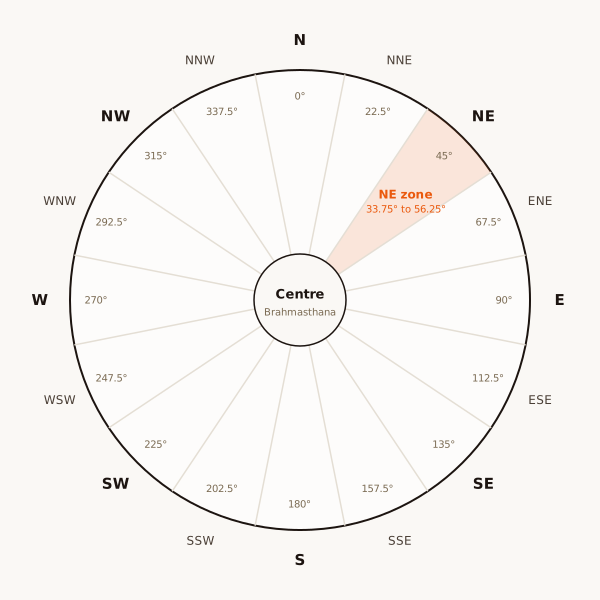
We apply traditional Vastu Shastra with instruments: compass readings at several points, a 16-zone map drawn from the centre of the plot and of each floor, and a Lecher Antenna scan. A written report follows within 48 hours.
Old homes deserve careful advice
Malleshwaram is one of the oldest planned extensions of Bangalore, laid out in the late 1890s, with tree-lined crosses and mains and generous plots. Many houses still have their original features: verandahs, courtyards, high ceilings and carved doors. Families love them and want to keep them.
We measure the house as it stands, map it into the 16-zone grid and look for corrections that respect the structure: how rooms are used, where people sleep and sit, what is stored where, and how light and openness are managed.
What a Vastu consultant in Malleshwaram looks at in a heritage house
In an older Malleshwaram home we pay particular attention to:
- The courtyard or open centre, the Brahmasthana, and how it is kept.
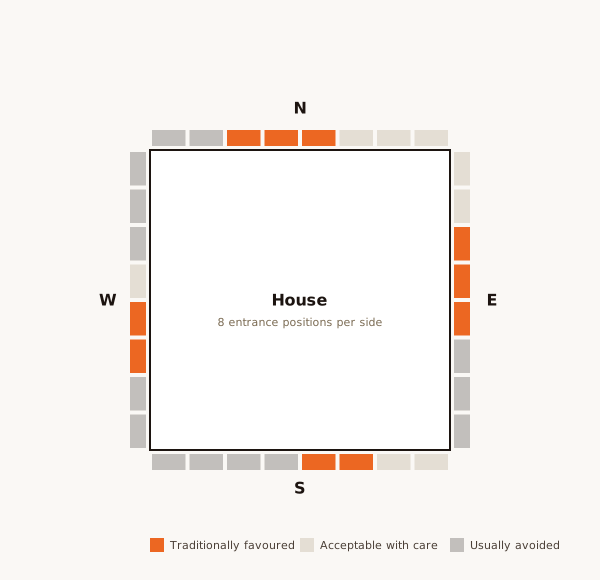
- The main door, often a fine old door, and its position on its side.
- Rooms whose use changed over the decades.
- The kitchen, often at the back, and where the stove now stands.
- Wells, sumps and tanks, some of them old.
- Trees and gardens around the house.
Each is read in degrees and mapped. The report suggests how to work with what is there.
Courtyards and the open centre
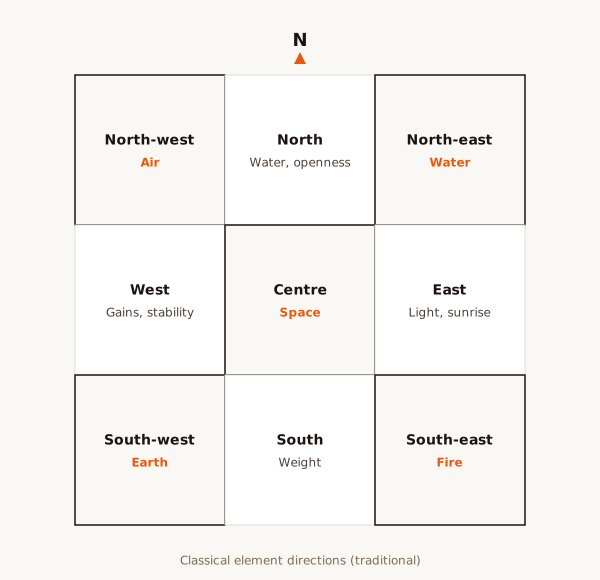
Some older homes have an open centre, which classical Vastu values highly as the Brahmasthana, the zone of space. We check how it is kept: whether it is open to the sky or covered, whether anything heavy sits in it, and what surrounds it.
An open, clean, well-lit centre is a strength. A centre that has been covered over and filled with storage is a common finding, and clearing it is often one of the simplest and most effective corrections.
Room use over time
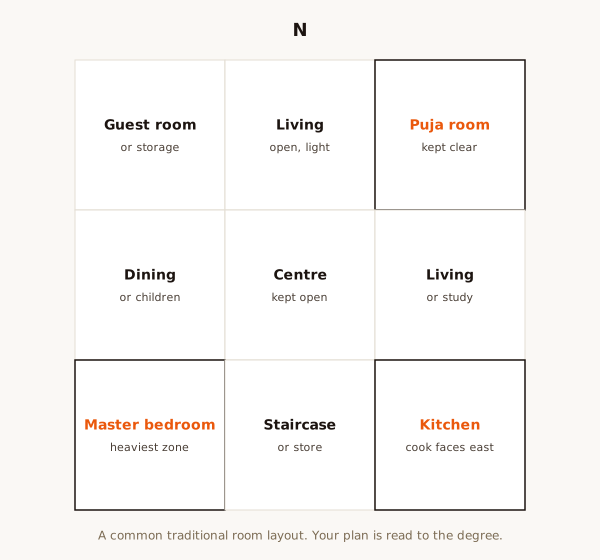
In a house that has seen several generations, rooms change purpose. A store becomes a bedroom, a study becomes a puja room, a verandah is enclosed to make another room. The building keeps its orientation, but each new use may or may not suit its zone.
Reassigning rooms is usually the simplest correction. The master bedroom moves to the south-west room, the puja moves to the north-east, the study takes a calm zone. No walls are touched.
Rebuilding a family home
If the family has decided to rebuild, the drawing stage is the moment to get the centre, staircase, kitchen and master bedroom right. We work with your architect so the new home carries forward what worked in the old one, and send written notes before construction begins.
Apartments replacing old houses
Many old Malleshwaram plots now hold small apartment buildings. In a flat we read the unit from its centre and focus on bedroom allocation, bed and desk direction, the kitchen, a clear north-east and an uncluttered centre.
Shops on Sampige Road and 8th Cross
Malleshwaram’s shopping streets have textile stores, jewellers, sweet shops, pharmacies and restaurants, many of them old family businesses. We read the entrance, the counter, the owner’s seat and where stock is kept. Most changes are layout adjustments. See Vastu for Shops.
Trees and gardens
Malleshwaram is famous for its trees. Traditionally, large trees are preferred towards the south and west and the north and east are kept more open. We do not suggest cutting healthy trees. Instead we plan how the garden is used and where new planting, seating or water features would sit best.
Wells and old water systems
Some older houses still have a well or an old sump. Water traditionally sits in the north or north-east. A well in another zone is not filled in on our advice; we note it and suggest how to balance it, and mark the better position for any new sump or tank.
How a visit in Malleshwaram works
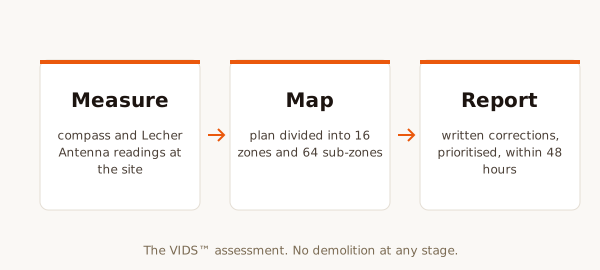
A heritage house visit takes two to three hours. We take compass readings at several points on each floor and outside, note how each space is used and scan bedrooms and sitting areas with the Lecher Antenna. Within 48 hours you receive the written VIDS report with the zone map, every reading, observations and prioritised corrections. Questions afterwards are answered on WhatsApp.
Fees and what you receive
Fees are fixed by property type and quoted before the visit, with nothing charged afterwards for the report. Current Bangalore fees for apartments, independent houses and commercial premises are on our Pricing page, and our sample Vastu report shows the format you receive. We do not sell yantras, pyramids, crystals or any other products. Every correction uses what you already have: placement, room use, colour, light and the balance of the five elements.
Questions we hear in Malleshwaram
“Can you improve an old house without changing its structure?” Yes. All our corrections are non-structural.
“Our house has an open courtyard. Is that good?” An open centre is valued in classical Vastu.
“Do you review drawings for a rebuild?” Yes, before construction.
“Do you cover nearby areas?” Yes, including Rajajinagar, Hebbal and Sadashivanagar.
The classical texts behind our advice
Malleshwaram families often know Vastu well. Our advice draws on classical treatises, including the Aparajitaprccha, a twelfth-century Sanskrit text on architecture that Raghavendra Hebbur is translating. We are careful to say which points come from such texts, which come from measurement on site and which are our interpretation.
Puja rooms in older homes
Most old houses have a dedicated puja room. The north-east is the traditional zone, kept light and clean with nothing heavy above it. When the puja room is elsewhere, we discuss options gently; for many families its position carries meaning beyond Vastu, and we respect that.
Elderly family members
In many Malleshwaram homes, elderly parents live on the ground floor. We look for a calm bedroom zone, an easily reached bathroom, morning light and clear paths. These practical points sit alongside the directional reading in the report.
What Vastu can and cannot do
A Vastu report is guidance based on classical principles and measured readings. It is not medical, legal or financial advice, and we never promise outcomes. Our editorial standards explain how we separate tradition, measurement and interpretation.
Areas we cover around Malleshwaram
On-site visits cover Malleshwaram, Sadashivanagar, Vyalikaval, Seshadripuram, Gayathri Nagar, Mathikere and the roads towards Yeshwanthpur and Rajajinagar. Message us the location on WhatsApp and we will confirm the visit and fee before booking.
Verandahs and front rooms
Many old Malleshwaram houses open onto a verandah or a front room that once received guests. Over time these spaces have often been enclosed, turned into an office or filled with storage. Because they sit at the entrance, they shape how the whole house reads. We look at the zone they occupy and suggest how to use them so the approach to the main door stays open and well lit. Often that means moving storage elsewhere and returning the space to sitting or reading.
Terraces and later additions
Rooms added on the terrace, water tanks and solar heaters change the vertical balance of an old house. Traditionally the south and west are kept higher and heavier, the north and east lower and lighter. A terrace room in the south-west generally sits well; one in the north-east adds weight where the house should be light. We note these and suggest how to use them lightly or balance them.
Colour, light and old interiors
Older homes often have darker interiors, with thick walls and smaller windows. Colour and lighting can do a great deal without touching the structure. We suggest lighter shades in the north and east, warmer tones in the south-west, and better lighting in any dark north-east corner or windowless central room.
Nearby areas we cover.
Frequently asked questions.
Can you improve an old house without changing its structure?
Yes. All our corrections are non-structural. We work with room use, placement, colour, light and elemental balance.
Our house has an open courtyard. Is that good?
An open centre is valued in classical Vastu. We check how it is kept, what surrounds it, and whether anything heavy sits in it.
Do you review drawings for a rebuild?
Yes. We review the architect's plans before construction and suggest positions for the staircase, kitchen, bedrooms and puja room.
Do you assess shops in Malleshwaram?
Yes, including small shops and showrooms on the main roads.
Have a property here you want assessed?
Share the property type and a floor plan on WhatsApp for an exact quote and the next available date.