As a Vastu consultant in Peenya, most of our work is on small and medium industrial units: fabrication shops, machine shops, tool rooms, garment units, printing presses and the many job-work sheds that fill the 1st, 2nd and 3rd stages of the industrial area and the stretch towards Nagasandra along Tumkur Road. Owners usually call us when they are taking a new shed, expanding into the next unit, or reorganising a floor that has grown without a plan.
We also visit homes in the residential pockets around Peenya, Jalahalli, Dasarahalli and Nagasandra, often for the same families who run the units. Every assessment uses our VIDS 16-zone method, measured from true north on site, and every correction is planned without demolition and without stopping production.
What a Vastu consultant in Peenya checks in a unit
A small industrial unit packs a whole factory into one shed, so every zone carries weight. On a typical visit we read:
- The main gate and the shed entrance, by their pada positions.
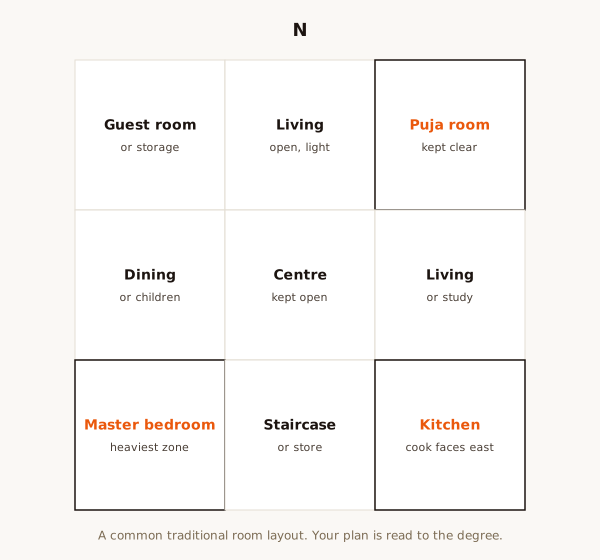
- The owner cabin and the accounts desk, ideally in the south-west and facing north or east.
- Heavy machines and raw material stock, ideally towards the south and west.
- Furnaces, ovens, compressors, welding bays and the electrical panel, ideally in the south-east.
- Finished goods and dispatch, ideally in the north-west.
- Water storage, the borewell and any effluent drain, keeping the north-east clean.
- The centre of the shed, kept as open working floor rather than a store.
See factory Vastu and the industrial Vastu guide for the full method.
Row sheds with shared walls
Many Peenya units sit in rows, sharing side walls with neighbours and facing an estate road on one side. That means two sides of the shed are fixed, the entrance can only be on the road side, and the plot outline is set by the layout. We read what you control: the internal layout, the position of the shutter or door along the front wall, the mezzanine, and how machines and stock are arranged.
Units on a corner, with two road frontages, have more freedom. We compare the possible gate and shutter positions on both sides and suggest the one that suits both Vastu guidance and the movement of trucks and material.
Mezzanines, upper floors and offices
Peenya sheds often add a mezzanine for an office, a design room or light assembly. Tradition prefers upper floor weight towards the south and west, so a mezzanine along the south or west wall suits the reading better than one over the north-east corner. The owner cabin on a mezzanine is read by its own position in the shed.
Where the office is in a separate block in front of the shed, we read the office and the shed as two units on the same plot. See cabin seating and accounts and finance.
Taking a new shed or plot
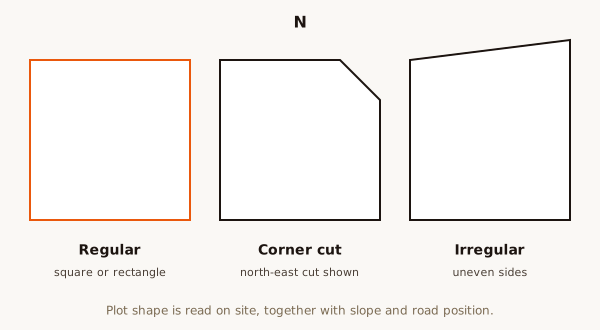
Before you sign a lease or buy a plot, a short reading can save a long correction. We check the plot shape, the road position, any road running straight into the boundary, the slope and drainage, and where the main machines and the cabin could go. Industrial plots in older estates are often regular rectangles, which helps, but road hits at T-junctions within the estate are common and worth reading. See industrial plot Vastu and veedhi shoola.
How we work without stopping production
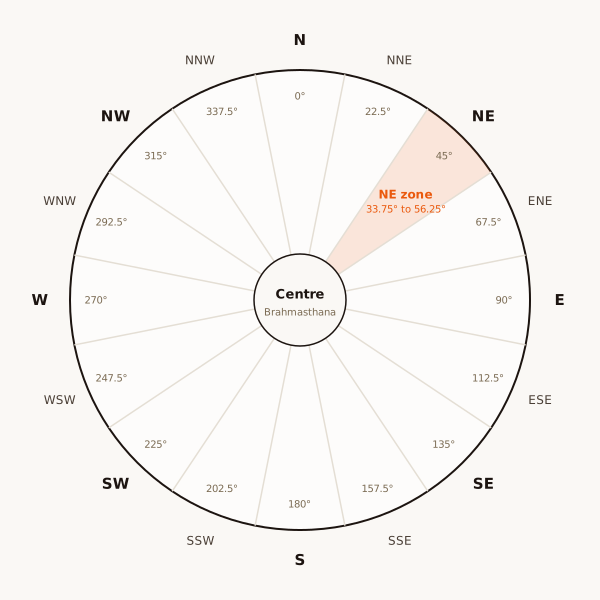
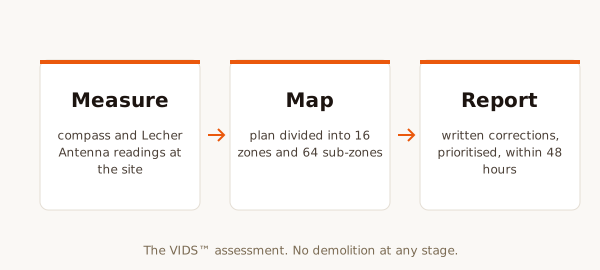
We walk the site while it runs. Compass readings are taken at several points away from steel structures, machines and vehicles, which distort the needle, and are corrected for magnetic declination, which you can check with the NOAA magnetic declination calculator. We sketch the layout, note each machine and store by zone, and talk to the owner and supervisor about how material actually moves.
Lecher Antenna readings can be added on site if you want them. We describe them honestly as radiesthesia, which mainstream science does not accept, and keep them separate from the measured findings.
Corrections that suit a working unit
- Move the owner cabin or the accounts desk, which is often a weekend job.
- Shift raw material stock to the south and west walls.
- Clear the north-east corner of scrap, oil drums and stored dies.
- Move dispatch staging towards the north-west.
- Relocate the electrical panel or compressor in a planned shutdown.
- Set the mezzanine and new machines correctly when expanding.
Large machines are rarely moved for Vastu alone. When a machine is already due to be relocated or replaced, we tell you where it should go. See zero-demolition corrections.
Homes around Peenya
Families who run units in Peenya often live close by, in Jalahalli, Dasarahalli, Nagasandra, Vidyaranyapura or towards Yeshwanthpur. We assess apartments, independent houses and villas in the same visit where that helps. For homes, see Vastu for home and independent house Vastu.
Fees and reports
Industrial and commercial assessments start from ₹51,000 and are quoted after we see the site plan and the scale of the unit. Homes in Bangalore are ₹15,000 for an apartment or row house and ₹25,000 for a villa or independent house. A pre-purchase plot report is ₹5,000. The written report arrives within 48 hours of the visit. See all fees and a sample report.
Why owners call Vardhini Vastu
We have been practising since 2016, with more than 3,200 consultations behind us. We measure before we advise, we separate classical guidance from what we measured, we sell no products and we take no commission. We do not promise turnover, orders or profits. We tell you how your unit reads by direction and which changes are practical in a working shed.
Common findings in Peenya units
- Scrap, empty drums and old dies piled in the north-east corner because it is nearest the gate.
- The owner cabin placed beside the shutter for convenience, in the north-east or north.
- The electrical panel and compressor on the north wall, where the incoming cable happened to arrive.
- Raw material stacked along the north or east wall, leaving the south-west open.
- A toilet block added in the north-east of the plot when the unit expanded.
- Dispatch and receiving sharing one cluttered entrance.
Each of these is read by its measured zone. Most can be changed during a weekend or a planned shutdown.
Garment, printing and light assembly units
Not every Peenya unit is heavy engineering. Garment units, printing presses and electronic assembly lines run on rows of workstations, cutting tables and stores of fabric, paper or components. For these, the layout question is about flow: material should enter, move through the floor and leave without crossing itself, and the heavy stores should sit in the south-west.
Cutting tables and long benches are best aligned so that workers face north or east where possible. The supervisor desk suits a position from which the whole floor can be seen, ideally from the south or west side. Quality checking and packing suit the north-west, near dispatch.
Leased sheds: what a tenant can change
Many units in the area are leased. A tenant cannot move walls, but can decide almost everything that matters inside: where the cabin goes, how machines and stores are laid out, which entrance is used daily, and how the open yard is used. We focus the report on those decisions and keep anything structural for the owner to consider separately.
If you are comparing two sheds before signing, we can read both and set them side by side, so that the choice rests on layout and direction as well as rent and location.
Common questions in Peenya
Do you work with units outside the main estate? Yes. We also visit units along Tumkur Road, in Nagasandra and in the smaller industrial pockets towards Jalahalli and Dasarahalli.
Can you review a layout before a new machine arrives? Yes. That is the best moment, since the foundation and power point can be placed correctly from the start.
Do you sell yantras or products for factories? No. We sell nothing. Every correction is a change in layout, placement or use.
The open yard and the gate
Units with an open yard in front of or beside the shed have more room to work with. Tradition prefers the open space on the north and east, with the borewell or sump in the north-east of the yard and the security cabin beside the gate but away from the north-east corner. Truck parking and loading bays suit the north-west or south-east of the yard. See compound wall Vastu for how the boundary and gate are read.
Related services.
Nearby areas we cover.
Frequently asked questions.
Do you visit small sheds and job-work units in Peenya?
Yes. Small units are a large part of our work here. The assessment covers the gate, shutter, cabin, machines, stock, power and dispatch.
Will we need to stop work during the visit?
No. We walk the site while it runs and plan any changes around your production schedule.
Our shed shares walls with neighbours. Can Vastu still help?
Yes. We read what you control: the entrance position, internal layout, mezzanine, cabin and stock placement.
Can you check a shed before we lease it?
Yes. Send the layout and location, and we can visit before you sign.
Have a property here you want assessed?
Share the property type and a floor plan on WhatsApp for an exact quote and the next available date.