About Vardhini Vastu
Understanding space. Applying Vastu with purpose.
Vardhini Vastu is a Vedic Vastu consultancy focused on understanding the relationship between people, property, direction, layout, and function, before recommending a single change.
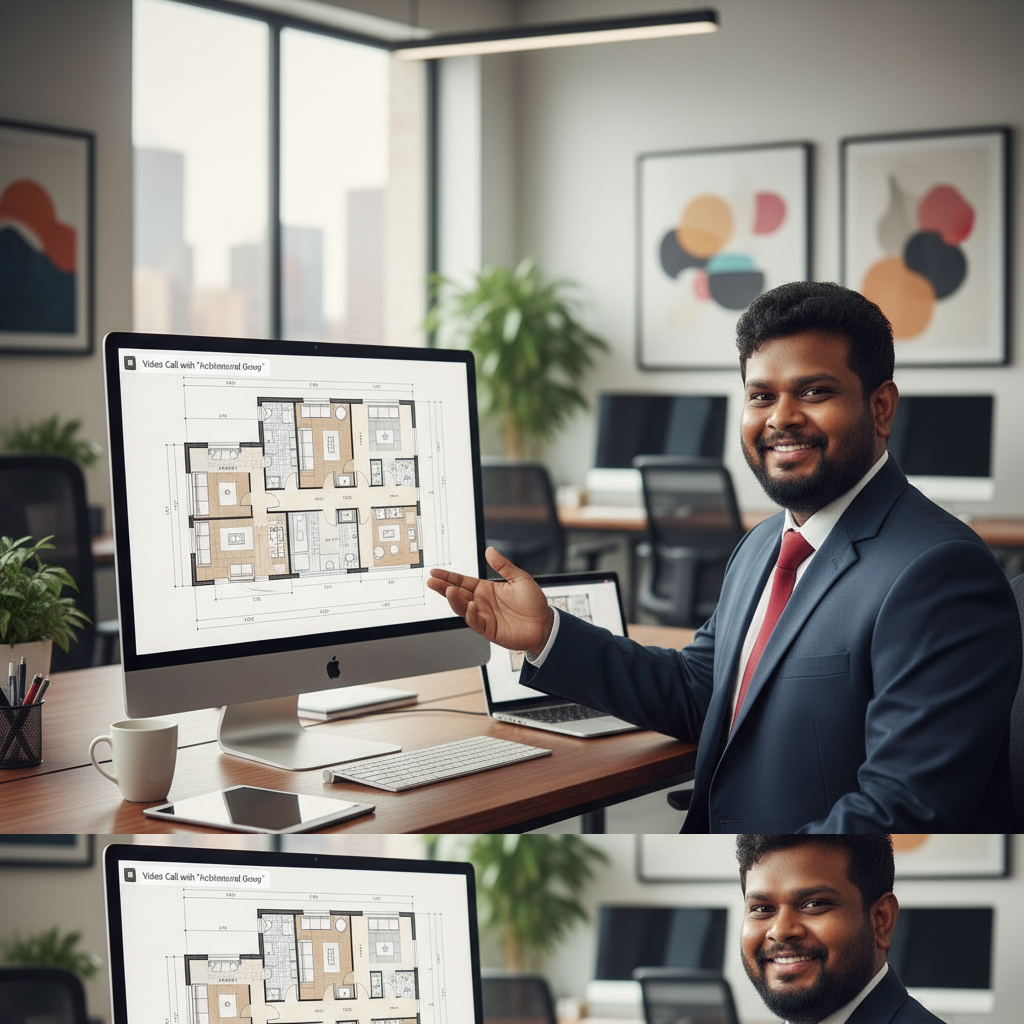
Why Vardhini Vastu?
"Vardhini" is a Sanskrit-derived word associated with growth and flourishing. It's an apt name for a consultancy built on a simple premise: a space that is understood, not just decorated or built to code, is a space that works better for the people in it.
That's not a supernatural claim. It's the reason Vastu, applied thoughtfully, still holds relevance in modern buildings: it forces a structured look at orientation, layout, and function, questions a purely aesthetic or purely structural design process can skip past. Vardhini Vastu exists to bring that structure to homes, offices, and industrial sites, using the VIDS™ 16-zone framework and, where a site visit allows it, Lecher Antenna instrumentation.

Vastu is more than a checklist.
Context matters
The same recommendation isn’t automatically applied to every property.
Understand before recommending
The property is understood before any change is proposed.
Tradition with discernment
Classical Vastu principles are presented responsibly and in context.
Practical implementation
Recommendations account for the realities of an existing building.
Priority over volume
Clients understand which observations matter most, and which are secondary.
Respect the property
Solutions work with the existing structure where possible, rather than defaulting to demolition.
The Vardhini Vastu Framework
Our way of looking at a space.
Property
Plot, orientation, surroundings, and physical context.
Space
Rooms, functions, circulation, openings, and proportions.
Direction
Directional relationships and the 16 VIDS™ zones.
Occupancy
How people actually use the space, day to day.
Observation
Identifying the areas that genuinely require attention.
Recommendation
Practical recommendations appropriate to the property.
Ancient knowledge meets contemporary architecture.
The VIDS™ framework applies the same way regardless of the property type. What changes is scope, not method.
A different approach to Vastu.
The Process
What happens at each stage of a consultation.
Understand
The property, the people, and the purpose.
Observe
Site, orientation, layout, and spatial relationships.
Analyse
The property against the 16 VIDS™ zones.
Diagnose
Zones and elements requiring attention.
Recommend
A written report, practical and proportionate.
Balance
Zero-demolition corrections, implemented where required.
Frequently asked questions.
What is Vardhini Vastu?
A Vedic Vastu consultancy led by Raghavendra Hebbur, applying the VIDS™ 16-zone diagnostic framework and Lecher Antenna instrumentation to residential, commercial, and industrial properties.
How is Vardhini Vastu different from a traditional Vastu consultation?
The same classical Vastu Shastra principles are applied through a structured 16-zone framework, with a written report and instrumentation-based readings rather than a verbal opinion.
Do you work with existing properties?
Yes. Most consultations are for homes, offices, and industrial sites that are already built and occupied.
Do you provide online consultations?
Yes, from floor plans and photographs, for clients anywhere in India and internationally.
Can Vastu be considered during construction?
Yes. Reviewing plans before or during construction is when changes can still be made at the lowest cost.
Do you provide solutions without demolition?
Every recommendation is zero-demolition, using placement, colour, and instrumentation-guided adjustment.
What information is required for a consultation?
A floor plan and, where possible, the compass direction of the main entrance. For online consultations, photographs of each room are also useful.
Vardhini Vastu is a Bengaluru practice founded in 2016 by Raghavendra Hebbur to give homeowners, businesses and industrial owners a measured, written reading of their property instead of a quick verbal opinion. The page above shows how we look at a space. This section explains, in plain terms, who does the work, which tools and texts sit behind it, and what you can expect when you get in touch.
Everything here describes how the practice actually runs. There are no client names, no promised results and nothing to buy. If a statement comes from a classical text, we say so. If it comes from a measurement taken on site, we say that instead.
Vardhini Vastu since 2016
The practice began in 2016 in Bengaluru and it is still run by its founder. Over more than ten years it has handled 3,200+ consultations across 620+ properties, from compact two-bedroom flats to villas, offices, shops and factory sheds.
The name comes from a Sanskrit root associated with growth. The idea behind the work has not changed: understand the building first, measure it properly, and only then suggest changes that a family or a business can realistically carry out.
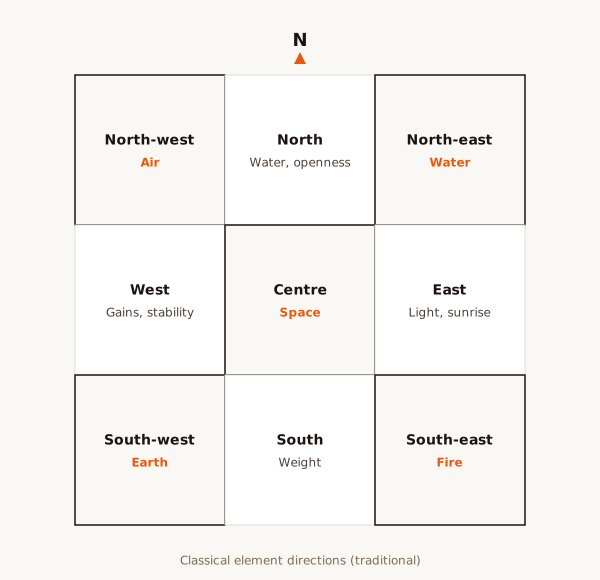
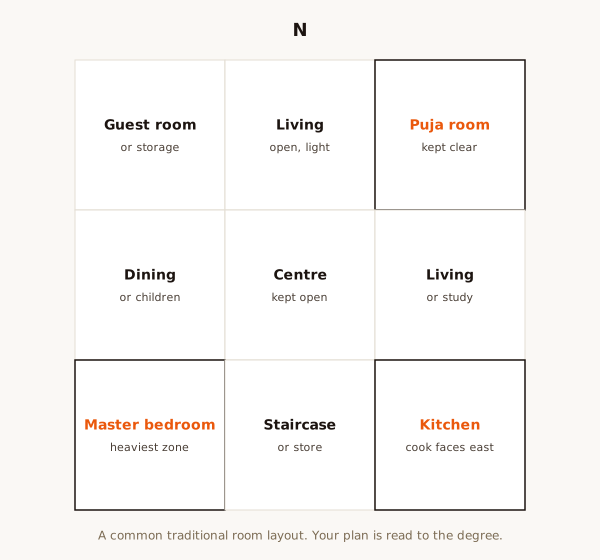
Most site work happens across Bangalore. Clients in other cities and abroad are served through the online consultation service, which follows the same steps using plans and photographs. An online assessment uses traditional Vastu only, the 16-zone map and the 3x3 grid drawn on your plan; geopathic stress readings need a site visit.
Raghavendra Hebbur: training and instruments
Raghavendra Hebbur is a Certified Geo Master. He handles every consultation himself, from the first look at the floor plan to the final written report. Nothing is handed to an assistant to interpret.
Three kinds of readings support the directional work on site:
- Compass readings taken at several points in the property and averaged, so one steel beam or appliance does not distort the result.
- Lecher Antenna checks for geopathic stress, such as underground water lines, across beds, desks and work areas, wherever a site visit is possible.
- Universal Aura Scanner (UAS) by Geo Engineering, used as a supporting check on specific rooms or positions.
The readings are written into the report next to the compass degrees. You can see what was measured and where, rather than having to trust a remark made at the door.
Reading the Aparajitaprccha, a 12th-century text
Alongside consulting, Raghavendra is translating the Aparajitaprccha, a 12th-century Sanskrit treatise on architecture. It deals with planning, proportion, orientation and the placement of rooms and functions, and it is one of the classical sources the VIDS™ framework refers back to.
Working from an original text changes the way advice is given. Many rules that circulate online are simplified or lifted out of context. Going back to the source makes it easier to tell what the tradition actually says, what was added later, and what needs careful interpretation for a modern apartment tower or an industrial shed.
Where our pages quote or paraphrase a classical principle, it is marked as traditional. Our editorial standards explain how we keep tradition, measurement and interpretation apart.
How Vardhini Vastu applies the VIDS™ method
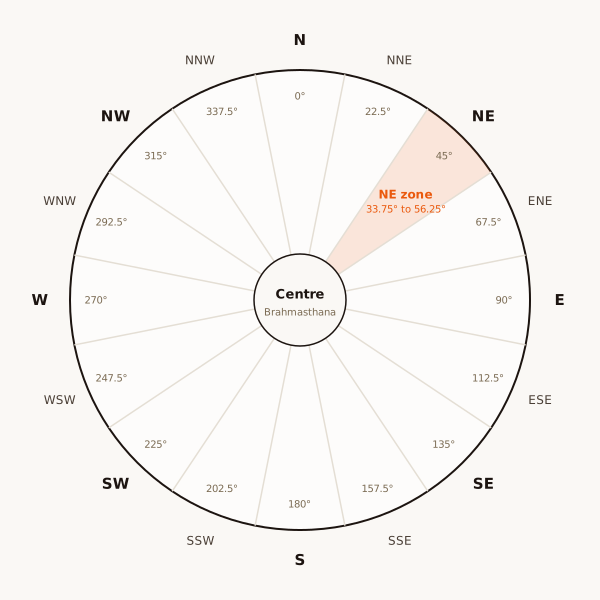
VIDS™ is the 16-zone method Raghavendra created and uses in every consultation. The property is divided into 16 directional zones of about 22.5 degrees each, measured from true north on site.
A magnetic compass points to magnetic north, which is not quite the same as true north. Each reading is corrected for local magnetic declination using public data such as the NOAA magnetic declination calculator. A few degrees can move an entrance or a kitchen from one zone into the next, so this step is never skipped.
Each zone is then read for its current use: entrance, kitchen, bedroom, toilet, storage, workstations or machinery. The full process is set out on the VIDS™ methodology page, and the 16 zones explained guide covers what each zone is traditionally linked with.
What a scientific approach means here
Scientific does not mean a laboratory claim. It means a repeatable process: measure the same way every time, record the readings, explain the reasoning, and keep each recommendation in proportion to what was found.
- Directions are measured on site, not guessed from a builder brochure or a map app.
- Readings are written down with the zone, the degree and the current room use.
- Every recommendation states why it is made and how much it matters.
- Where something cannot be corrected without building work, the report says so plainly.
It also means being clear about limits. This work is not a replacement for structural, medical, legal or financial advice, and we never use fear to push a change.
Corrections without demolition
Almost every recommendation uses placement, colour, lighting, room use and decluttering. Moving a bed, turning a desk, changing how a corner is used or adding light to a dark zone can usually be done in a weekend, without a contractor.
If an issue truly needs construction, for example a staircase in the wrong zone in a house still at the drawing stage, the report says so and explains the options. It never presents breaking a wall as the only answer. The zero-demolition corrections guide gives practical examples.
What we do not sell
We sell no products. There are no yantras, pyramids, crystals or gemstones on offer, and no remedy kits. We take no commission from builders, interior firms or property sellers, so advice on whether to buy a flat or a plot is not shaped by anyone else.
We also do not promise outcomes. A well-arranged home or office supports the people who use it, but no honest consultant can guarantee a promotion, a sale or a recovery. You will not find that kind of claim on this site or in a report.
Who we work with
Most clients are Bangalore families living in an existing flat or house. Others are planning a new home, choosing a plot, setting up an office or running a manufacturing unit. The method stays the same; the scope and the report change with the property.
- Homes and apartments, including flats already lived in
- Villas and independent houses
- Plots before purchase, and new construction at the drawing stage
- Offices, shops and commercial premises
- Factories, warehouses and industrial plots
- NRI owners looking after a property in India from abroad
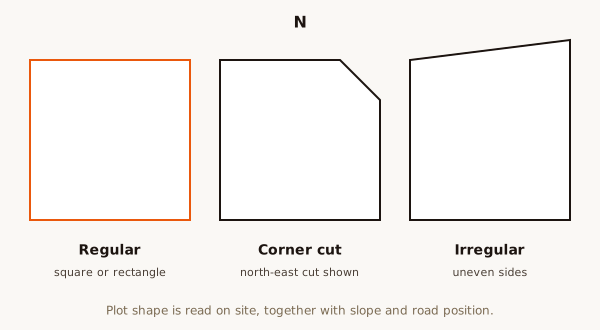
How a consultation runs
Before the visit you share a floor plan and tell us what concerns you. The preparation guide lists what helps most.
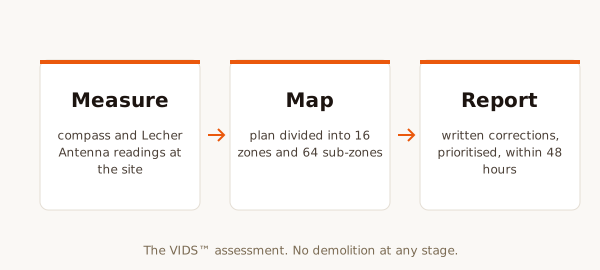
For a home in Bangalore the site visit usually takes two to four hours. Raghavendra walks every room, takes compass readings at several points and, where the visit allows, uses the Lecher Antenna over beds, desks and seating.
The written report follows within 48 hours. It contains the zone map, the readings, the observations and the corrections ranked by priority. You can see the format on the sample report page.
Online consultations follow the same structure using your plan, photographs and a direction reading you take on your phone while we guide you over a call.
Fees at a glance
Fees are fixed by property type and listed in full on the pricing page:
- Online consultation, anywhere: ₹5,000
- Pre-purchase plot report: ₹5,000
- Bangalore apartment or row house: ₹15,000
- Bangalore villa or independent house: ₹25,000
- Outstation apartment: ₹21,000 plus travel
- Outstation villa: ₹30,000 plus travel
- Commercial and industrial: from ₹51,000
There are no add-on charges for remedies, because there are no remedies to buy.
VastuOne and the book Vastu Unlocked
Raghavendra is a co-founder of VastuOne, a pan-India network of consultants who share an approach built on careful assessment rather than fear or product sales. It means a client in another region can be pointed to someone who works in a similar way.
He is also the author of the book Vastu Unlocked, written for readers who want to understand the reasoning behind common guidance before acting on it.
Reviews and track record
The practice holds a 5.0 rating from 248 Google reviews. We do not publish client names or case results on the site, because every property is different and a single story can mislead. If you want to know how others found the process, the reviews are the honest place to look.
Contact Vardhini Vastu
The office is at 3rd Cross, Saraswati Road, Ajit Layout, Virgo Nagar, Bengaluru 560049. You can write to raghu.hebbur@gmail.com or use the WhatsApp button on this page.
Tell us the property type, the city and whether you would like an on-site or online consultation. We will confirm the fee and the next available date, and send the short list of what to keep ready.
Where Vastu fits in a modern Bangalore home
Vastu began as a planning discipline for buildings, long before apartment towers and steel frames. Today most people meet it when they buy a flat, move into a rented home or plan an office. The real question is rarely whether to follow every classical rule. It is which few Vastu points matter for this property and these people, and which can be safely left alone.
That is why a report from us is short on general rules and long on specifics: the measured degree of the main door, the zone the kitchen falls in, and where the bed sits relative to any recorded disturbance. Readers who want the background can start with the guides on main door Vastu, kitchen Vastu and bedroom Vastu.
Related services.
Start with understanding your space.
Book a consultation with Raghavendra Hebbur and get a written VIDS™ report in 48 hours.