North-west-facing house Vastu covers homes whose road side faces the diagonal between north and west. The front of such a house carries part of the north and part of the west, and the corner between them, the north-west, is the zone tradition links with air, movement and change. This guide explains how we confirm the facing, where the main door can sit on each face and how the rooms inside are planned.
Families often come to us worried because someone told them a north-west facing is unstable. It is not a verdict on the house. What matters is the measured degree, the exact door position and how the zones are used, and every one of those can be read and, where needed, corrected without breaking walls.
What north-west facing means in Vastu
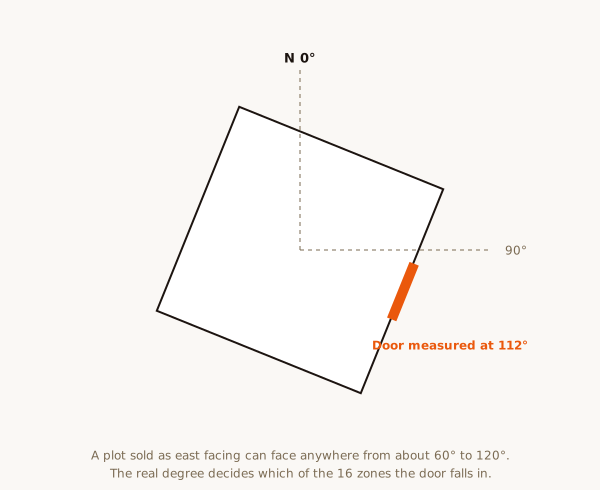
Two different plots get called north-west facing in Bangalore listings:
- The tilted plot: one front boundary, facing roughly 304 to 326 degrees. The front wall runs across north and west zones.
- The corner plot: one road on the north boundary and another on the west, meeting at the north-west corner of the site.
Either way, the building presents a north-side face and a west-side face to the open, with the north-west corner in between. The corner plot simply makes both faces usable for an entrance, while the tilted plot asks us to read a single wall zone by zone.
Measuring a north-west-facing house Vastu reading to the degree
A compass needle points to magnetic north, which is not quite true north. We take readings at several points around and inside the house, keep away from vehicles, grilles, columns and meter boxes, and correct the result for local magnetic declination. Anyone can look up the figure on the NOAA magnetic declination calculator.
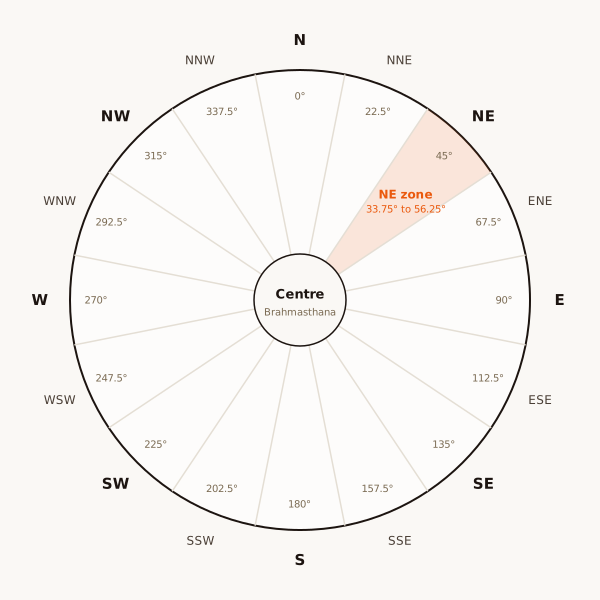
The corrected degree places the front in one of three Vastu zones around this diagonal:
- West-north-west (WNW): 281.25 to 303.75 degrees.
- North-west (NW): 303.75 to 326.25 degrees.
- North-north-west (NNW): 326.25 to 348.75 degrees.
This is why a house sold as west facing can turn out to be north-west facing, and one sold as north facing can really sit in north-north-west. The difference changes which entrance positions are favoured, so the report states the measured figure first.
The Vastu zones on the two road-facing sides
On a corner plot, the north road side runs from the north-east corner through north and north-north-west to the north-west corner. The west road side runs from the north-west corner through west-north-west and west towards the south-west. On a tilted plot the single front wall usually spans west, west-north-west, north-west, north-north-west and north.
Traditional Vastu guidance: the north should stay open and light, the west can carry moderate weight, and the north-west suits movement: guests, vehicles and things that come and go.
What we measure: the degree of each face, where the centre falls, whether the north-west corner is extended or cut by the road, and how air actually moves through the house from the front.
Vastu entrance positions on the north face
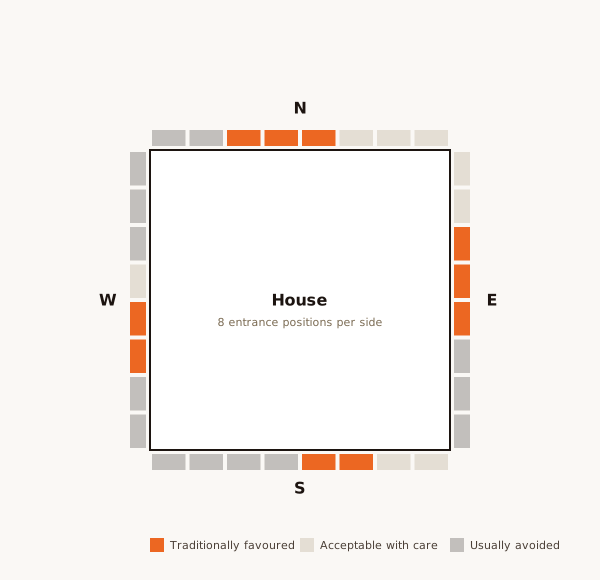
Classical texts divide each side of a building into eight entrance positions (padas). Different schools rank them slightly differently; we use the most widely followed reading and confirm it on your plan.
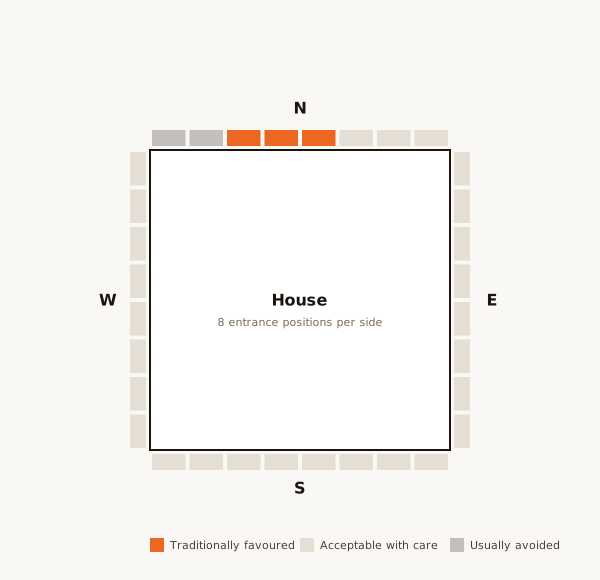
Count the eight positions along the north face from the north-west corner towards the north-east:
- 1st to 2nd positions (at the north-west end): usually avoided.
- 3rd to 5th positions: traditionally favoured.
- 6th to 8th positions (towards the north-east): acceptable with care.
On a north-west-facing corner plot, a main door in the middle of the north face is often the cleanest answer, with the car gate placed on the west.
Vastu entrance positions on the west face
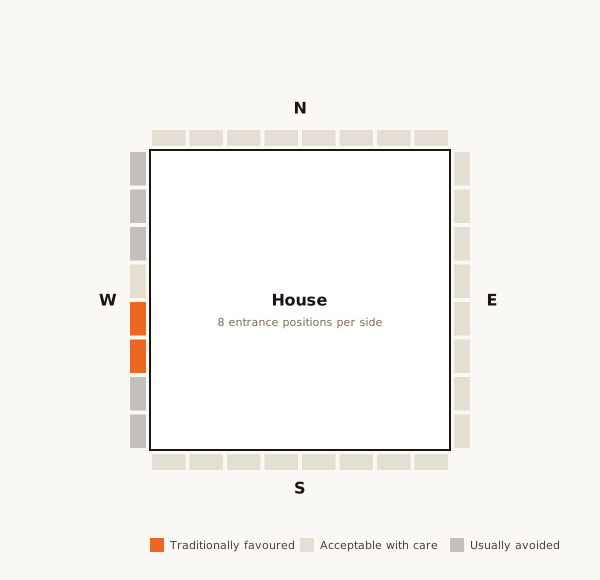
Count the eight positions along the west face from the south-west corner towards the north-west:
- 1st to 2nd positions (at the south-west end): usually avoided.
- 3rd to 4th positions: traditionally favoured.
- 5th position: acceptable with care.
- 6th to 8th positions (towards the north-west): usually avoided.
Notice the pattern: on both faces, the positions closest to the north-west corner are the weaker ones. Builders like that corner because it gives the widest frontage to the living room, so it is the door placement we correct most often on this facing.
Reading a door on a tilted front wall
When the plot is tilted and there is only one front wall, the cardinal pada count does not fit cleanly. We plot the door by its measured degree from the centre of the house. A door that lands in north-north-west is read with north-side guidance; one in west-north-west with west-side guidance. A door centred on the north-west axis itself is the case schools argue about most, and we set out the options in writing rather than give a single confident rule.
The combined diagram of all entrance positions is laid over your plan at the measured angle. It turns a vague worry about the corner into a specific position you can see.
Room planning in north-west-facing house Vastu
With the front at the north-west, the south-east corner sits diagonally opposite at the back, and the north-east and south-west corners sit on the two sides.
- Kitchen: south-east, at the back, is the traditional first choice. The north-west, at the front, is an accepted alternative and often suits a work kitchen or utility beside the car porch.
- Master bedroom: south-west, along the west side, with the bed head to south or west.
- Guest room: north-west, close to the entrance, which fits the zone’s link with people who come and go.
- Puja space: north-east, on the north side. Keep it clear of shoe racks and storage.
- Toilets: north-west or west are acceptable; avoid the north-east, the south-west corner and the centre.
- Staircase: south, west or south-west are preferred.
Read this as a reference. The final plan depends on the plot, the measured degree and how your family uses the house. Our bedroom guide covers bed and wardrobe placement in more detail.
The north-west as a zone of movement
Traditional Vastu guidance: the north-west is associated with the air element. Classical practice places guest rooms, vehicles, storage of things that leave the house and, in some schools, a daughter’s room here.
What we measure: we do not treat that as a prediction about your family. We check whether the front corner is cluttered or blocked, whether cross-ventilation reaches the back of the house and whether the entrance spills straight into the living room without a pause. Those are physical things you can feel and change.
Typical Bangalore north-west-facing homes
On 30 by 40 and 30 by 50 sites we often see the same arrangement: car parking and a guest room at the front north-west, the living room behind, the kitchen at the back, and a separate staircase to a rented upper floor. Patterns worth checking:
- Main door pushed into the north-west corner to widen the living room.
- A toilet on the north side drifting into the north-east as the plan gets squeezed.
- The overhead tank placed over the front staircase instead of the south-west.
- A dark, closed north-east side passage used for washing machines and gas cylinders.
Strong afternoon sun on the west half of the frontage is also common. A verandah, deep sunshade or planting helps both comfort and the reading of the west face.
Myths around north-west-facing house Vastu
- Myth: a north-west facing makes the family unsettled. Tradition describes the character of a zone; it does not sentence a household. We have no evidence that the facing alone does any such thing.
- Myth: the house will never feel stable unless the door is moved. Doors are corrected in place with threshold treatment, colour and lighting.
- Myth: you need special objects to fix it. We sell no products, yantras or pyramids, and we take no commission.
- Myth: Vastu can secure income or health. It cannot. It can make a house better lit, better ventilated and easier to live in.
Vastu corrections without demolition
For an existing house we start with use and arrangement: clearing the north-west corner, shifting a cluttered store away from the north-east, swapping a guest room and a study, turning the bed, choosing colours by zone and improving light along the north. A door at the north-west end gets threshold and lighting treatment matched to its measured zone. Where a fault genuinely needs construction we say so, and record the better position for your next renovation. Our page on existing property Vastu explains how that work is prioritised.
Before you buy a north-west-facing plot
Check the shape, whether the road cuts or extends the north-west, the slope of the land and what sits opposite the gate. An extended north-west is read differently from an extended north-east, so do not assume any extension is good. Our plot buying checklist lists what to look at, and a written pre-purchase plot report costs ₹5,000.
Fees, visit and written report
A home visit usually takes two to four hours. Within 48 hours you get a written report with every reading, the 16-zone map and corrections in order of priority; the sample report shows the format. A Bangalore independent house or villa is ₹25,000, an apartment ₹15,000 and an online consultation ₹5,000. See the consultation fees page or book a consultation. An online assessment uses traditional Vastu only, the 16-zone map and the 3×3 grid drawn on your plan; geopathic stress readings need a site visit.
Frequently asked questions.
Is a north-west-facing house bad as per Vastu?
No. The north-west is the zone of air and movement, not a bad direction. The house works well when the main door is kept away from the extreme north-west corner and the rooms are placed by zone.
Where should the main door be in a north-west-facing house?
On the north face, the third to fifth positions counted from the north-west corner; on the west face, the third and fourth counted from the south-west corner. Positions right at the north-west corner need correction.
Can the kitchen be at the front in a north-west-facing house?
Yes. The north-west is an accepted alternative for the kitchen, and on this facing it sits at the front. The south-east, at the back, is the traditional first choice.
My house is sold as west facing but measures 305 degrees. Which page applies?
At 305 degrees the front reads as north-west in our 16-zone map, so the guidance on this page applies rather than plain west-facing advice.
Have a property here you want assessed?
Share the property type and a floor plan on WhatsApp for an exact quote and the next available date.