North-east-facing house Vastu deals with homes that do not look squarely at a compass point. The road side of the plot faces the diagonal between north and east, so the front of the house belongs partly to the north and partly to the east. This page explains what that means, how we measure it, where the main door can go on each face and how the rooms are planned inside.
The question comes up often in Bangalore, because many layouts were drawn along old roads, lake edges and slopes rather than along the compass. What follows combines traditional Vastu guidance with readings we take on site using the VIDS™ 16-zone method, and it says plainly where tradition ends and measurement begins.
What a north-east-facing plot actually is in Vastu
Property listings use the phrase north-east facing for two different situations, and it helps to know which one you have.
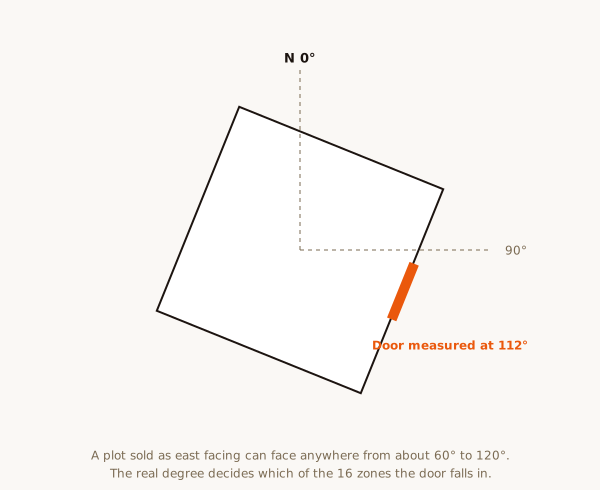
- A diagonal or tilted plot: the front boundary itself faces somewhere between roughly 34 and 56 degrees. The house has one front wall, and that wall sweeps across the north and east zones.
- A corner plot: roads run along both the north and the east boundaries, so the house has two real frontages that meet at the north-east corner.
In measured terms both are read the same way: the front of the building carries north-side zones and east-side zones, with the north-east corner between them. The practical difference is that a corner plot gives you two possible entrance walls, while a tilted plot gives you one wall that changes zone as you walk along it.
How north-east-facing house Vastu is measured to the degree
We never accept the facing printed on a brochure or a sale deed. On site we take compass readings at several points around the house and inside it, away from cars, steel gates, rebar and electrical panels that pull the needle. The readings are then corrected from magnetic north to true north using the local magnetic declination, which you can check yourself on the NOAA magnetic declination calculator. In Bangalore the correction is small, but we still apply it.
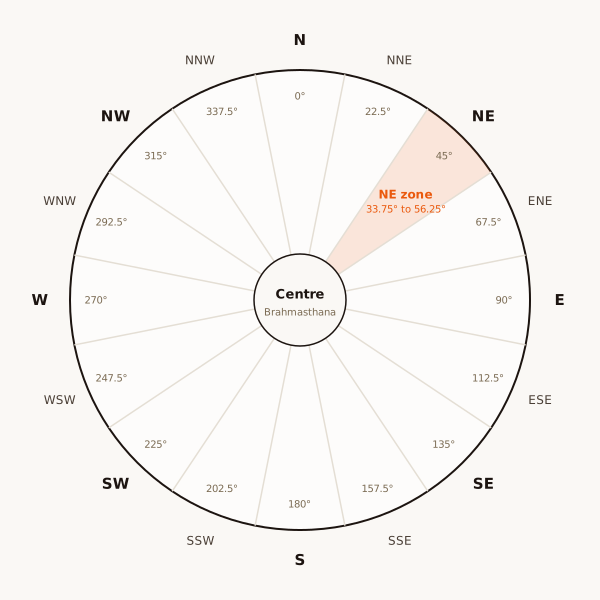
The degree matters because the Vastu 16-zone map divides the circle into bands of 22.5 degrees each. Around this diagonal the bands are:
- North-north-east (NNE): 11.25 to 33.75 degrees.
- North-east (NE): 33.75 to 56.25 degrees.
- East-north-east (ENE): 56.25 to 78.75 degrees.
So a house sold as north-east facing that measures 28 degrees is really a north-north-east home and is planned largely with north-side guidance, while one at 62 degrees leans east. A true diagonal sits close to 45 degrees. We record the figure in the report so you can see where every recommendation comes from.
Which Vastu zones the two road-facing sides carry
On a corner plot, the north road side runs from the north-west corner through north and north-north-east to the north-east corner. The east road side runs from the north-east corner through east-north-east and east towards the south-east. On a tilted plot the single front wall spans roughly north, north-north-east, north-east, east-north-east and east, depending on how wide the house is.
Traditional Vastu guidance: north and east are the sides that should be lower, lighter and more open than the south and west. A north-east-facing plot puts its road, front setback and parking exactly there, which is why it is traditionally well regarded.
What we measure: the exact degree of each wall, where the centre of the house falls, whether the north-east corner is cut by a road curve or extended by the site boundary, and what sits in each of the 16 zones today.
Vastu entrance positions on the north face
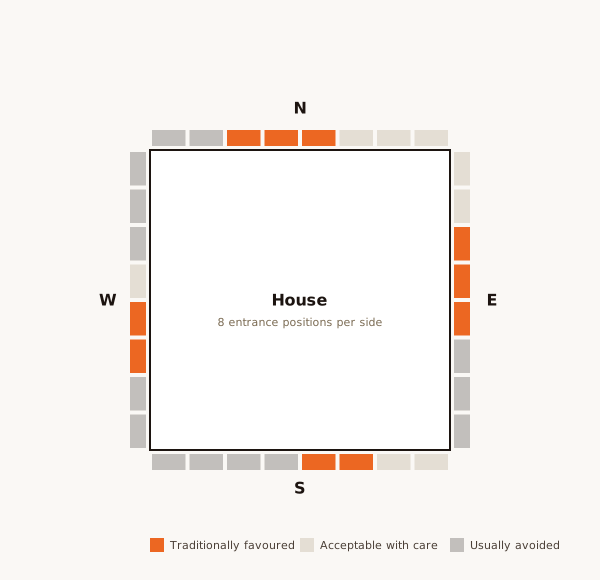
Classical texts divide each side of a building into eight entrance positions (padas). Schools of Vastu name and rank them a little differently. We follow the most widely used reading and confirm it on your actual plan.
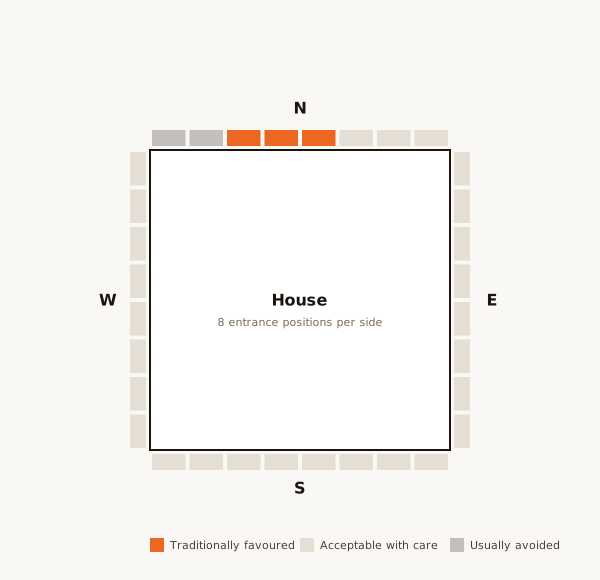
Where the north side is a real frontage, count the eight positions from the north-west corner towards the north-east:
- 1st to 2nd positions (towards the north-west): usually avoided.
- 3rd to 5th positions: traditionally favoured.
- 6th to 8th positions (towards the north-east): acceptable with care.
On a corner plot the north face is often the quieter road, which makes it a good place for the main door and a side gate for the car on the east.
Vastu entrance positions on the east face
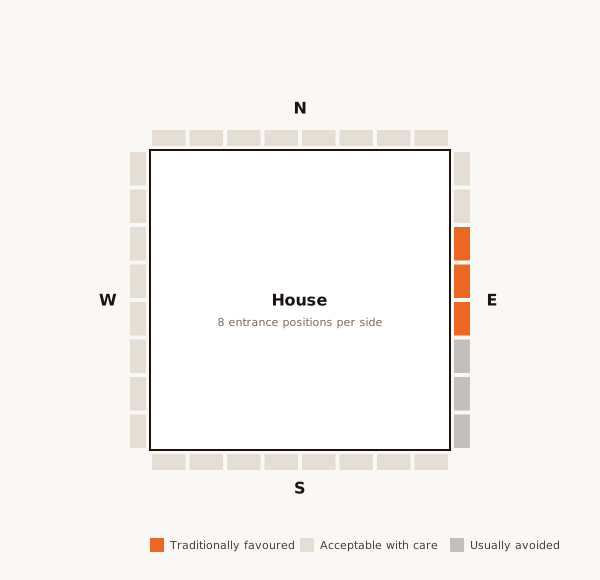
Where the east side is a real frontage, count the eight positions from the north-east corner towards the south-east:
- 1st to 2nd positions (near the north-east): acceptable with care.
- 3rd to 5th positions: traditionally favoured.
- 6th to 8th positions (towards the south-east): usually avoided.
The east face is where we most often find the trouble on corner plots: the builder pushes the door to the far south-east end so that the living room can take the full frontage. If your door is already there, it is corrected with threshold treatment, colour and lighting for that exact zone.
When the front wall itself is diagonal
On a tilted plot the eight positions of a cardinal wall do not map neatly onto one wall, so we locate the door by its degree from the centre of the house instead. A door that reads in the north-north-east or east-north-east zone is treated with north-side or east-side guidance respectively. A door that sits right on the north-east axis is the one point where schools disagree; many prefer the door a little to either side of the exact corner line, and we explain the options rather than pretend there is one answer.
The diagram below shows all the entrance positions around a house together. We overlay it on your plan at the measured angle, which is the only honest way to read a diagonal door.
Kitchen, bedroom and toilet placement in north-east-facing house Vastu
Inside a north-east-facing home the usual Vastu zone logic still applies. Because the front is the north-east, the heavier private rooms naturally fall towards the back, which suits both Vastu and daily life.
- Kitchen: south-east, which on this facing is usually a side or rear-side corner. The north-west is an accepted alternative. See our kitchen guide.
- Master bedroom: south-west, at the back and away from road noise, bed head towards south or west.
- Children or guest rooms: west or north-west.
- Puja or prayer space: north-east, but here the north-east is the front of the house, so keep it light and calm: a small prayer niche off the living room rather than a room squeezed beside the gate.
- Toilets: west or north-west. Never on the north-east frontage and never at the centre.
- Staircase: south, west or south-west.
This is a reference, not a template. The plot shape, the exact degree and the size of the house decide the final plan.
Common Bangalore layouts and their Vastu issues
Most north-east-facing homes we assess for Vastu in Bangalore are independent houses on 30 by 40, 30 by 50 or 40 by 60 sites, often with a rental floor above. A few patterns repeat:
- An external staircase at the front: built in the north-east setback so tenants can reach the upper floor. It puts weight exactly where the plot should stay open.
- A heavy car-park slab and tall gate in the north-east: practical, but it closes the most open corner.
- An overhead tank above the front staircase: the tank ends up over the north-east.
- A toilet tucked under the stairs near the entrance: common in compact plans.
A sump in the north-east, on the other hand, is traditionally fine and is one thing these plots usually get right.
Myths about north-east-facing house Vastu
- Myth: a north-east-facing house guarantees prosperity. No layout can promise money, marriage or health. Good planning improves light, air, movement and comfort, and that is what we work on.
- Myth: any door near the north-east corner is best. The exact position and degree still matter, as the two door diagrams show.
- Myth: a corner plot is always better. Two roads also mean two setbacks, more dust and more noise. It suits some families and not others.
- Myth: a less favoured door must be moved. We have never asked a client to move a door.
Vastu corrections without demolition
In north-east-facing house Vastu, corrections for an existing home use what is already there: clearing and lightening the north-east setback, moving heavy storage and the water tank plan towards the south-west, reassigning rooms to suit their zones, turning the bed or the desk, colour chosen by zone, and threshold treatment for a door in a weaker position. We sell no products and take no commission. If something truly needs construction, such as a toilet inside the north-east corner that cannot be reassigned, we say so plainly and mark the better position for your next renovation. Our article on zero demolition corrections explains the approach.
Buying a north-east-facing plot
Before you buy, look beyond the facing: the plot shape, whether the north-east corner is cut, the slope, which roads touch which sides and what stands opposite the gate. A regular plot whose land falls gently towards the north-east is the traditional ideal. Our plot Vastu service gives a written pre-purchase report, and the guide to plot facing direction covers the basics.
Fees, visit and report
A site visit for a house usually takes two to four hours, and you receive a written report within 48 hours with every reading, the 16-zone map and prioritised corrections. You can see the format in our sample report. In Bangalore an independent house or villa is ₹25,000 and an apartment ₹15,000; an online consultation from anywhere is ₹5,000. Full details are on the consultation fees page, and you can book a consultation when you are ready. An online assessment uses traditional Vastu only, the 16-zone map and the 3×3 grid drawn on your plan; geopathic stress readings need a site visit.
Frequently asked questions.
Is a north-east-facing house good as per Vastu?
It is traditionally well regarded, because the open road side falls in the north and east. The exact door position and the room layout still decide how well it works.
Where should the main door be in a north-east-facing house?
On the north face, the third to fifth positions counted from the north-west corner; on the east face, the third to fifth counted from the north-east corner. On a diagonal front wall we place the door by its measured degree.
Where should the kitchen go in a north-east-facing house?
In the south-east, which is usually a side or rear corner on this facing. The north-west is an accepted alternative.
My plot is sold as north-east facing but measures 30 degrees. What is it?
At 30 degrees the front reads as north-north-east in our 16-zone map, so we plan it mostly with north-side guidance. The advice always follows the measured degree.
Have a property here you want assessed?
Share the property type and a floor plan on WhatsApp for an exact quote and the next available date.