As a Vastu consultant in Jigani, we split our time between two kinds of property. The first is industrial: units in the Jigani 1st and 2nd phase industrial areas, along the Jigani to Anekal corridor and in the Anekal industrial area, where owners are building new sheds, expanding existing ones or buying land for a second unit. The second is residential: plotted layouts, independent houses and new apartment projects that have grown around the industrial belt as people move closer to where they work.
For both, the method is the same. We measure true north on site, draw the 16 zones of our VIDS method over the plan, and read each part of the property by its zone. We sell no products, we plan every correction without demolition, and we never stop a working unit to do our job.
Industrial units in Jigani and Anekal
Units here tend to be larger than the small sheds of older city estates, often with a separate office block, a main shed, stores, a utility area and an open yard on one plot. That gives more room to place each activity well. On a visit we read:
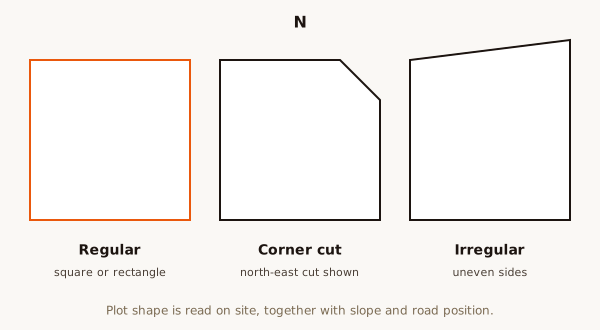
- The plot shape, slope and road position, including any road that runs straight into the boundary.
- The main gate and the security cabin.
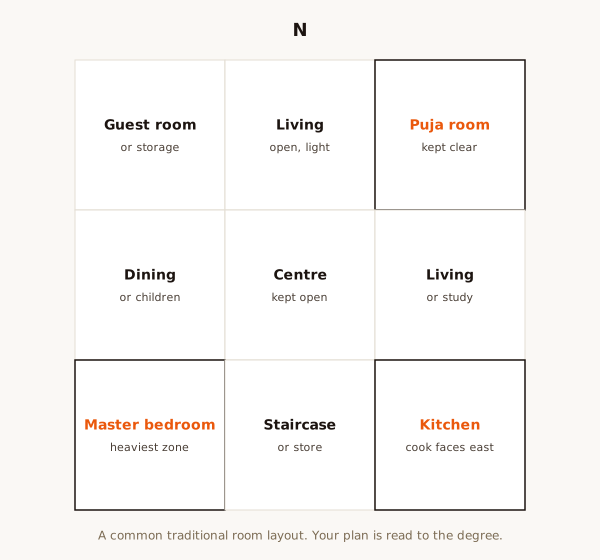
- The office block and the owner cabin, ideally in the south-west of the office and facing north or east.
- The main shed, with heavy machinery and raw material towards the south and west.
- Boilers, furnaces, DG sets and transformers, ideally in the south-east.
- Finished goods and dispatch, ideally in the north-west.
- Water storage, borewells and the effluent treatment plant.
See factory Vastu and manufacturing Vastu for the full industrial method.
Water, effluent and utilities
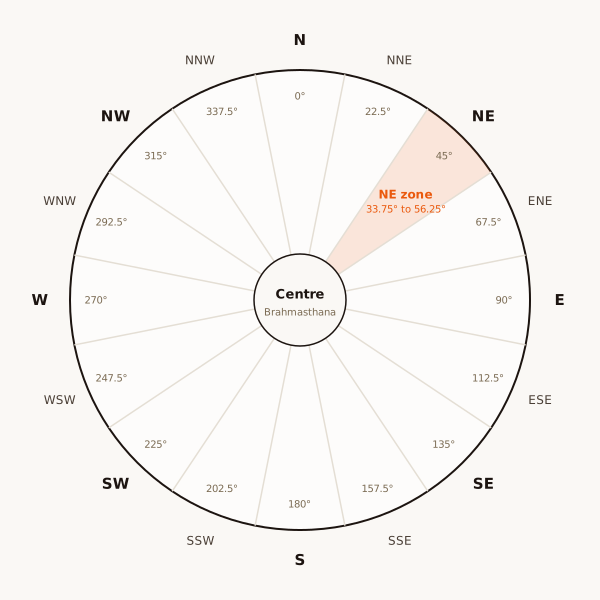
Process industries need water, and many produce waste water that must be treated. Tradition keeps clean water in the north-east and wants waste water kept well away from it. On a new plot, that means the borewell and clean water sump go to the north-east, and the effluent treatment plant to the south or west side of the plot, or the north-west if the layout forces it.
Where an effluent plant already sits in the north-east, we do not suggest moving it. We note it, check that drainage flows away from clean water storage, and focus on the parts of the plant that can still change. Electrical rooms, DG sets and transformers are read for the south-east, the zone of fire.
Planning a new factory in the corridor
The Jigani to Anekal corridor still has land being developed, which means many owners are at the drawing stage. This is the best time to apply Vastu. We work with your architect or structural consultant on the plot layout, the position of each building, the gate and the internal roads, and we send written comments while the drawings can still change.
Placing the main shed, the office and the utilities correctly on paper costs almost nothing. Correcting them after construction can mean months of disruption. See industrial plot Vastu and plot shape Vastu.
Buying industrial land
Before buying a plot, we read its shape, cut or extended corners, slope, roads and surroundings. Industrial plots in newer layouts can be irregular where they follow old survey lines, and a cut in the north-east or a road hitting the south-west are worth knowing about before you commit. A pre-purchase plot report is ₹5,000. See our plot buying checklist.
Homes and plotted layouts around Jigani
Residential growth around Jigani is a mix of plotted layouts, independent houses and apartment projects. For plotted layouts, the main questions are plot facing, shape and the position of the road; for houses, the full room-by-room reading; for apartments, the flat as its own unit.
Many families buying a site here plan to build within a few years. A reading of the plot now and of the house plan later gives the best result. See Vastu for plot, 30×40 house plan Vastu and Vastu for apartment.
How the visit works
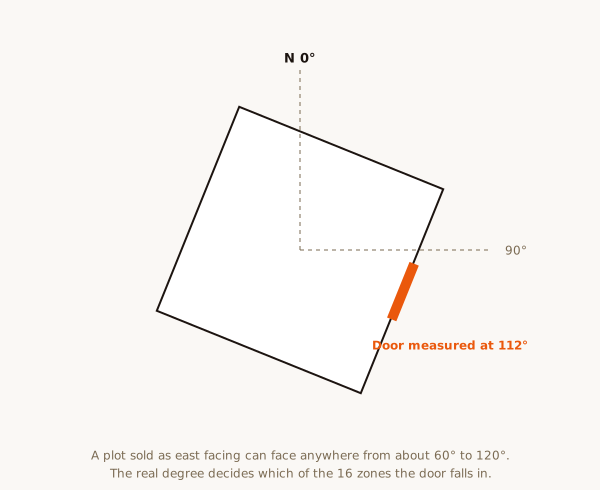
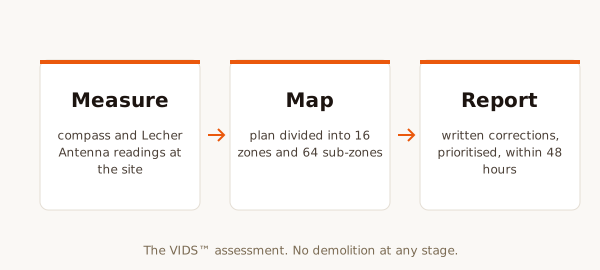
We walk the site while it runs. Compass readings are taken at several points away from steel, machines and vehicles, and corrected for magnetic declination, which you can check with the NOAA magnetic declination calculator. We sketch the layout, note each building and activity by zone, and discuss how material and people move through the site.
If you want them, Lecher Antenna readings can be added on site. We describe them honestly as radiesthesia, which mainstream science does not accept, and keep them separate from the measured findings.
Corrections in a working factory
- Move the owner cabin or the accounts desk to the south-west of the office.
- Clear the north-east of the yard and the shed of scrap and stored material.
- Shift raw material stores towards the south-west.
- Plan dispatch staging in the north-west.
- Use planned shutdowns to move panels, compressors or DG sets towards the south-east.
- Place every new building, shed extension or machine correctly from the start.
We rarely suggest moving heavy machinery for Vastu alone. See zero-demolition corrections.
Common findings in the Jigani belt
- An office block built in the north-east of the plot because it faces the road.
- The effluent plant or septic tank in the north-east.
- Heavy stores in the north or east, with the south-west left as open yard.
- A gate exactly at a corner of the plot.
- New sheds added over time without a plan for the whole site.
None of these is read with fear. Each is measured, explained and ranked by how practical it is to change.
Fees and reports
Industrial and commercial assessments start from ₹51,000 and are quoted after we see the site plan. Homes in Bangalore are ₹15,000 for an apartment or row house and ₹25,000 for a villa or independent house. A pre-purchase plot report is ₹5,000. The written report arrives within 48 hours. See all fees and a sample report.
Why owners choose Vardhini Vastu
We have practised since 2016 and completed more than 3,200 consultations. We measure before we advise, we keep classical guidance separate from what we measured, we sell nothing and we take no commission from builders or suppliers. We do not promise orders, profits or approvals. We tell you how your site reads by direction and which changes are realistic for a working unit or a family home.
Expanding an existing unit
Many Jigani units have grown in stages: a first shed, then a second, then an office block, a canteen and a store, each placed where there was space at the time. When an owner plans the next expansion, we read the whole site as it stands and mark where the new building can go so that it improves the overall layout rather than adding to the problem.
Typical moves are to place the new raw material store in the south-west, the new office in the south or west side of the plot, and to keep the north-east of the yard open for water storage, landscaping or visitor parking. Where land is limited, we rank the options and explain the trade-off.
Warehouses and logistics units
The belt also has warehouses and logistics yards serving the industries around it. For these, the reading focuses on the dock positions, the direction of truck movement, the location of fast-moving stock and the office. Docks for outgoing goods suit the north-west, heavy and slow-moving stock suits the south-west, and the centre of the warehouse floor is kept as clear aisle. See warehouse Vastu.
Staff housing, canteens and workers areas
Larger units often provide a canteen, a rest area or staff housing on the same plot. Canteens and kitchens are read for the south-east, the fire zone, with the north-west as the alternative. Rest areas and dormitories suit the south and west. Toilets for workers are kept out of the north-east of the plot. These are small decisions when planned, and they make a site easier to run day to day.
Common questions in Jigani
How far out do you travel? We regularly visit units across the Jigani phases, Anekal and the corridor between them, and plots and homes in the layouts around them.
Can you read a site from drawings first? Yes. We can review the plan online first and then confirm on site, which is useful when the plot is still empty.
Will you tell us a site is unlucky? No. We describe what the layout is by direction and what can be done. We never use fearful language.
Related services.
Nearby areas we cover.
Frequently asked questions.
Do you cover the Anekal industrial area as well as Jigani?
Yes. We visit units across the Jigani phases, the Jigani to Anekal corridor and the Anekal industrial area.
Can you review a factory layout before construction?
Yes. We work with your architect on the plot layout and send written comments while the drawings can still change.
Our effluent plant is in the north-east. Must we move it?
Usually not. We note it, check drainage away from clean water, and focus on what can still change.
Do you also check plots in residential layouts here?
Yes. A pre-purchase plot report covers shape, slope, roads and facing.
Have a property here you want assessed?
Share the property type and a floor plan on WhatsApp for an exact quote and the next available date.